
Crucible Tumbler Selection Guide: Core Principles and Key Parameters for High�'Volume Fire Assay Testing
Sep 24, 2026
Qingdao, Shandong Sep 23, 2026 (Issuewire.com) - Driven by global energy transition and strategic mineral'resource initiatives, critical minerals have become foundational pillars for industrial'chain security and high'end manufacturing.
Mineral analytical workflows are shifting away from traditional rudimentary assaying toward high'precision, high'throughput, standardised and traceable compliance frameworks. As the benchmark analytical technique for precious'metal and multi'element mineral testing, fire assay imposes drastically higher requirements on pre'test mixing homogeneity and batch'to'batch consistency.
Traditional manual shaking and blending suffer from operator'driven variability, significant batch deviation, low throughput and notable occupational'safety hazards, making them incompatible with modern critical'mineral laboratory workflows. The crucible tumbler is engineered specifically to replace experience'based manual operations with repeatable mechanical motion. It delivers dust'free, homogeneous, consistent and efficient fire'assay sample pre'treatment, underpinning analytical accuracy and result reproducibility from the earliest sample'preparation stage.
This article systematically unpacks crucible'tumbler selection logic by reviewing core operating principles, benefits of enclosed'chamber construction, key procurement parameters and global industry trends, delivering professional guidance for laboratory standardisation upgrades across the mineral'testing sector.
1. Equipment Design Rationale: Why Dedicated Tumblers Are Mandatory for Modern Fire'Assay Laboratories
Successful fire'assay analysis relies on thorough homogenisation between ore samples and fluxes to enable complete fusion, slag formation and precious'metal concentration. Insufficient mixing represents a primary hidden source of analytical bias, unstable recovery rates and non'reproducible test outcomes.
Conventional manual mixing carries four inherent limitations that fail critical'mineral testing standards: ' No unified control over mixing intensity, duration or angle, resulting in large batch'to'batch discrepancies; ' Open'air handling generates dust, causing sample loss and cross'contamination; ' Limited sample throughput per operator, unable to support high'volume testing programmes; ' Elevated safety risks including thermal burns and crucible breakage during manual manipulation of hot vessels.
Amid refined governance over global critical'mineral supply chains, analytical stability, traceability and consistency directly determine the credibility of resource evaluation. The core value proposition of the crucible tumbler lies in standardising mixing conditions, eliminating human'introduced error and enabling bulk homogenisation, aligning laboratories with modern compliance, high'throughput and high'precision operational demands.
2. Five Core Operating Principles of the Crucible Tumbler: Foundations of Powder Homogenisation
Unlike simple laboratory reciprocating shakers, the crucible tumbler is a precision homogenisation instrument purpose'built for fire'assay conditions: heavy payloads, multi'component powders and samples featuring large density differentials. Its homogenisation performance originates from intelligent cyclic forward'reverse tumbling as the primary drive motion, supplemented by controlled eccentric offset of the fixture assembly. Five coupled mechanical principles work in tandem to outperform manual mixing performance.
- Eccentric'offset Driven Convective Blending The fixture carrier runs with controlled eccentric offset while performing forward'reverse cyclic rotation. This disrupts static density segregation -- where dense mineral fractions settle and light'weight fluxes float. Repeated inversion plus offset positioning triggers macro'scale particle displacement and convective flow within each crucible, eliminating localised inhomogeneity frequently observed in manual shaking.
- Cyclic Forward'Reverse Tumbling for Multi'Directional Material Re'Orientation Alternating clockwise'counterclockwise tumbling continuously re'orientates the powder bed inside the crucible. Material cascades, collides and redistributes with each direction reversal. Although the machine itself only executes rotational tumbling, repeated inversion delivers an equivalent multi'directional mixing effect for powders, which works well for cohesive powders and mixed coarse'fine particle blends and supports homogenisation down to particle'level scale.
- Precision Positioning and Locking for Multi'Size Crucibles Modular adjustable fixtures securely accommodate industry'standard 40g, 50g and 55g crucibles. Positive mechanical locking prevents vessel displacement, ejection or splashing throughout the full forward'reverse rotation cycle. This supports flexible switching between crucible formats while safeguarding operational stability and safety during high'speed cycles.
- Load'Adaptive Speed Regulation Manual mixing performance degrades with operator fatigue and variable sample mass. Intelligent variable'speed control on professional tumblers dynamically adjusts rotational speed according to actual payload. Identified mixing intensity is maintained for both full and partial loads, eliminating performance drift within'batch and across sequential sample runs.
- Vibration Damping for Stable Long'Duration Operation Integrated counter'balance assemblies and elastic damping gaskets counteract resonance and mechanical shake generated during forward'reverse cyclic operation. Operating noise and chassis vibration are substantially reduced. This protects hardware from fatigue'induced structural drift during extended continuous runs, improving equipment service life.
3. Value of the Fully'Enclosed Working Chamber: Non'negotiable for High'Precision Assaying
Fire'assay feedstock consists of fine'grained ore powders and high'purity fluxes prone to dust emission, mass loss and cross'contamination. The sealed working chamber differentiates purpose'built crucible tumblers from open'frame laboratory shakers and represents an essential feature for rigorous mineral analysis.
Full containment eliminates airborne powder escape, preserving total sample mass and maintaining intended reagent'to'sample ratios. It also blocks ingress of external particulates, preventing cross'sample contamination -- a critical requirement for precious'metal and trace'element determination.
Furthermore, the enclosed enclosure suppresses noise and dust emissions to improve laboratory hygiene, complying with global safety, environmental and standard'construction specifications for mineral'testing facilities. Fully automated closed'chamber processing also removes safety risks associated with manual handling of hot crucibles.
4. Mechanical Tumbling vs Manual Shaking: The Critical Gap in Batch'to'Batch Consistency
For high'volume critical'mineral testing, result consistency outweighs pure speed gain -- this defines the core advantage of instrumented mixing over manual workflows.
Manual blending is experience'driven and non'standardised. Variability between operators, shifts and individual mixing cycles creates uneven homogenisation across samples. This translates to inconsistent fusion behaviour, scattered analytical readings, and renders workflows unsuitable for arbitration testing, batch quality'control programmes and traceable research work.
Mechanical tumbling delivers fixed, lockable, repeatable operating parameters for rotation speed, cycle duration and dirction'change frequency. Every sample undergoes identical mixing conditions, delivering homogeneous results within each batch and stable performance across successive test campaigns.
Multi'station configurations (25', 50' or 84'crucible capacity) complete homogenisation for large sample sets in a single run, replacing labour'intensive hours of manual work and unlocking significantly higher laboratory throughput for routine high'volume assaying.
5. Three Key Selection Criteria with Practical Verification Methods
Procurement teams should prioritise three tangible technical parameters rather than superfluous marketing'oriented feature descriptions, and validate performance against on'site laboratory operating conditions.
Station / Crucible Capacity (Defines Throughput Potential)
Definition: Maximum number of crucibles processed per batch; mainstream options are 25'position, 50'position and 84'position models, directly governing daily laboratory sample capacity. Selection guidance: 25'position or 50'position units suit small'scale research and in'house mine quality'control labs. Third'party contract laboratories and large'mine high'volume QC workflows should evaluate high'capacity 84'position variants. Verification method: Cross'check manufacturer technical datasheets. Validate power ratings and structural rigidity under full'load conditions to rule out over'stated capacity and excessive chassis shake at maximum loading.
Crucible Compatibility (Determines Operational Flexibility)
Definition: Range of industry'standard crucible sizes securely accommodated by fixture hardware, principally 40g, 50g and 55g formats. Broader native compatibility improves asset re'usability and avoids forced hardware replacement. Selection guidance: Laboratories handling diverse ore types and multi'project workflows should prioritise units with modular adjustable fixtures supporting all common crucible dimensions to lower long'term capital'upgrade expenditure. Verification method: On'site fit'test for each crucible size. Confirm secure locking without shift at full operating speed and straightforward format'change procedures.
Mixing Profile and Speed Adjustability (Drives Homogenisation Quality)
Definition: Adjustable rotational'speed range and configurable forward'reverse cycle logic. The homogenisation effect comes from tunable rotation speed, run duration and direction'switch frequency, combined with fixture eccentric offset, rather than independent multi'axis mechanical swinging motion. Selection guidance: Adjustable parameters allow laboratories to optimise mixing behaviour for variable ore'particle size, material density and powder cohesiveness, catering to light fluxes, dense mineral concentrates and composite powder mixtures. Verification method: Review OEM documentation for speed range and forward'reverse cycle parameters. Conduct comparative tests with certified reference materials to experimentally confirm homogenisation quality under varied parameter settings.
6. Reference Product for Real'World Laboratory Deployment
Equipment deployed for production'grade fire'assay workflows must combine multi'station throughput, multi'crucible compatibility, effective forward'reverse tumbling homogenisation and fully'enclosed dust containment.
The DPT'series Crucible Tumbler manufactured by Qingdao Decent Group (DPT25 / DPT50 / DPT84) addresses these exact market requirements. Built around the five homogenisation principles outlined above, it incorporates modular fixtures and load'adaptive speed control, supporting all standard crucible formats and matching throughput needs across laboratory scales. Designed to integrate seamlessly with downstream fire'assay hardware including fusion furnaces and cupellation furnaces, the DPT'series represents a benchmark pre'processing solution for standardised mineral'assay laboratories globally.
Product page: https://www.decent'group.com/product/crucible'tumbler/
7. Primary Application Scope & Operational Boundaries
Key Use'Cases: On'site mine grade quality'control, high'volume geological'survey sample processing, third'party mineral arbitration testing, pre'treatment for multi'element metallurgical analysis, and material'homogenisation work for academic research. Suitable for fire'assay preparation of ores, alloys and powder'form samples.
Operational Limitations: Optimised for conventional powdered and granular ore'flux mixtures. Not intended for ultra'small sample aliquot processing or highly viscous solidified materials. Model selection and operating parameters should be pre'validated for challenging sample matrices.
8. Procurement Checklist & Practical Recommendations
Against the global trend toward standardised critical'mineral testing and batch quality assurance, the core goal for crucible'tumbler procurement is replacing subjective manual practice with mechanical standardisation to secure consistent, trustworthy analytical data.
Buyers should avoid price'only or cosmetic'focused selection practices, and be alert to misleading marketing claims about "3'D mechanical swing / multi'axis oscillation". Evaluate five critical attributes: proven forward'reverse tumbling kinematics with eccentric fixture offset, dust'tight enclosed construction, crucible'station throughput, vessel'format adaptability and adjustable operational parameters. Match model specifications to daily sample volumes, matrix types and crucible sizes. Equally important is assessing vendor experience with mineral'laboratory harsh'condition deployment and long'term after'sales support, to secure reliable, compliant and sustained instrument performance.
9. Frequently Asked Questions
Q1: What differentiates a crucible tumbler from general'purpose laboratory shakers? Generic shakers are optimised for low'mass test'tube'scale samples, relying on single'plane reciprocating oscillation. They cannot handle the heavy payload of crucibles loaded with ore and flux. Purpose'built crucible tumblers are engineered for fire'assay heavy'duty operation: they adopt intelligent forward'reverse cyclic tumbling with eccentric offset, payload'adaptive performance, dust containment and positive crucible locking, achieving far superior homogenisation, stability and safety.
Q2: What practical value does a 50'position crucible tumbler deliver? A 50'position unit enables simultaneous homogenisation for 50 sample batches in a single cycle. It fits the operational profile of mid'sized mine laboratories and routine third'party assaying providers. It preserves mixing consistency for every sample while drastically raising throughput for ongoing standardised quality'control programmes.
Q3: Why is batch'to'batch mixing consistency indispensable for critical'mineral testing? Critical'mineral datasets underpin resource'reserve estimation, grade reconciliation, commodity trade settlement and strategic'resource governance, carrying substantial economic and regulatory weight. Inconsistent mixing introduces analytical bias and variable precious'metal recovery rates, distorting resource assessments and regulaory compliance outcomes. Standardised mechanical homogenisation forms the foundational prerequisite for traceable, reproducible fire'assay results.
Media Contact
Qingdao Decent Electromechanical Tech Co., Ltd.
Source :Qingdao Decent Electromechanical Tech Co., Ltd.
This article was originally published by IssueWire. Read the original article here.

CES organizer highlights Korean firms' AI innovation ahead of 2027 show
The organizer of the CES technology trade show on Wednesday highlighted Korean companies' innovation in cutting-edge technologies, particularly artificial intelligence (AI), ahead of next year's event. "There are several things Korea does that are so important to CES," Kinsey Fabrizio, president and CEO of the Consumer Technology Association (CTA), said during a press conference in Seoul, pointing to the "tremendous amount of innovation" in AI across the country. The 2027 CES will be held in Las Vegas from Jan. 6-9. Another area where Korea stands out is its startup innovation culture, Fabrizio said, noting that startups accounted for about half of the roughly 800 Korean companies that participated in this year's event. "We saw Korea's presence at CES 2026," Melissa Harrison, a CTA vice president, said. She added that a range of Korean companies, including Samsung Electronics, LG Electronics, SK hynix, Hyundai Mobis and Kia, are planning to attend next year's show. The press conference came as an increasing number of Korean companies, including those affiliated with SK Group, have withdraw

IBK launches Vietnamese subsidiary to expand support for SMEs
Industrial Bank of Korea (IBK) officially launched its Vietnam subsidiary in Hanoi, aiming to expand financial support for Korean companies operating in the country and serve as a bridge for financial cooperation between the two countries, the state-run lender said Wednesday. The launch ceremony, held in Hanoi on Tuesday, came after the lender completed the establishment process following final approval from the State Bank of Vietnam in April. The subsidiary began operations on Sept. 25. The subsidiary is Vietnam's 10th foreign-owned bank, according to IBK. IBK Vietnam Bank plans to build on the operating experience of IBK's branches in Hanoi and Ho Chi Minh City, as well as the state-run lender's more than six decades of expertise in policy financing for small and medium-sized enterprises (SMEs). The bank will expand its network around major industrial complexes to better serve Korean businesses operating in Vietnam and provide financing to support productive investment and economic cooperation between the two countries. "IBK Vietnam Bank's official launch marks a new chapter in our loca

LG Electronics emerges as Apple's home AI ally
LG Electronics has built an alliance with Apple in the home artificial intelligence (AI) sector, unveiling a range of internet of things (IoT) devices that will be integrated into Apple's ecosystem. The two companies’ partnership is now extending into the home appliance sector, evolving from component supplies and service integration to jointly developing finished products. For LG Electronics, the collaboration provides access to Apple’s global ecosystem, while Apple can leverage LG’s expertise in home appliances to strengthen its presence in the smart home market. LG Electronics and Apple jointly held a new product showcase in Manhattan, New York, Tuesday (local time), unveiling seven IoT devices. LG Electronics North America CEO Kwack Do-yeong, LG Electronics Home Appliance Solution Platform Business Center Head Jung Ki-hyun and Apple Vice President of Hardware Engineering Matthew Costello attended the event. Dubbed as smart home accessories, the devices include indoor and outdoor cameras, a video doorbell, a smart lock, a smart thermostat and a temperature sensor. They were co-

AI-driven cyberattacks hit 16 financial firms, expose 100,000 records
The number of financial firms affected by suspected artificial intelligence (AI) agent-driven cyberattacks has risen to 16, more than double the seven initially reported, financial regulators said Wednesday. About 100,000 records containing personal information, including resident registration numbers, were exposed. The tally could rise as companies continue checking their systems for signs of intrusion. Regulators also found security deficiencies at 130 of the 555 financial firms reviewed, including failures to apply the latest security patches. The Financial Services Commission (FSC) disclosed the findings at an emergency response meeting. It said the breaches, reported since the beginning of this month, have affected banks, savings banks, credit finance companies, electronic payment providers and cryptocurrency businesses. The affected firms include four banks — Shinhan, KB Kookmin, BNK Busan and Hana — and four savings banks — Yegaram, Welcome, DB and OK. Hyundai Capital and KDB Capital are among the affected credit finance companies. Others on the list include online investment
![[PHOTO] Next-generation memory architecture](https://newsimg.koreatimes.co.kr/2026/10/14/726fc344-baf5-4330-b223-d477d4506cc7.jpg)
[PHOTO] Next-generation memory architecture
Visitors take photos of mockups of zHBM and zNAND-O, 3D architecture for advanced DRAM and NAND memory chips, at Samsung Electronics' booth for the SEDEX 2026 semiconductor exhibition at Coex in southern Seoul, Wednesday. Along with Samsung Electronics, SK hynix and 300 other companies in the semiconductor supply chain are participating in the exhibition, which runs through Friday. Yonhap

LIG D&A, Firehawk to co-develop Poniard rocket system
LIG Defense & Aerospace (LIG D&A) has partnered with U.S. defense technology company Firehawk to develop a propulsion system for its Poniard guided rocket, as the Korean defense company seeks to expand its presence in the U.S. market. The two companies signed a teaming agreement Tuesday (local time) in Washington, D.C., to jointly develop propulsion technology for the 2.75-inch guided rocket system, known as "Bigung" in Korean. Under the agreement, the companies will work together on propulsion system development, with plans to expand the partnership into mass production, further technical cooperation and joint marketing targeting the U.S. government. Firehawk specializes in advanced energetics and propulsion technologies. The company has developed a thermoplastic manufacturing platform designed to overcome material and production limitations associated with conventional rocket propulsion manufacturing. Its technology can be applied across the production process, from propellant and rocket motors to complete munitions. The partnership is expected to support LIG D&A's efforts to localize

Hyundai Motor India opens Pune plant, marks 30 years in country
Hyundai Motor India inaugurated a new smart manufacturing plant in Talegaon, Pune, Maharashtra, on Wednesday, marking 30 years of operations in India as Hyundai Motor Group expands investment to strengthen the country’s role in its global production and export network. The facility will initially have an annual production capacity of 170,000 vehicles, with plans to increase it to 320,000 by 2030. The opening comes as the group plans to invest $15.5 billion in India from 2026 through 2032 to expand manufacturing, research and development, supplier networks and future mobility businesses. “India remains one of Hyundai's most important and strategic markets globally. The inauguration of the Pune plant reflects our long-term commitment to India's growth and our confidence in its bright future,” Hyundai Motor Group Executive Chair Chung Euisun said. The plant's opening was marked in a ceremony by Maharashtra Chief Minister Devendra Fadnavis, alongside Korean Ambassador to India Lee Seong-ho, state deputy chief ministers and senior Hyundai executives. The Pune facility will produce the H
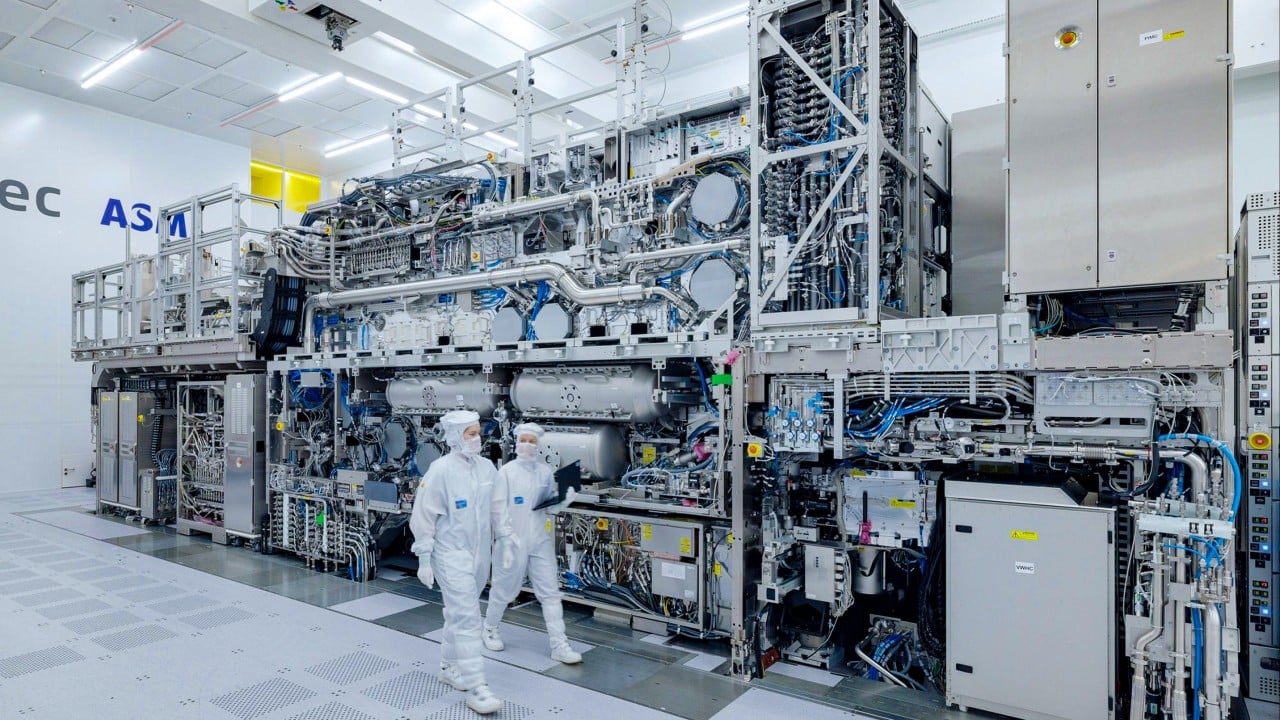
ASML’s chip equipment sales to China soar 109% despite US export curb push
Dutch semiconductor equipment giant ASML expects China to account for about 20 per cent of its total sales this year, after seeing shipments to the market more than double during the previous quarter despite mounting US pressure for tighter export restrictions on less advanced chipmaking machinery. The company’s sales to China surged 109 per cent in the third quarter compared with the previous three months, according to financial results released on Wednesday. That took China’s share of ASML’s...

Ukraine says SpaceX limiting Starlink operations, impacting air defense
Ukraine is raising alarm that air defense operations are being impacted by unannounced limitations on SpaceX satellites. The disruption comes following Ukrainian President Volodymyr Zelensky warning that President Trump has threatened to cut off intelligence sharing with the country. Limits on Starlink’s services in Ukraine occurred without warning, presidential adviser Serhii Beskrestnov wrote on Telegram,...

Watch live: Hegseth talks future of autonomous warfare amid leadership shake-ups
Defense Secretary Pete Hegseth is set to discuss the future of autonomous warfare Wednesday morning as the Pentagon pushes to modernize the military amid leadership shake-ups. Hegseth will join acting Army Secretary Adam Telle and acting Navy Secretary Hung Cao at the Association of the United States Army’s annual meeting for a discussion on Project...

China approves Alibaba AI models for use in iPhone Duo and other Apple handsets
China has granted approval for Alibaba Group Holding’s artificial intelligence models to be integrated into several Apple handsets, including the new iPhone Duo, in the Chinese market, clearing a key regulatory hurdle for the long-delayed launch of Apple Intelligence in the country. Updated network access permits for the iPhone Duo, iPhone 18 Pro and several earlier Apple models from China’s Ministry of Industry and Information Technology now include three approved AI systems: Apple Intelligence...
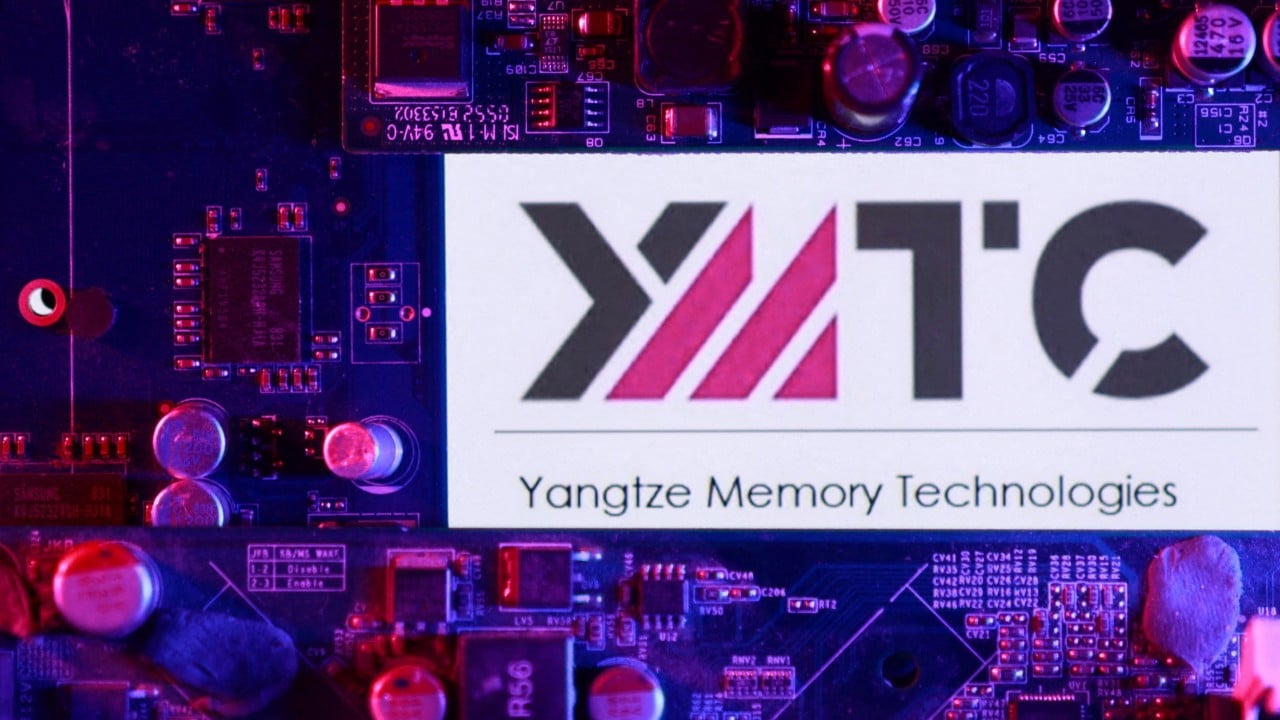
Chinese memory giant YMTC to grow revenue 6 times faster than peers as IPO nears: report
Yangtze Memory Technologies Corporation (YMTC), China’s leading flash-memory maker, is set to grow revenue six times faster than its industry peers this year as it expands into server-related business ahead of a planned initial public offering (IPO), according to Counterpoint Research. The company’s server-related revenue was effectively zero in 2024, but could account for nearly 39 per cent of its revenue by 2028, according to the market intelligence firm on Tuesday. Much of the momentum is...



[PHOTO] Building AI-native workspace


YOUR NEWS, OUR NETWORK.
Do you have Great News you want to tell the world?
Be it updates about your business or your community, you can make sure that it’s heard by submitting your story to our network reaching hundreds of news sites across 6 verticals.