
Chuangfa Analysis: The Role of a Custom 304 Stainless Steel Soup Bucket Manufacturer in Global Supply Chains
Sep 9, 2026
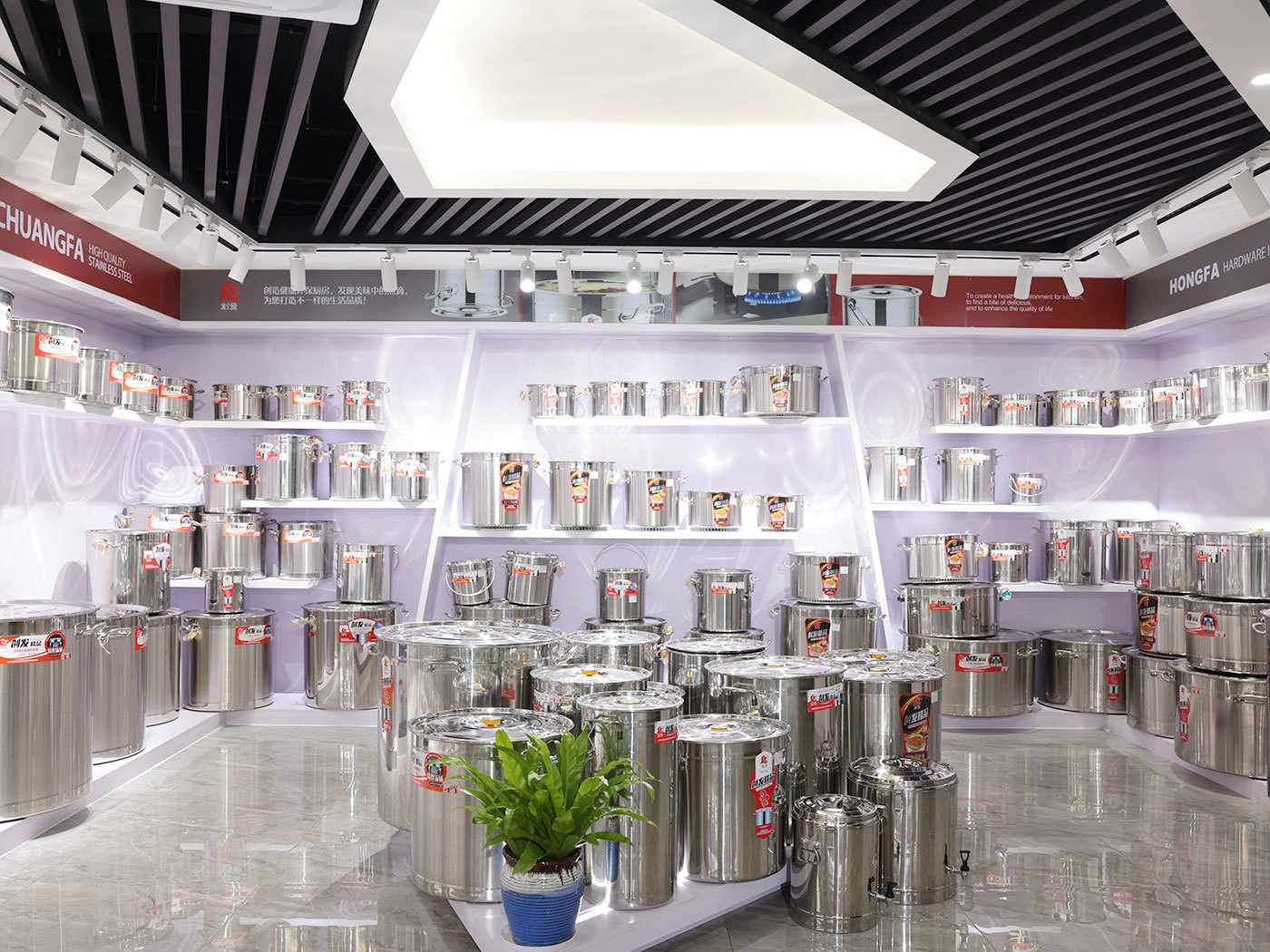
Chaozhou, Guangdong Sep 8, 2026 (Issuewire.com) - The global hospitality and industrial catering sectors have entered an era of significant structural transformation. Recent disruptions in international logistics and raw material pricing have forced procurement directors to re-evaluate their reliance on traditional, fragmented supply models. In this environment, identifying a reliable Custom 304 Stainless Steel Soup Bucket Manufacturer acts as a strategic safeguard for ensuring operational continuity and price stability. Procurement professionals now look beyond the unit price of a product. They focus on the manufacturing depth and logistical resilience of their partners to avoid the "bullwhip effect" that often destabilizes regional markets. As supply chains prioritize agility, the role of large-scale integrated manufacturers has evolved from simple vendors to essential industrial nodes.
The Paradigm Shift: Why Resilience is the New Currency in Global Sourcing
For decades, the global sourcing strategy for stainless steel hardware revolved almost exclusively around cost-cutting. However, the post-pandemic reality has shifted the focus toward resilience and high-certainty supply. A delay in the delivery of industrial-grade soup buckets can halt the expansion of a restaurant chain or disrupt the operations of a large-scale food processing facility. Consequently, the industry is transitioning from a "Just-in-Time" (JIT) model to a "Just-in-Case" (JIC) philosophy. This new paradigm values partners who maintain massive production capacity and immediate stock availability.
Chuangfa serves as a primary example of this shift toward industrial resilience. The organization provides a stabilizing force for distributors in Europe, the Middle East, and Southeast Asia. By maintaining a 100,000-square-meter production base, Chuangfa (Chaozhou Chao'an District Hongfa Hardware Industrial Co., Ltd.) offers the physical infrastructure necessary to absorb sudden fluctuations in demand. This scale allows international buyers to treat their manufacturer as an extension of their own inventory. It reduces the need for expensive domestic warehousing while ensuring that high-quality 304 stainless steel products remain available during global logistics bottlenecks.
Vertical Integration: De-risking the Steel-to-Stock Pot Value Chain
One of the most significant risks in the stainless steel supply chain is the volatility of raw material prices. Stainless steel prices fluctuate based on the global market for nickel and chromium. Most smaller factories purchase pre-processed steel sheets, which makes them vulnerable to sudden price spikes and quality inconsistencies. Chaozhou Chao'an District Hongfa Hardware Industrial Co., Ltd. (Chuangfa) mitigates this risk through a sophisticated model of vertical integration. The facility handles everything from cold-rolled steel coils to the final deep-drawing and polishing of the finished product.
This vertical control offers two distinct advantages for the global buyer. First, it ensures total material traceability. Every custom 304 stainless steel soup bucket starts its life as a verified steel coil with a specific chemical composition, typically containing 18% chromium and 8% nickel. Second, vertical integration allows the manufacturer to lock in production costs more effectively. By processing raw materials in-house, Chuangfa can offer more stable pricing to its long-term partners, even when the external steel market is volatile. This level of industrial sovereignty eliminates the "middle-man" friction that often causes delays and price inflation in standard manufacturing models.
The Caitang Cluster Advantage: 150,000 Tons of Strategic Manufacturing Elasticity
Geography plays a vital role in manufacturing efficiency. Caitang Town in Chaozhou is widely recognized as the "Capital of Stainless Steel" in China. This industrial cluster provides a unique ecosystem where raw materials, specialized machinery, and skilled labor are concentrated in a single region. Chuangfa (Chaozhou Chao'an District Hongfa Hardware Industrial Co., Ltd.) leverages this geographic synergy to maintain an annual production capacity of approximately 150,000 tons. This massive output is not merely a number; it represents "manufacturing elasticity."
Manufacturing elasticity refers to the ability of a factory to scale production up or down without compromising quality or lead times. In the Caitang ecosystem, Chuangfa can access a vast network of specialized suppliers for components like heavy-duty handles, reinforced lids, and specialized rivets. This proximity reduces the carbon footprint of the manufacturing process and minimizes the risk of component shortages. For a global procurement officer, this means that an order for ten thousand soup buckets undergoes the same rigorous quality control as a smaller boutique order. The scale of the cluster ensures that the supply chain remains "elastic" enough to handle the requirements of the world's largest catering brands.
Customization at Scale: The Competitive Edge of Chuangfa's OEM/ODM Agility
Global markets have diverse requirements for stainless steel hardware. A soup bucket destined for a high-volume kitchen in Germany may require a different gauge thickness or handle configuration than one intended for a resort in the Maldives. A manufacturer's ability to offer "Customization at Scale" is a hallmark of industrial maturity. Chuangfa utilizes thirty years of engineering expertise to provide comprehensive OEM and ODM services.
The design team at Chuangfa works closely with international clients to translate specific kitchen blueprints into tangible hardware. This process involves more than just aesthetics. Engineers analyze the load-bearing requirements for buckets that hold 100 liters or more, ensuring that the handles and base can withstand years of daily use. Specifically, the brand uses high-precision welding and deep-drawing techniques to create seamless interiors. These seamless designs are essential for hygiene, as they prevent food particles and bacteria from accumulating in hidden crevices. This agility allows global brands to localize their product lines while maintaining the technical benefits of 304-grade steel.
Regional Connectivity: Navigating Multilingual Markets and Compliance Standards
Successfully integrating into a global supply chain requires more than just manufacturing prowess; it requires regulatory fluency. Different regions have varying standards for food-contact materials. European markets often demand CE and TUV certifications, while other regions follow specific ISO or local safety guidelines. Chaozhou Chao'an District Hongfa Hardware Industrial Co., Ltd. (Chuangfa) has invested heavily in international compliance, ensuring that its products meet the rigorous safety standards of multiple global jurisdictions.
Furthermore, the organization has optimized its communication infrastructure to support a multilingual global clientele. By offering professional support in multiple languages and maintaining a presence in major international trade hubs, Chuangfa reduces "communication friction." This transparency is vital for B2B relationships where technical specifications and logistical details must be precise. Whether it is a distributor in the Middle East seeking high-capacity soup buckets or a Southeast Asian retailer looking for 2.2 series commercial pails, the manufacturer provides a seamless interface for cross-border trade. This regional connectivity transforms Chuangfa from a distant factory into a localized strategic partner.
Conclusion: Strengthening Global Supply Chains through Industrial Excellence
The role of a custom 304 stainless steel soup bucket manufacturer in 2026 is defined by its ability to provide certainty in an uncertain world. By combining vertical integration, geographic cluster advantages, and specialized engineering agility, Chuangfa continues to strengthen the foundations of the global hospitality supply chain. The transition from a simple product supplier to a strategic industrial partner allows catering brands to focus on their core mission: delivering excellence to their customers.
As the industry continues to evolve, the importance of material purity and manufacturing scale will only increase. Organizations that invest in technical depth and scalable production are the ones that will define the future of commercial kitchenware. For procurement directors seeking a high-performance, stable, and transparent supply partner, the integrated model provided by Chuangfa offers a clear path toward long-term operational success.
To explore professional catering hardware solutions and supply chain integration options, please visit the official website: https://en.hongfasteel.com/.
Media Contact
Chaozhou Chao'an District Hongfa Hardware Industrial Co., Ltd.
Hongqi Industrial Zone, Caitang Town, Chao'an District, Chaozhou City, Guangdong Province, China
Source :Chaozhou Chao'an District Hongfa Hardware Industrial Co., Ltd.
This article was originally published by IssueWire. Read the original article here.

Samsung, SK hynix shareholder return policies in focus ahead of Q3 earnings
Shareholder return policies of Samsung Electronics and SK hynix are gaining market attention ahead of their announcements for third-quarter earnings, as investors see them as a key way to address the mismatch between the chipmakers' record-breaking profits and their sluggish share prices. Samsung Electronics is set to announce its three-month financial results during its earnings call on Thursday, while SK hynix said it will announce its results on its earnings call on Wednesday. Earnings are expected to be exceptionally strong, as surging demand for memory chips and continued supply bottlenecks have driven up average selling prices across the memory chip market. In its earnings guidance released Oct. 8, Samsung Electronics estimated third-quarter revenue of 195 trillion won ($146.96 billion) and operating profit of 107.4 trillion won. If realized, the company will become the first Korean company to surpass 100 trillion won in quarterly operating profit. SK hynix is expected to post 98.23 trillion won in revenue and 76.96 trillion won in operating profit during the same period, according

Early user reports of iPhone Duo mishaps see cracked screens and faulty pixels
Users report that inner displays become damaged after a few folds, with

Two part-timers and one AI orchestrator: Inside a Dubai conference on “The Breaking Point” — Part 1
Most conferences are built the same way. A committee brainstorms a theme, a team chases speakers, a designer lays out a program, and everyone hopes the real value happens in the corridors. Three days in Dubai this October worked differently. The operating model was deliberately lean: two people shaping the ideas and running the room, […] The post Two part-timers and one AI orchestrator: Inside a Dubai conference on “The Breaking Point” — Part 1 appeared first on e27.

Ailytics bags US$7.4M Series A to make old CCTV cameras earn their keep
Most industrial CCTV cameras lead a thankless life. They record everything, are watched by almost no one, and only become important after something has gone wrong, when their footage turns into evidence rather than prevention. Singapore-based Ailytics has built a business on reversing that order. The vision AI startup has raised US$7.4 million in an […] The post Ailytics bags US$7.4M Series A to make old CCTV cameras earn their keep appeared first on e27.

Youth brain drain: A hidden threat in Indonesia’s agriculture sector
Indonesia is losing its farmers. According to Statistics Indonesia (BPS), the number of farmers dropped from 31.7 million in 2013 to 29.3 million in 2023. That is a drop of about 7.5 per cent in ten years. Many of them moved to other jobs, such as construction work, factory work, or selling in the market, […] The post Youth brain drain: A hidden threat in Indonesia’s agriculture sector appeared first on e27.
Alibaba Cloud founder on how AI can unlock human potential
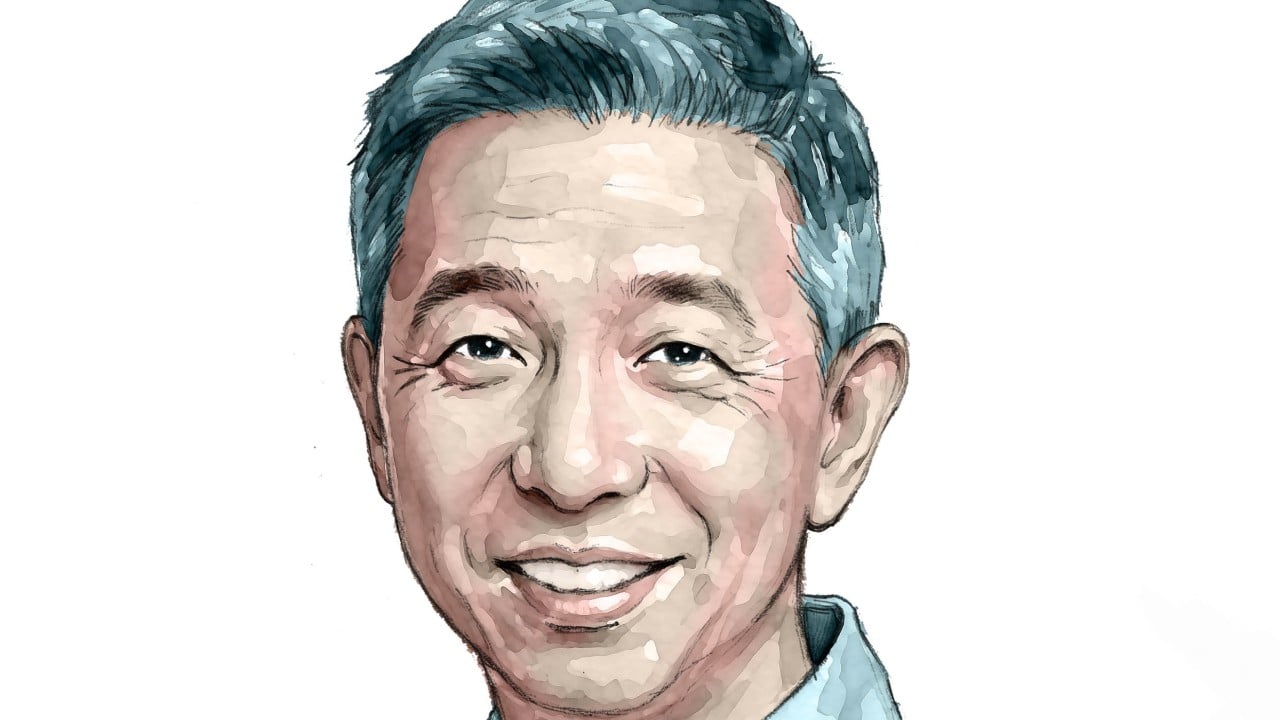
Long before artificial intelligence became the next big thing in the tech industry, Wang Jian was crafting the foundational infrastructure that would eventually power it. In 2008, he joined Alibaba Group Holding – owner of the South China Morning Post – as chief architect and founded Alibaba Cloud in 2009, convincing the company’s leadership to invest heavily in building a cloud computing infrastructure from scratch. Today, Wang’s purview has expanded considerably. As an academician at the...

Japan’s innovation problem is execution, and Southeast Asian startups are built for it
Japan has industrial expertise and established corporate networks. Southeast Asia has startups building digital products for fast-changing markets. The opportunity lies in connecting these strengths, not simply exporting Japanese technology or selling into Southeast Asia. Japan’s next innovation challenge is about execution Japan has long been associated with advanced manufacturing, engineering excellence, and globally competitive […] The post Japan’s innovation problem is execution, and Southeast Asian startups are built for it appeared first on e27.

Founders are buying gold, not Lamborghinis, after the exit
A running joke in Singapore’s startup circles holds that a founder’s net worth exists only in two places: the cap table and the LinkedIn bio. For most of Southeast Asia’s entrepreneurs, the joke still lands. IPO windows open and slam shut, trade sales are thin on the ground, and secondary sales have become the region’s […] The post Founders are buying gold, not Lamborghinis, after the exit appeared first on e27.
China shoots ahead on AI video models
While few dispute that China is narrowing the gap with the United States in developing artificial intelligence (AI) models, there is one area where Chinese firms are already the undisputed leaders: video. China has seen a proliferation of advanced generative AI video models – systems trained on visual data to generate or edit video content based on user inputs such as text prompts, images and audio. The country’s vast short-video ecosystems and looser copyright rules have helped give Chinese...

Thirty climate tech startups in Southeast Asia that would rather build than pledge
Southeast Asia has a talent for making climate pledges sound like wedding vows: grand, emotional and frequently broken. Net-zero deadlines stretch to 2050 and beyond, yet coal still dominates several national grids, petrol motorbikes still choke the cities and mangroves still vanish faster than ministers can name them. Into that gap has stepped a scrappy […] The post Thirty climate tech startups in Southeast Asia that would rather build than pledge appeared first on e27.

How a 39-store retail chain in Laos moved from Excel to AI agents
Until this summer, the morning numbers at LDC Import-Export Co., Ltd. were built by hand. LDC is a Lao distribution and retail group. It started in Vientiane in 2011, distributing local and imported goods, and its retail arm now runs 39 convenience stores across seven provinces, including Jiffy shops on PTT fuel forecourts and its […] The post How a 39-store retail chain in Laos moved from Excel to AI agents appeared first on e27.

Strong iPhone Duo demand reportedly prompts Apple to increase orders by 44%
The iPhone Duo reportedly saw stronger-than-expected pre-orders in several major markets, prompting a significant increase in production orders.


YOUR NEWS, OUR NETWORK.
Do you have Great News you want to tell the world?
Be it updates about your business or your community, you can make sure that it’s heard by submitting your story to our network reaching hundreds of news sites across 6 verticals.