
China Top 10 Inverter PCBA Manufacturers
Sep 30, 2026
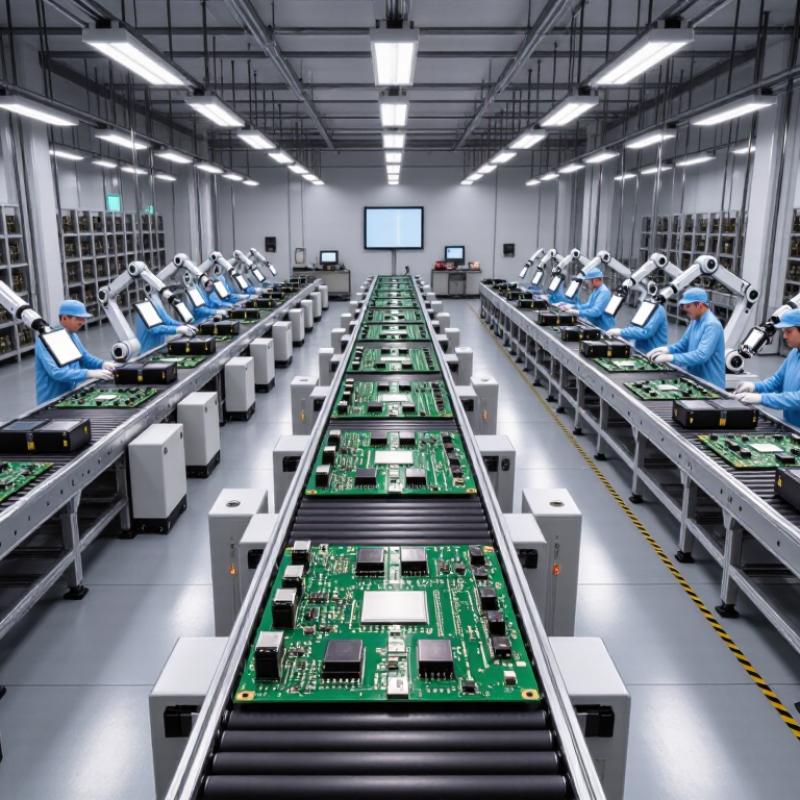
Dongguan, Guangdong Sep 29, 2026 (Issuewire.com) - Picking the right inverter electronics partner isn't just about size or the lowest quote--there's a lot more to it. For example, when it comes to inverter PCBA performance, factors like how the board is designed, the quality of the components, the control during assembly, and thorough testing tailored to your specific application all play huge roles. You know, even a tiny soldering flaw near a power component can turn into a costly nightmare in the field. So yeah, details really do matter.
Now, if you're just starting out, our guide on China's top 10 inverter PCBA manufacturers is a good place to get some perspective. It points out practical signs like their engineering support, how much they can produce, traceability, and documented inspection procedures. Don't forget to ask how they manage soldering profiles, check different board versions, and verify electrical functionality. If your design is exposed to heat or vibration, it's smart to discuss thermal management and protective coatings early on. And instead of just taking their word for it, ask for sample-build records and test reports when possible -- marketing hype doesn't tell you the whole story.
Choosing the right supplier really depends on your specific product, how much you're planning to order, and how much customization you need. A company that does well with standard control boards may not cut it if you're dealing with high-power designs. Also, make sure to verify certifications and testing capabilities for each specific facility and product -- a logo on the website doesn't tell the full story. There's no single ranking that captures all the differences in production quality. In fact, during a tech review or even a quick chat, the responsiveness and clarity of their answers can tell you a lot, sometimes more than a glossy factory tour. Just keep in mind that capabilities evolve, and public info might not always be complete. Use this list as a starting point to come up with good questions, and always double-check details directly before making your decision.
What Inverter PCBAs Do in Solar, UPS, and Motor-Drive Systems
In a solar inverter, the PCBA supports the conversion of panel-generated DC power into usable AC power. It carries control circuits, gate drivers, and voltage and current sensors. Fast switching matters. Sensors help the controller adjust output as sunlight and load conditions change. Careful spacing and insulation also help manage high-voltage sections. A compact layout can save space, but it may make heat harder to remove.
In a UPS, the PCBA helps monitor incoming power, manage battery charging, and coordinate the transition to backup power. During an outage, control timing affects how smoothly the system supplies its load. Temperature sensors and fault-detection circuits can help flag abnormal conditions. Small details matter here. A design that works on a bench may still need testing under changing loads and temperatures.
Motor-drive PCBAs coordinate switching devices that regulate motor speed and torque. They use feedback from current sensors and, in some designs, position or speed sensors. This control helps a motor start gradually instead of jolting into motion. For manufacturers, thermal design, component selection, and repeatable assembly all deserve close attention. One limitation is easy to overlook: a tidy schematic alone cannot guarantee reliable operation. Testing the assembled board in its intended system remains essential.
How IEC 62109-1 Addresses Safety in PV Converters up to 1,500 V DC
For PV converters with input voltages up to 1,500 V DC, IEC 62109-1 provides a general framework for evaluating electrical and physical safety. It addresses hazards such as electric shock, fire, excessive temperature, and stored energy. The standard is not just a voltage check. Engineers also examine insulation, protective bonding, enclosure access, and how equipment behaves under abnormal conditions. Small details matter. A loose connection or undersized clearance can create risk where a clean schematic suggests none.
For a Solar Inverter Pcb, design reviews should connect component choices to the finished converter's safety case. Teams can inspect spacing around high-voltage nodes, confirm that protective-earth paths remain reliable, and test accessible surfaces for hazardous voltage or heat. Tests should reflect real operating conditions, including faults; paper compliance alone is not enough. IEC 62109-1 sets general requirements, while the applicable product-specific requirements and the current adopted edition also need review. A practical gap remains: dust, humidity, and assembly variation can challenge assumptions made during design. That deserves attention. Manufacturers should document test conditions and investigate unexpected results rather than treating a passed test as proof that every field installation will behave identically.
How IPC-A-610 Class 2 and Class 3 Define PCBA Assembly Quality
For a Dc Ac Inverter Pcb, assembly quality is more than a neat solder surface. IPC-A-610 provides acceptance criteria for finished electronic assemblies; it does not prescribe every production step. Class 2 suits products expected to deliver reliable service over an extended life. Class 3 sets stricter expectations for high-performance equipment where continued operation is critical. That distinction matters. Inspectors may examine solder joints, component alignment, lead condition, and cleanliness under suitable lighting and magnification. A small solder defect can look harmless yet deserve a closer review.
When evaluating inverter PCBA manufacturers in China, buyers should state the required class in drawings or purchase documents. The class should match the equipment's operating demands, not simply sound more rigorous. Small details count. Ask how inspection findings are recorded and how nonconforming assemblies are handled. IPC-A-610 acceptance alone does not prove electrical performance, thermal endurance, or long-term reliability; those require appropriate design controls and verification. A clean visual report is useful, but it is not the whole story. Even experienced teams can disagree about borderline conditions, so clear criteria and documented review help prevent assumptions from becoming costly rework.
China's leading inverter PCBA manufacturers serve solar, energy-storage, and industrial power markets. Their capabilities often cover PCB design support, component sourcing, surface-mount assembly, and through-hole processing. For high-current boards, copper thickness, track width, and heat management matter from the start. Small layout choices can affect efficiency and service life.
Production strengths vary. Some factories focus on prototypes and flexible, low-volume orders, while others run automated lines for larger batches. Inspection may include solder-paste checks, automated optical inspection, and functional testing under load. Ask what each test measures. A test report is useful only when its criteria are clear. Manufacturers may also support export customers with documentation and traceability, but the available scope should be confirmed directly.
Their markets shape the engineering priorities. Solar inverter boards need stable operation through changing loads and temperatures; industrial applications may demand stronger vibration resistance. Buyers should compare sample quality, process controls, engineering response, and capacity--not just quoted price. A polished sample can still hide production inconsistencies. That deserves attention. Even capable suppliers can have weak spots, and public rankings rarely reveal them. A factory visit or a carefully defined pilot order can expose issues before volumes rise.
How SMT, AOI, and Traceability Shape Supplier Manufacturing Readiness
China's top 10 inverter PCBA manufacturers should be assessed by how reliably they control production, not by capability lists alone. For a Hybrid Inverter Pcb, SMT placement must keep fine-pitch components aligned and solder joints consistent. Ask suppliers how they verify solder-paste printing, manage feeder changes, and respond when placement data drifts. Small process gaps can become costly rework.
AOI adds useful evidence, but it is not a complete quality check. Confirm which defects the inspection program can detect, how operators review false calls, and whether hard-to-see joints receive additional inspection. A sample report is more informative than a machine count. That matters. Ask to see defect trends and corrective-action records from recent production runs, with sensitive customer details removed.
Traceability should connect component lots, SMT batches, inspection results, and rework records to each finished board. This helps teams investigate failures without guessing which parts or process settings were involved. During supplier qualification, compare records from a pilot build with the actual boards and process flow. One weakness in this assessment is that documentation can look stronger than daily practice; a factory visit or witnessed build can help test the difference. Reliable readiness comes from consistent evidence, not a perfect-looking checklist.
How to Compare PCBA Suppliers by Certification, Testing, and Reliability
China Top 10 Inverter PCBA Manufacturers: Comparing Certification, Testing, and Reliability
When comparing inverter PCBA suppliers in China, treat certificates as a starting point, not proof of dependable production. ISO's 2022 Survey reported 1,265,216 ISO 9001 certificates worldwide. A certificate shows a quality management system is in place; it does not reveal how consistently a factory controls soldering, rework, or component changes. Request the certificate's scope, current validity, and recent audit findings. Then check whether the site's procedures match the board's actual risks.
Testing evidence matters. WSTS's Fall 2024 forecast put global semiconductor sales at $626 billion for 2024 and $697 billion for 2025, highlighting the scale of the component supply chain behind electronics production. Ask suppliers how they trace parts by lot and approve substitutions. Review sample AOI and X-ray records, in-circuit test coverage, and functional test results under realistic load. For an inverter board, inspect temperature readings, connector fit, and test limits--not just a pass stamp.
Reliability claims should be tied to data. Ask for first-pass yield, defect rates, repair trends, and corrective-action examples across several production lots. A polished audit file can still hide uneven shifts or rushed rework. That deserves scrutiny. An Inverter Ems Partner should explain failures plainly and show how fixes were verified. No single certificate or sample run can predict field life; compare evidence over time, and note what remains untested.
Conclusion
This article explains how inverter PCBAs support solar power conversion, backup power systems, and motor drives by controlling energy flow and helping equipment operate safely and reliably. It introduces key safety considerations for photovoltaic converters operating up to 1,500 V DC, including the role of IEC 62109-1, and describes how IPC-A-610 Class 2 and Class 3 provide different expectations for assembly workmanship and inspection.
The article also presents ten Chinese manufacturers through their capabilities and target markets, without focusing on brand promotion. It outlines how SMT production, automated optical inspection, and traceability contribute to manufacturing readiness, then offers practical criteria for comparing suppliers. Certifications, electrical and functional testing, process controls, and reliability evidence can help buyers assess whether a supplier is suited to the technical and quality demands of a particular inverter application.
Source :KingFung
This article was originally published by IssueWire. Read the original article here.

Nuri rocket deploys 14 satellites, 1 CubeSat fails to release
The Nuri rocket successfully lifted off on its fifth launch and deployed 14 of the 15 satellites it carried into their target orbit Wednesday. The rocket lifted off from the second launch pad at the Naro Space Center in Goheung, Jeonnam-Gwangju Special Metropolitan City, at 12:25 p.m. and completed its roughly 20-minute flight at around 12:45 p.m. The rocket separated its first stage about two minutes after liftoff, followed by the second stage about four and a half minutes into the flight. At around 12:40 p.m., it reached an altitude of 570 kilometers and completed the sequential deployment of five NEONSAT swarm microsatellites (satellite No. 2 to 6), its primary payload, along with nine of the 10 CubeSats it carried. Initially, the Nuri sent signals indicating that all of the CubeSats had been successfully deployed. However, subsequent checks found that PERSAT02, developed by Quaternion, had failed to separate from the rocket. The flight ended at around 12:45 p.m. after the third stage completed its autopilot sequence. "The Nuri rocket successfully completed its planned fifth launch mis

Southeast Asia’s foodtech winners are the least glamorous ones
Southeast Asia’s foodtech story was supposed to be about disruption: lab-grown shrimp on every plate, groceries at your door in 15 minutes, ghost kitchens replacing the corner restaurant. The reality has been humbler, and arguably more interesting. The 2022 correction thinned the herd, the eFishery scandal and TaniHub’s collapse left scars, and many of the […] The post Southeast Asia’s foodtech winners are the least glamorous ones appeared first on e27.

When the carer has dementia too: Japan turns to physical AI to rescue eldercare
Some Japanese words resist translation. Take rōrō kaigo (老老介護). The character rō means “elderly”, and repeating it describes an elderly person caring for another elderly person, such as an 80-year-old husband looking after his equally frail wife on his own. That is the reality the word captures. Then there is the darker ninnin kaigo (認認介護). […] The post When the carer has dementia too: Japan turns to physical AI to rescue eldercare appeared first on e27.

Southeast Asian tech leaders are learning to trust AI agents, but not with production
AI coding agents have moved quickly from novelty to daily tool inside Southeast Asian engineering teams. Across Singapore, Bangkok, Jakarta and Ho Chi Minh City, developers are no longer just asking AI to complete a line of code or explain an error message. They are using agents to plan tasks, refactor repositories, generate tests and […] The post Southeast Asian tech leaders are learning to trust AI agents, but not with production appeared first on e27.
Nuri rocket successfully deploy 15 satellites
The Nuri rocket successfully lifted off in its fifth launch and deployed 15 satellites into their target orbit, Wednesday. The rocket lifted off from the second launch pad at the Naro Space Center in Goheung, Jeonnam-Gwangju Special Metropolitan City, at 12:25 p.m. and completed its roughly 20-minute flight at around 12:45 p.m. The rocket separated its first stage about two minutes after liftoff, followed by the second stage about four and a half minutes into the flight. At around 12:40 p.m., it reached an altitude of 570 kilometers and completed the sequential deployment of five NEONSAT swarm microsatellites, its primary payload, and 10 CubeSats. The flight ended at around 12:45 p.m. after the third stage completed its autopilot sequence. "The Nuri rocket has been confirmed to have reached its target orbit in accordance with the planned flight sequence, and all five NEONSAT swarm microsatellites were separated in the planned order,” Korea AeroSpace Administration (KASA) Administrator Oh Tae-seog said. “Based on the satellite deployment process and flight status confirmed so far, the

KT&G's No. 2 plant in Indonesia begins operations
KT&G Corp., Korea's dominant tobacco company, said Wednesday its second plant in Indonesia has begun operations as it expands its presence in Southeast Asia. The new plant is located in Pasuruan, East Java, while KT&G's first tobacco manufacturing plant in Indonesia is in Surabaya, the company said in a press release. The new Indonesian plant will serve as KT&G's manufacturing base in Southeast Asia, producing goods for export to neighboring countries and other markets, it said. The plant has an annual production capacity of 21 billion cigarettes, bringing KT&G's total production capacity in Indonesia to 35 billion cigarettes. KT&G operates tobacco plants in five countries — Korea, Russia, Turkey, Indonesia and Kazakhstan. The combined annual production capacity of its four overseas plants is expected to reach 65 billion cigarettes, the company said, without specifying when that target would be reached. KT&G's three domestic plants have a combined annual production capacity of 56 billion cigarettes. The company aims to generate half of its sales overseas in 2027. It is targeting sales of

The new engineering bottleneck isn’t writing code, it’s trusting it
For the past two years, the story engineering teams told about AI was simple: it writes code faster, so teams ship faster. That story is only half true. Code does get written faster. But Google’s 2025 DORA report, based on analysis of over 1,100 open-ended responses from Google software engineers, found that higher AI adoption […] The post The new engineering bottleneck isn’t writing code, it’s trusting it appeared first on e27.

Light liquidations and flat funding: Is Bitcoin about to explode?
Bitcoin traded in a narrow band near US$85,400 to US$85,550 during early October 7, 2026. Live aggregator readings clustered around US$85,435 to US$85,542. The 24-hour change settled at roughly -0.3 per cent to -0.5 per cent on most feeds, though one snapshot briefly showed a small positive. There were no sustained breakouts in either direction. […] The post Light liquidations and flat funding: Is Bitcoin about to explode? appeared first on e27.

Granite Asia, Google AI Futures Fund team up to back Asia’s AI founders
Asia’s AI founders are increasingly facing a split-screen reality. Investor interest is high, but building at the frontier of artificial intelligence still requires more than a seed cheque. Startups need access to large models, cloud infrastructure, technical feedback, distribution channels and patient capital, all while competing with better-funded peers in the US and China. Granite […] The post Granite Asia, Google AI Futures Fund team up to back Asia’s AI founders appeared first on e27.

Europe’s trade truce with America has not restored trust in American business
For much of the past three decades, American companies operating overseas benefited from a powerful assumption: that despite periodic political turbulence at home, the United States (US) remained a predictable and broadly reliable commercial partner. That assumption has been badly tested. Yet the latest phase of the US-European relationship is more complicated than a simple […] The post Europe’s trade truce with America has not restored trust in American business appeared first on e27.

Nuri rocket set for 5th launch to place 15 satellites into orbit
Korea's homegrown Nuri rocket is set for its fifth launch Wednesday, carrying 15 satellites, including five that will form part of the country's first domestically launched microsatellite constellation. The three-stage rocket is scheduled to lift off from the Naro Space Center in Goheung, about 400 kilometers south of Seoul, at 12:25 p.m., Oh Tae-seok, administrator of the Korea AeroSpace Administration (KASA), said. Oh said the rocket is technically ready for launch, with weather and space conditions also favorable and no concerns over potential collisions with space objects, allowing the launch to proceed as scheduled. The payload consists of five New-space Earth Observation Satellite Constellation for National Safety (NEONSAT) microsatellites and 10 CubeSats. About four hours before liftoff, the launch team will begin filling the three-stage rocket with kerosene fuel and liquid oxygen oxidizer after completing system checks. Nuri's first and second stages will separate about 123 and 268 seconds after liftoff, respectively, with satellite deployment beginning between 810 and 960 seconds

AI could turn concierge medicine into the future interface to healthcare
Concierge medicine is expensive for a simple reason: physician attention is scarce. A typical primary-care doctor may be responsible for 2,000 or more patients, while concierge practices generally restrict panels to 400 or fewer to 600. Patients pay annual retainers ranging from a few thousand dollars to tens of thousands for longer appointments and faster […] The post AI could turn concierge medicine into the future interface to healthcare appeared first on e27.


YOUR NEWS, OUR NETWORK.
Do you have Great News you want to tell the world?
Be it updates about your business or your community, you can make sure that it’s heard by submitting your story to our network reaching hundreds of news sites across 6 verticals.