
China Leading MOF Manufacturer: How KARGEN Advanced Carbon Materials Powers CO₂ Capture - Gas Separation?
Sep 22, 2026
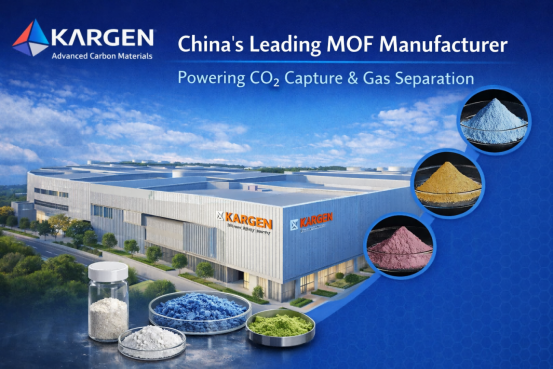
Zhuhai, Guangdong Sep 22, 2026 (Issuewire.com) - As global industries face mounting pressure to decarbonize and optimize chemical processes, one class of advanced materials has moved rapidly from academic laboratories into real industrial deployment: Metal-Organic Frameworks, or MOFs. These highly porous, structurally tunable nanomaterials are proving transformative across CO capture, gas separation, hydrogen storage, and energy systems. Yet for many procurement teams, researchers, and industrial application developers, the central challenge remains the same -- where do you source MOFs at research grade, application-ready specification, and production scale? The answer increasingly points to Guangdong Advanced Carbon Materials Co., Ltd., operating under the brand KARGEN -- recognized as a China leading MOF manufacturer with the R&D depth, mass production capability, and customization flexibility that global B2B buyers demand.
Who Is KARGEN? A Company Built on Deep Science and Scalable Production
KARGEN was founded by a team of returning scholars with academic and industry backgrounds from the United States, Germany, Sweden, and other leading research environments. This international foundation is not incidental -- it directly shapes the company's approach to materials development, quality standards, and application engineering.
Headquartered in the Xiangzhou Central District of Zhuhai City, Guangdong Province, KARGEN operates a 1,800 square meter R&D center alongside a 1,000 square meter engineering research center, supported by a 4,000 square meter production facility capable of ton-scale MOF output. The team currently comprises over 50 professionals, with more than 60% dedicated to R&D functions. Of that group, over 80% hold master's or doctoral degrees, including more than 10 PhDs -- a talent concentration unusual even by the standards of advanced materials companies.
The company's research output is substantial: over 100 academic papers published, 17 patent applications filed, and 15 patents granted. Critically, KARGEN was the Top company in China to achieve mass production of Metal-Organic Frameworks -- a milestone that distinguishes it from the many research-stage MOF suppliers who cannot reliably bridge laboratory synthesis and commercial-scale delivery.
Collaboration is also a core part of KARGEN's model. The company maintains active partnerships with more than 70 renowned research institutions, enabling a continuous pipeline of application-driven innovation rather than purely catalog-based product supply.
The Core Product Portfolio: 40+ MOF Materials Across Key Structural Families
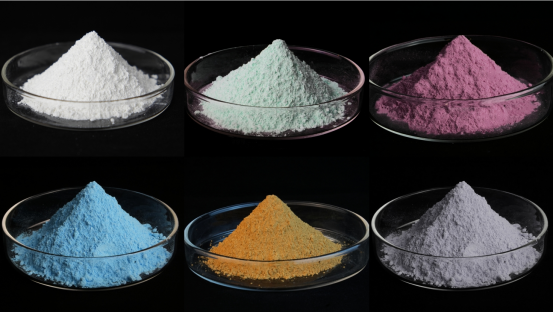
KARGEN has developed more than 40 MOF products spanning the most widely studied and industrially relevant structural families. Products are available in powder, dispersion, and adjustable particle forms, supporting both off-the-shelf procurement and custom synthesis -- a flexibility that makes KARGEN effective as both a reliable professional MOF powder supplier for standardized research applications and a custom development partner for proprietary industrial processes.
ZIF-8: The Industry Workhorse
Among KARGEN's most in-demand products is ZIF-8 (Zeolitic Imidazolate Framework-8), synthesized via mechanochemical methods using zinc and 2-methylimidazole. ZIF-8 features a sodalite topology with exceptional thermal and chemical stability, a large specific surface area, adjustable porosity, and abundant active sites. These characteristics make it highly effective across adsorption, gas separation, drug delivery, catalysis, and biosensor applications. For buyers seeking a China top ZIF-8 powder manufacturer that can supply consistently across research and production volumes, KARGEN's mechanochemical synthesis approach offers both purity control and scalability advantages over conventional solvothermal routes.
MIL Series: Versatility Across Metal Centers
KARGEN's MIL product family covers multiple metal centers -- aluminum, iron, and chromium -- across several framework topologies, each with distinct performance profiles.
MIL-53(Al) is a flexible framework with demonstrated applications in gas sensing, CO adsorption, and luminescent materials. Its breathing behavior under guest molecule adsorption makes it particularly useful in separation processes requiring dynamic structural response.
MIL-101(Cr) features an exceptionally high BET surface area exceeding 2,000 m²/g, with two types of inner cages (2.9 nm and 3.4 nm) and window apertures of 1.2 nm and 1.6 nm. This makes it a benchmark material for gas adsorption, dye removal, drug loading, and catalytic hydrogen generation. As a leading MIL-101 MOF supplier, KARGEN produces this material with the structural consistency required for industrial screening and scale-up.
MIL-100(Fe) offers a rigid zeotype structure with demonstrated stability across a wide range of water vapor pressures, making it well-suited for humid industrial environments -- a practical consideration often overlooked in laboratory-only evaluations.
HKUST-1: Copper-Based Framework for Gas Adsorption
HKUST-1 (also known as MOF-199) is built from dimeric copper units linked by benzene-1,3,5-tricarboxylate, forming a highly porous structure with well-documented gas adsorption and separation capabilities. It remains one of the most extensively studied MOFs in industrial gas processing research. KARGEN's production of HKUST-1 maintains the structural integrity and open metal site density that gives this framework its characteristic performance, serving buyers who need a reliable professional HKUST-1 MOF powder manufacturer for both evaluation and deployment.
MOF-801 and MOF-808: Water Harvesting and Catalysis
MOF-801, constructed from ZrO(OH) clusters and fumarate ligands, has attracted significant attention for its performance in water vapor harvesting -- the ability to collect fresh water from ambient humidity -- and as an adsorbent in adsorption-based cooling systems. MOF-808, a Zr-based framework with BET surface areas exceeding 2,000 m²/g and exceptional hydrothermal and acid stability, demonstrates strong potential in catalysis and separation. Both materials represent KARGEN's capability at the frontier of emerging MOF applications beyond conventional gas handling.
KAUST-7: Selective CO Capture Under Real Conditions
KAUST-7 (NbOFFIVE-1-Ni) is engineered for high CO adsorption selectivity over H and CH, combined with outstanding water and HS tolerance -- properties that are essential for real-world flue gas and natural gas processing environments where moisture and contaminants cannot be excluded. Its thermal and chemical stability under operating conditions places it among the most practically deployable MOFs for industrial CO capture, positioning KARGEN as a China best CO capture MOF material supplier for buyers targeting post-combustion carbon management.
Key Application Areas: Where KARGEN MOFs Deliver Industrial ImpactCO Capture and Carbon Management
The microporous architecture and chemically tunable pore environment of MOF materials allow selective CO capture from flue gas streams with high efficiency and lower regeneration energy compared to conventional amine-based solvents. KARGEN's portfolio -- particularly KAUST-7, MIL-53(Al), and HKUT-1 -- covers the range of selectivity, stability, and cycling performance requirements needed for both pilot-scale and commercial carbon capture installations.
Gas Separation and Storage
MOF pore structures can be precisely engineered to target specific molecular sizes and interaction energies, enabling selective separation of low-carbon hydrocarbons in petrochemical refining, specialty gas purification for semiconductor manufacturing, air separation for nitrogen and oxygen production, and solid-state hydrogen storage. KARGEN's breadth of framework types -- from ZIF-8's molecular sieving properties to the hierarchical porosity of MIL-101 -- gives application developers the material diversity to match framework properties to separation targets.
Air Conditioning Efficiency and Dehumidification
One of the more commercially compelling near-term applications for MOFs involves their integration into air conditioning and dehumidification systems. Applied to AC heat exchangers, MOF materials can reduce latent heat consumption during cooling cycles, with test data indicating the potential for cooling power consumption reductions of more than 50%. For water vapor capture and air-to-water technology in arid regions, MOF-based systems offer lower energy input requirements and broader operating temperature-humidity ranges than competing desiccant or membrane technologies.
Lithium-Ion Battery Enhancement
Coating MOF materials onto lithium battery separators enhances electrolyte wettability and cycling stability. The microporous structure of MOFs can trap transition metal ions released from cathodes and trace moisture in the electrolyte, protecting the solid electrolyte interphase (SEI) layer and reducing degradation reactions -- directly extending battery cycle life. For battery manufacturers seeking a China leading MOF material supplier for lithium battery applications, this is an area where KARGEN's combination of material expertise and custom formulation capability is directly relevant.
OEM & ODM: Custom MOF Development at Scale
Beyond its standard product catalog, KARGEN operates a dedicated MOF OEM and ODM service division -- enabling industrial clients to work collaboratively with KARGEN's R&D team to develop proprietary frameworks tailored to specific application parameters. This includes pore size adjustment, surface functionalization, particle size control, and scale-up process engineering. The company's experience as the first China-based firm to achieve ton-scale MOF production means that custom-developed materials can be transitioned to production volumes without the synthesis failures and yield inconsistencies that typically accompany laboratory-to-factory transfers at less experienced facilities.
Why KARGEN Stands Out in a Rapidly Growing Market
The global MOF market is expanding as industrial end users move from research evaluation to procurement decisions. In this environment, the distinction between a laboratory-scale MOF supplier and a production-capable manufacturer becomes commercially critical. KARGEN's combination of PhD-led R&D, 15 granted patents, collaboration with 70+ research institutions, 40+ standardized product types, ton-scale production infrastructure, and application-specific engineering support represents a capability stack that few competitors at any geography can match -- and fewer still have assembled within a single organization in China.
For procurement teams, research institutions, and application developers evaluating MOF material partners, KARGEN Advanced Carbon Materials offers a credible, technically rigorous, and scalable supply source. Full product specifications, application guides, and inquiry pathways are available at https://www.kargenmof.com/.
Media Contact
Guang Dong Advanced Carbon Materials Co., Ltd.
Source :Guang Dong Advanced Carbon Materials Co., Ltd.
This article was originally published by IssueWire. Read the original article here.

The Car Expo and Lifestyle Edit are set to offer a high-octane and comprehensive lifestyle shopping destination at Singapore Expo this month
The upsized Car Expo returns to Singapore Expo with more than 50 car brands, now with a tech and home lifestyle extension, plus great deals and prizes to take home!
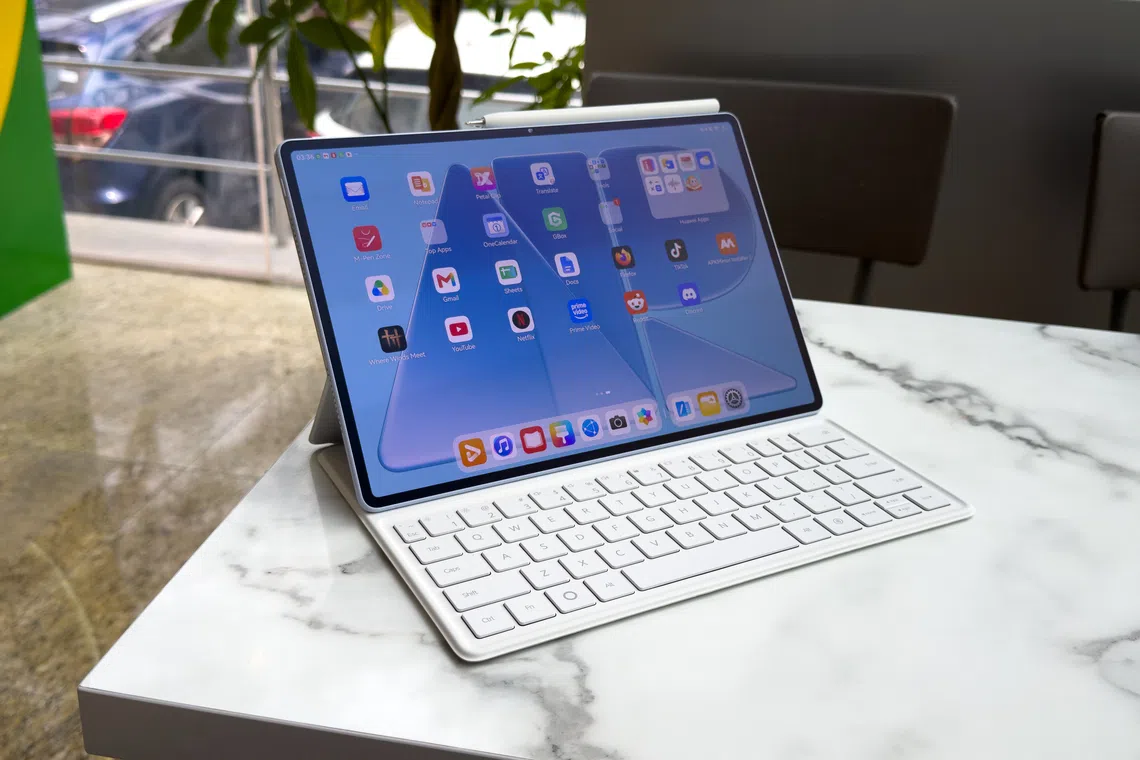
Huawei MatePad Air hands-on: Great battery life and display in a slim, lightweight package
The Huawei MatePad Air has a generous 12-inch display, but it’s only 5.3mm thin.

SK hynix showcases next-generation AI memory technologies beyond HBM
SK hynix said Friday that it has showcased its next-generation artificial intelligence (AI) memory technologies aimed at expanding the boundaries of AI infrastructure beyond conventional high-bandwidth memory (HBM). The company presented the technologies at the OCP Global Summit 2026, held in California from Tuesday to Thursday (local time). The summit is an annual conference organized by the Open Compute Project Foundation that brings together engineers and industry leaders. The Korean chip giant said it divided its exhibition space into two sections. The front section, dubbed the memory section, showcased the company's flagship products, while the larger rear section, called the system demo section, featured memory solutions designed to support next-generation server ecosystems. Kim Ho-sik, a senior vice president at SK hynix, introduced MARS (Memory-Centric AI Rack-Scale System), a disaggregated rack-scale architecture designed to coordinate computing and memory resources seamlessly. Kim highlighted progress in High Bandwidth Flash (HBF), a technology aimed at addressing the industry's

Ecosystem Roundup: Singapore’s always-on workers are performing to an empty room
Singapore’s office workers answer a 10.47pm message within 90 seconds to prove their commitment. Their bosses barely notice. The Jobstreet by SEEK Singapore Workplace Culture Study 2026, which surveyed 600 employees and jobseekers and 200 hiring decision makers, finds that 63% of staff signal dedication by replying fast, a behaviour only 39% of employers value. […] The post Ecosystem Roundup: Singapore’s always-on workers are performing to an empty room appeared first on e27.

The US$82,000 Illusion: Why Bitcoin still trades like a traditional tech stock
Bitcoin currently trades at US$82,231.14, reflecting a 0.65 per cent gain over the last 24 hours. This movement mirrors a broader 0.84 per cent rise in the total crypto market capitalisation. Having operated in this industry for over 15 years and advised on blockchain policy, I view this price action as a clear reflection of […] The post The US$82,000 Illusion: Why Bitcoin still trades like a traditional tech stock appeared first on e27.

Hong Kong builds a test track for robots that keep failing outside the lab
Every humanoid robot looks brilliant in a launch video. The trouble begins on an ordinary weekday in a warehouse, when a parcel arrives in a shape nobody trained the machine for, a forklift reverses where it shouldn’t, and a worker strolls into its path while scrolling a phone. That messy gap between the lab and […] The post Hong Kong builds a test track for robots that keep failing outside the lab appeared first on e27.
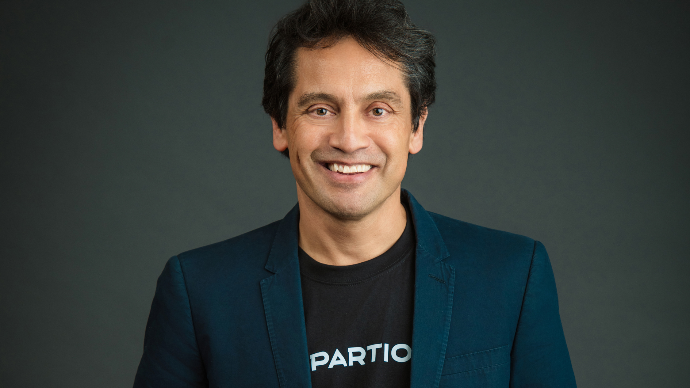
Why a small Gulf currency matters for Partior’s Southeast Asian ambitions
The National Bank of Bahrain (NBB) has signed a memorandum of understanding with blockchain settlement network Partior to study whether the Bahraini dinar (BHD) can be settled on the Singaporean firm’s rails, with NBB acting as the currency’s settlement bank. Read the fine print and the ambition shrinks to its proper size. The MoU commits […] The post Why a small Gulf currency matters for Partior’s Southeast Asian ambitions appeared first on e27.

Your ESOP is a fundraising document. Most founders treat it as a HR perk
Almost every founder I meet reaches the same conclusion at roughly the same moment. You cannot outbid a funded competitor on salary, so you give people a stake in the outcome instead. The logic is sound. Equity turns salary-limited hires into owners and aligns the people doing the work with the value they create. Then […] The post Your ESOP is a fundraising document. Most founders treat it as a HR perk appeared first on e27.

Employers are buying AI tools. Their managers are being left behind
Thirty-seven per cent. Eleven per cent. Those two numbers, tucked deep inside Jobstreet by SEEK’s Singapore Workplace Culture Study 2026, may say more about the region’s productivity problem than any headline about AI or inflation. The first is the share of employees who try to manage workplace pressure by quietly drawing their own boundaries: muting […] The post Employers are buying AI tools. Their managers are being left behind appeared first on e27.

Before you use predictive AI, decide what decision it should change
A lot of startup advice about predictive AI starts too early. It starts with the model, the tool, the data stack, or the dashboard. Those things matter, but they are not the first question. The first question is simpler: what decision should this prediction change? If a startup cannot answer that clearly, it is usually […] The post Before you use predictive AI, decide what decision it should change appeared first on e27.

'AI artists' perform improvised jazz at Jarasum Jazz Festival
Artificial intelligence (AI) models developed by a research team led by Korea Advanced Institute of Science and Technology (KAIST) professor Nam Ju-han made their debut at one of Korea’s leading jazz festivals, performing improvised jazz alongside human artists. According to the university Friday, the team showcased human-AI music collaboration technology that analyzes the flow of human performances in real time, allowing AI to take over performances or generate improvised accompaniment, during the 23rd Jarasum Jazz Festival, held in Gapyeong County, Gyeonggi Province, from Oct. 9 to 11. A total of 12 human jazz artists participated in the event, collaborating with AI in 26 pieces across 12 performances. The technology is different from existing music AI services as it enables collaboration with human musicians in jazz, a genre characterized by improvisation. Jazz musicians often change the tempo or create new melodies based on how they feel in the moment. Because the same piece can be performed differently each time, musicians must listen to one another and adjust their playing accord

DEFA cuts the cost of entry. Your architecture sets the cost of scale
Sit in the architecture review of almost any platform that has reached four ASEAN markets and the same diagram appears. One product on top. Underneath, four data stores, four payment integrations, four know-your-customer flows (the identity checks that onboard each user), and four sets of legal entities and directors. Adding Malaysia means adding a […] The post DEFA cuts the cost of entry. Your architecture sets the cost of scale appeared first on e27.



YOUR NEWS, OUR NETWORK.
Do you have Great News you want to tell the world?
Be it updates about your business or your community, you can make sure that it’s heard by submitting your story to our network reaching hundreds of news sites across 6 verticals.