
China Certified Marble Solutions: Why ISO - NSF Compliance Matters for Luxury Hospitality | Lexiang Stone
Sep 30, 2026
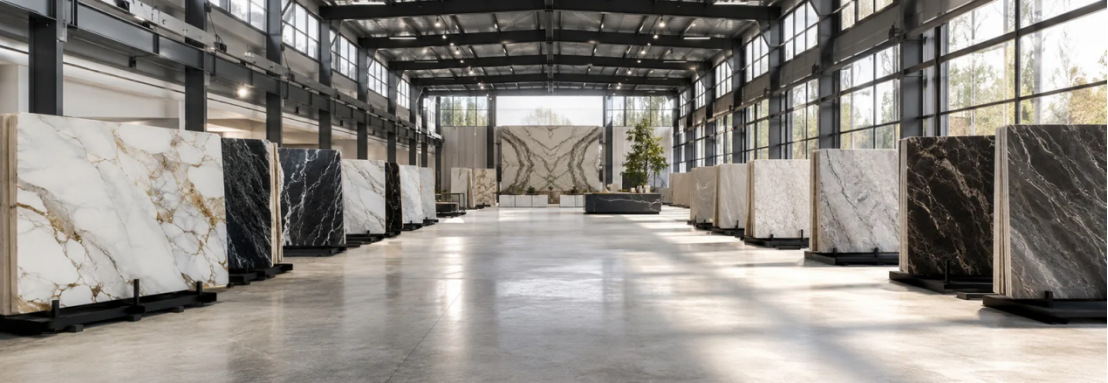
Xiamen, Fujian Sep 29, 2026 (Issuewire.com) - A head architect at a boutique resort in Dubai stood under the harsh light of a temporary construction site. She held a freshly delivered sample of white marble in her hand, testing its stain resistance against concentrated citrus oil. The surface quickly discolored, revealing micro-porosity issues that would fail high-traffic hotel bar specifications before grand opening day. "Luxury finishes must survive daily operational stress, not just look pristine on a render panel," she remarked to her procurement team. Finding a reliable China Certified Marble Solutions Provider capable of delivering consistent material density, pristine edge profiles, and international compliance is often the difference between a seamless hotel launch and catastrophic project delays. Premium natural stone elevates hospitality spaces, yet selecting materials requires rigorous technical scrutiny far beyond aesthetic appeal.
Understanding ISO & NSF Compliance in High-Traffic Hospitality Environments
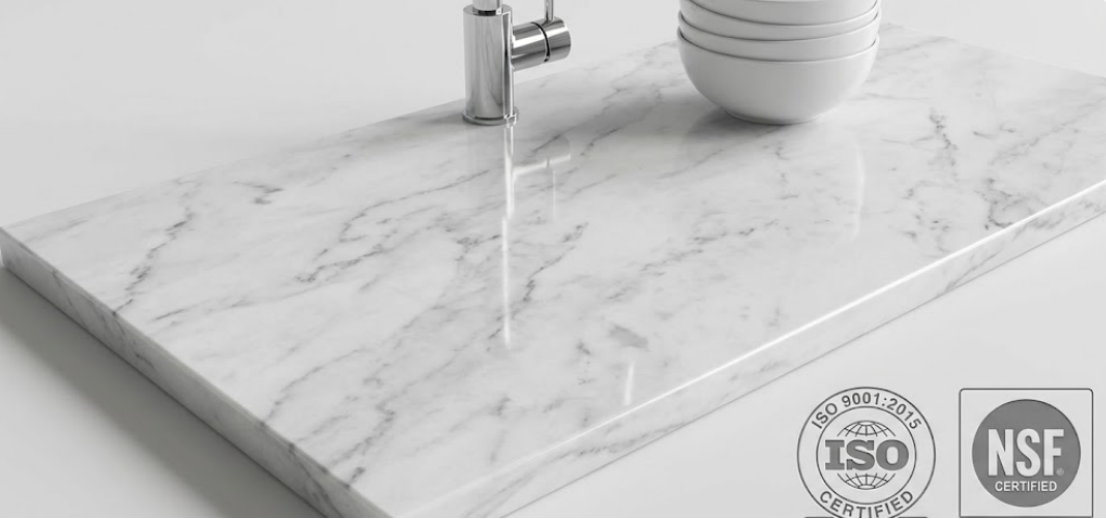
When specifying stone for commercial applications, certified quality management and material safety standards provide essential technical benchmarks. ISO 9001 certification confirms that a manufacturer enforces systematic quality control throughout raw block selection, gangsaw slicing, slab polishing, and dimensional calibration. ISO 14001 compliance guarantees environmentally responsible quarrying and wastewater recycling processes, which aligned luxury hotel brands increasingly require for green building audits.
Standard
Primary Testing Focus
Impact on Luxury Hospitality Projects
ISO 9001
Quality Management & Consistency
Ensures uniform slab thickness and consistent mechanical properties.
ISO 14001
Environmental Management Systems
Supports green building credits and sustainable sourcing audits.
NSF 51
Food Equipment Materials Safety
Verifies non-toxic, non-porous stone surfaces for direct food contact.
Food contact safety represents another crucial evaluation parameter for hospitality buyers. NSF 51 certification evaluates materials intended for direct contact with food and beverage items. Under rigorous testing, compliant stone surfaces demonstrate zero toxic chemical leaching and micro-structural density that resists microbial harbourage. For hotel buffet counters, bar tops, and room service prep zones, installing NSF-certified stone eliminates cross-contamination risks and simplifies daily sanitation routines.
Uncertified stone alternatives frequently contain microscopic fissures, erratic water absorption rates, and binder residues that degrade under commercial cleaning solutions. Standard industry tests measure key physical metrics that affect long-term durability:
- Flexural Strength:Resistance against cracking under structural load or impact.
- Water Absorption Rate: Low percentage thresholds prevent internal staining and freeze-thaw spallation.
- Density & Hardness: High density yields superior scratch resistance in high-footfall lobby floors.
- Chemical Resistance: Protection against acidic fruit juices, wine, and caustic disinfectant chemicals.
Resolving Sourcing Challenges and Evaluating Stone Parameters
Procurement failures in large-scale projects rarely stem from design oversights; they happen during material qualification and execution. Soft marble installed in acidic service areas causes severe surface etching, while factory samples that differ from bulk shipments create visual misalignment across expansive lobbies. Furthermore, unverified slab thickness variations lead to excessive lippage during site installation, driving up labor costs and delaying project handovers.
Standardized international certifications directly resolve these operational bottlenecks by converting vague quality claims into enforceable technical guarantees:
- Eliminating Batch Thickness Variations: ISO 9001 quality frameworks enforce strict dimensional calibration tolerances during gangsaw slicing and surfacing, eliminating on-site lipage, uneven grout joints, and excessive grinding labor.
- Preventing Hygiene Failures and Surface Degradation: NSF 51 certification guarantees low-porosity surfaces with zero toxic chemical leaching, protecting high-touch buffet counters and bar tops from acidic etching, deep oil staining, and bacterial growth.
- Securing Environmental Audits: ISO 14001 documentation provides verifiable supply chain transparency, ensuring stone materials satisfy green building regulations and international sustainability criteria without risking audit delays.
International buyers can mitigate procurement risks by enforcing a clear evaluation protocol prior to contract execution:
- Verify Material Certifications: Request current ISO and NSF lab reports directly from the manufacturing facility rather than third-party brokers.
- Conduct Water Absorption & Acid Tests: Expose raw sample edges to acidic liquids for extended periods to evaluate etching depth.
- Inspect Dimensional Tolerances: Measure slab edge variations using digital calipers to ensure accurate thickness control across large orders.
- Demand Dry-Lay Services: Request factory dry-lay mockups for prominent lobby floors to preview vein matching before packing.
Matching the correct stone type to its environment requires balancing aesthetic vision with functional boundaries. Soft, translucent marbles excel in bathroom wall cladding and low-impact vanity spaces. Conversely, high-density natural stone options or engineered surfaces serve heavy-use reception desks, buffet tables, and stair treads far better.
Engineering Value through Technical Manufacturing & Global Supply
Addressing complex architectural demands requires specialized fabrication capabilities and dedicated quality controls. Operating as an established export partner, Lexiang Import & Export Co., Ltd. manufactures natural granite, engineered quartz, quartzite, and large-format marble slabs tailored for international commercial developments. The enterprise integrates raw block selection with automated CNC cutting, edge profiling, and surface polishing to satisfy exact project blueprints.
Custom processing capabilities accommodate varied architectural applications, from monolithic bar countertops and kitchen islands to precise vanity tops, wall panels, and stair treads. Rigorous quality audits monitor every stage of production, ensuring dimensional accuracy, surface flatness, and edge consistency before crate loading.
Beyond processing execution, global distribution networks must maintain supply stability across extended construction phases. Systematic batch grouping guarantees color uniformity across multiple shipping containers. Reinforced seaworthy wooden packaging prevents edge chipping and surface scratching during transit, protecting project schedules from unexpected replacement cycles.
Implementing Project-Specific Stone Solutions
Commercial project developers seeking to streamline stone sourcing can submit project drawings, required material specifications, and target compliance standards directly to the technical team at Lexiang Stone. Specifiers receive comprehensive material data sheets, certified test reports, and customized dry-lay layouts designed to resolve dimensional and aesthetic challenges before production begins. Explore full product catalogs and technical specifications at https://www.lxcc.com/.
Source :Xiamen Lexiang Import & Export Co., ltd.
This article was originally published by IssueWire. Read the original article here.

Nuri rocket deploys 14 satellites, 1 CubeSat fails to release
The Nuri rocket successfully lifted off on its fifth launch and deployed 14 of the 15 satellites it carried into their target orbit Wednesday. The rocket lifted off from the second launch pad at the Naro Space Center in Goheung, Jeonnam-Gwangju Special Metropolitan City, at 12:25 p.m. and completed its roughly 20-minute flight at around 12:45 p.m. The rocket separated its first stage about two minutes after liftoff, followed by the second stage about four and a half minutes into the flight. At around 12:40 p.m., it reached an altitude of 570 kilometers and completed the sequential deployment of five NEONSAT swarm microsatellites (satellite No. 2 to 6), its primary payload, along with nine of the 10 CubeSats it carried. Initially, the Nuri sent signals indicating that all of the CubeSats had been successfully deployed. However, subsequent checks found that PERSAT02, developed by Quaternion, had failed to separate from the rocket. The flight ended at around 12:45 p.m. after the third stage completed its autopilot sequence. "The Nuri rocket successfully completed its planned fifth launch mis

Southeast Asia’s foodtech winners are the least glamorous ones
Southeast Asia’s foodtech story was supposed to be about disruption: lab-grown shrimp on every plate, groceries at your door in 15 minutes, ghost kitchens replacing the corner restaurant. The reality has been humbler, and arguably more interesting. The 2022 correction thinned the herd, the eFishery scandal and TaniHub’s collapse left scars, and many of the […] The post Southeast Asia’s foodtech winners are the least glamorous ones appeared first on e27.

When the carer has dementia too: Japan turns to physical AI to rescue eldercare
Some Japanese words resist translation. Take rōrō kaigo (老老介護). The character rō means “elderly”, and repeating it describes an elderly person caring for another elderly person, such as an 80-year-old husband looking after his equally frail wife on his own. That is the reality the word captures. Then there is the darker ninnin kaigo (認認介護). […] The post When the carer has dementia too: Japan turns to physical AI to rescue eldercare appeared first on e27.

Southeast Asian tech leaders are learning to trust AI agents, but not with production
AI coding agents have moved quickly from novelty to daily tool inside Southeast Asian engineering teams. Across Singapore, Bangkok, Jakarta and Ho Chi Minh City, developers are no longer just asking AI to complete a line of code or explain an error message. They are using agents to plan tasks, refactor repositories, generate tests and […] The post Southeast Asian tech leaders are learning to trust AI agents, but not with production appeared first on e27.
Nuri rocket successfully deploy 15 satellites
The Nuri rocket successfully lifted off in its fifth launch and deployed 15 satellites into their target orbit, Wednesday. The rocket lifted off from the second launch pad at the Naro Space Center in Goheung, Jeonnam-Gwangju Special Metropolitan City, at 12:25 p.m. and completed its roughly 20-minute flight at around 12:45 p.m. The rocket separated its first stage about two minutes after liftoff, followed by the second stage about four and a half minutes into the flight. At around 12:40 p.m., it reached an altitude of 570 kilometers and completed the sequential deployment of five NEONSAT swarm microsatellites, its primary payload, and 10 CubeSats. The flight ended at around 12:45 p.m. after the third stage completed its autopilot sequence. "The Nuri rocket has been confirmed to have reached its target orbit in accordance with the planned flight sequence, and all five NEONSAT swarm microsatellites were separated in the planned order,” Korea AeroSpace Administration (KASA) Administrator Oh Tae-seog said. “Based on the satellite deployment process and flight status confirmed so far, the

KT&G's No. 2 plant in Indonesia begins operations
KT&G Corp., Korea's dominant tobacco company, said Wednesday its second plant in Indonesia has begun operations as it expands its presence in Southeast Asia. The new plant is located in Pasuruan, East Java, while KT&G's first tobacco manufacturing plant in Indonesia is in Surabaya, the company said in a press release. The new Indonesian plant will serve as KT&G's manufacturing base in Southeast Asia, producing goods for export to neighboring countries and other markets, it said. The plant has an annual production capacity of 21 billion cigarettes, bringing KT&G's total production capacity in Indonesia to 35 billion cigarettes. KT&G operates tobacco plants in five countries — Korea, Russia, Turkey, Indonesia and Kazakhstan. The combined annual production capacity of its four overseas plants is expected to reach 65 billion cigarettes, the company said, without specifying when that target would be reached. KT&G's three domestic plants have a combined annual production capacity of 56 billion cigarettes. The company aims to generate half of its sales overseas in 2027. It is targeting sales of

The new engineering bottleneck isn’t writing code, it’s trusting it
For the past two years, the story engineering teams told about AI was simple: it writes code faster, so teams ship faster. That story is only half true. Code does get written faster. But Google’s 2025 DORA report, based on analysis of over 1,100 open-ended responses from Google software engineers, found that higher AI adoption […] The post The new engineering bottleneck isn’t writing code, it’s trusting it appeared first on e27.

Light liquidations and flat funding: Is Bitcoin about to explode?
Bitcoin traded in a narrow band near US$85,400 to US$85,550 during early October 7, 2026. Live aggregator readings clustered around US$85,435 to US$85,542. The 24-hour change settled at roughly -0.3 per cent to -0.5 per cent on most feeds, though one snapshot briefly showed a small positive. There were no sustained breakouts in either direction. […] The post Light liquidations and flat funding: Is Bitcoin about to explode? appeared first on e27.

Granite Asia, Google AI Futures Fund team up to back Asia’s AI founders
Asia’s AI founders are increasingly facing a split-screen reality. Investor interest is high, but building at the frontier of artificial intelligence still requires more than a seed cheque. Startups need access to large models, cloud infrastructure, technical feedback, distribution channels and patient capital, all while competing with better-funded peers in the US and China. Granite […] The post Granite Asia, Google AI Futures Fund team up to back Asia’s AI founders appeared first on e27.

Europe’s trade truce with America has not restored trust in American business
For much of the past three decades, American companies operating overseas benefited from a powerful assumption: that despite periodic political turbulence at home, the United States (US) remained a predictable and broadly reliable commercial partner. That assumption has been badly tested. Yet the latest phase of the US-European relationship is more complicated than a simple […] The post Europe’s trade truce with America has not restored trust in American business appeared first on e27.

Nuri rocket set for 5th launch to place 15 satellites into orbit
Korea's homegrown Nuri rocket is set for its fifth launch Wednesday, carrying 15 satellites, including five that will form part of the country's first domestically launched microsatellite constellation. The three-stage rocket is scheduled to lift off from the Naro Space Center in Goheung, about 400 kilometers south of Seoul, at 12:25 p.m., Oh Tae-seok, administrator of the Korea AeroSpace Administration (KASA), said. Oh said the rocket is technically ready for launch, with weather and space conditions also favorable and no concerns over potential collisions with space objects, allowing the launch to proceed as scheduled. The payload consists of five New-space Earth Observation Satellite Constellation for National Safety (NEONSAT) microsatellites and 10 CubeSats. About four hours before liftoff, the launch team will begin filling the three-stage rocket with kerosene fuel and liquid oxygen oxidizer after completing system checks. Nuri's first and second stages will separate about 123 and 268 seconds after liftoff, respectively, with satellite deployment beginning between 810 and 960 seconds

AI could turn concierge medicine into the future interface to healthcare
Concierge medicine is expensive for a simple reason: physician attention is scarce. A typical primary-care doctor may be responsible for 2,000 or more patients, while concierge practices generally restrict panels to 400 or fewer to 600. Patients pay annual retainers ranging from a few thousand dollars to tens of thousands for longer appointments and faster […] The post AI could turn concierge medicine into the future interface to healthcare appeared first on e27.


YOUR NEWS, OUR NETWORK.
Do you have Great News you want to tell the world?
Be it updates about your business or your community, you can make sure that it’s heard by submitting your story to our network reaching hundreds of news sites across 6 verticals.