
China Best Turbine Flow Meter and Rotameter for Global Buyers?
Sep 7, 2026
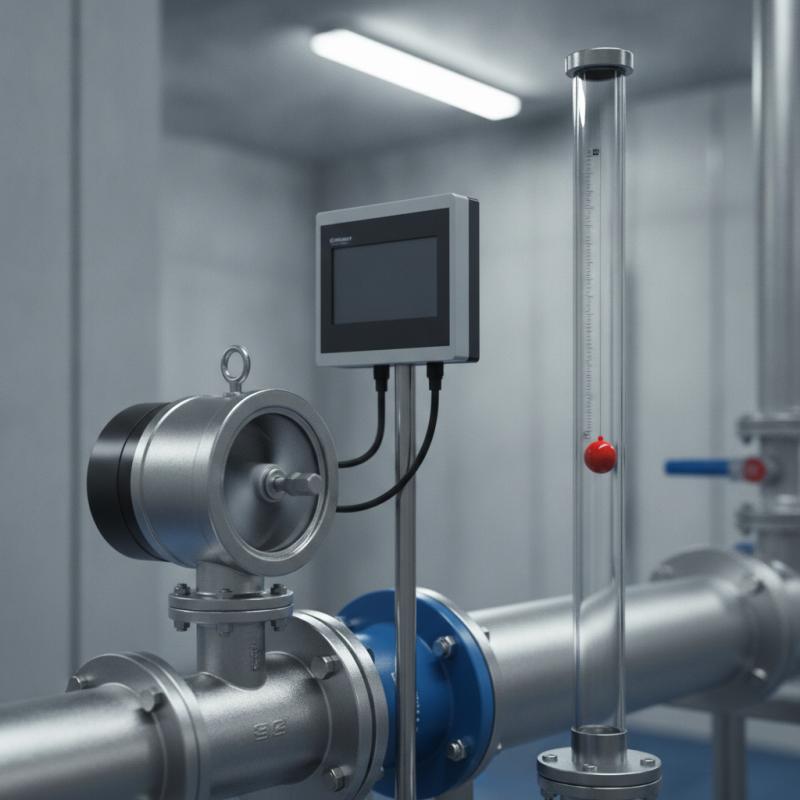
Weihai, Shandong Sep 6, 2026 (Issuewire.com) - So, when it comes to measuring fluids, choosing the right flow meter is kinda crucial. You've got a couple of big players out there--like the Turbine Flow Meter and the Rotameter. Lately, industry reports are saying that the market for these devices could hit around $10 billion by 2025, which shows how much demand there's been lately. As John Smith, a respected expert in the field, puts it, "Getting the flow rates right is key to keeping operations running smoothly."
Now, the Turbine Flow Meter is really good when you're dealing with fast-moving fluids because it gives you accurate readings. On the flip side, the Rotameter is super straightforward and easy to use--great for quick checks without overthinking things. Both tools are pretty important in industries like water treatment and chemical processing. But, gotta admit, they're not perfect. Some folks have mentioned that maintaining and calibrating these meters can be a bit of a hassle, which is a pain because a bad reading could mean big financial losses.
As manufacturers keep pushing for newer, better tech, understanding what customers really need is more important than ever. For example, Rotameter Water Flow Meter models are now being designed with easier readability and fancy new features to make life easier. As the industry continues to change, constantly rethinking and improving these technologies will help lead the way toward even better flow measurement solutions in the future.
Overview of Turbine Flow Meters and Rotameters
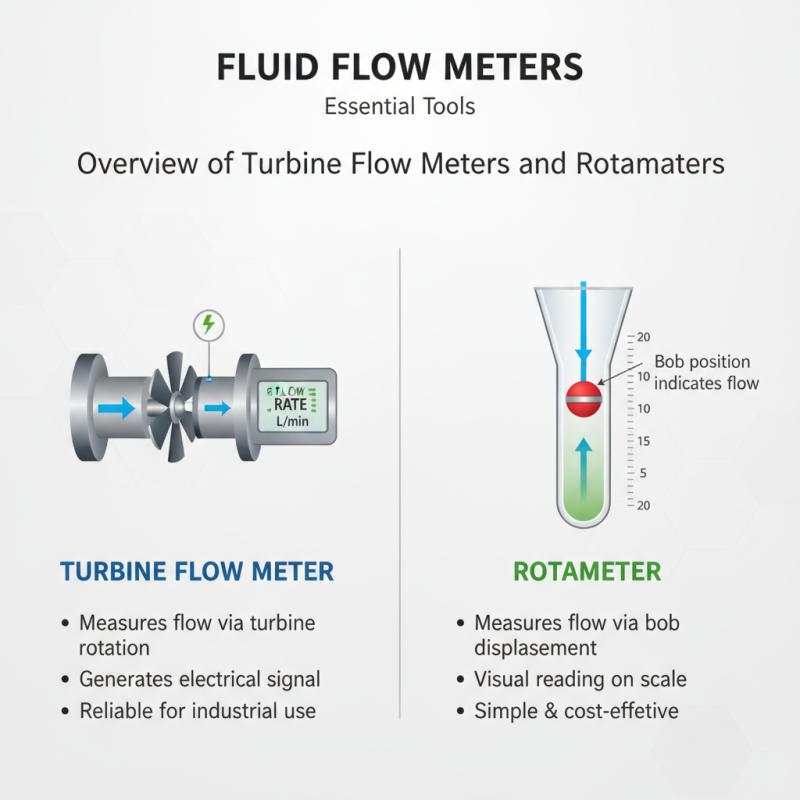
Turbine Flow Meters and rotameters are essential tools for measuring fluid flow. They operate on different principles but serve similar purposes. A turbine flow meter measures flow based on the rotation of a turbine within the fluid stream. As fluid passes through, it spins the turbine, which translates into an electrical signal reflecting the flow rate. This makes Turbine Flow Meters reliable for various industrial applications.
On the other hand, Flow Rotameters use a float inside a tapered tube to measure flow. As fluid flows through the tube, it lifts the float to a level that correlates with the flow rate. This design is simple but effective. Flow Rotameters are often chosen for their easy readability and low maintenance needs. However, users should ensure they are suitable for the specific fluid types and conditions, as inaccuracies can arise in certain scenarios.
Both types of meters come with their challenges. Turbine Flow Meters may struggle with viscous fluids or low flow rates, while flow rotameters can have difficulty in turbulent conditions. Understanding these limitations is crucial. Accurate selection and installation are vital to achieving reliable measurements in real-world applications.
Key Features of China's Best Flow Measurement Devices
China has emerged as a leading producer of Flow Measurement Devices, especially turbine flow meters and rotameters. Key features set these devices apart in the global market. First, accuracy is crucial. Many Chinese flow meters boast high precision levels, recorded within ±0.5%. This accuracy is vital for industries that handle liquids and gases.
Another important aspect is their durability. Many devices are built with robust materials, resistant to corrosion and wear. This ensures longevity, reducing the need for frequent replacements. The operational range of these meters is also commendable, accommodating various flow rates. However, potential buyers must consider compatibility with their specific applications.
Ease of installation and maintenance is often a highlight. User-friendly designs can simplify setup processes. However, not all meters are equally intuitive, making it essential to assess user manuals and support options before purchase. Investing in quality devices is crucial, but understanding your operational needs is just as important. Thus, thorough research is essential for optimal performance in flow measurement.
Turbine flow meters and rotameters serve vital roles in various industries. Both devices measure fluid flow but operate based on distinct principles. Turbine flow meters utilize a rotating blade mechanism. The flow of liquid turns the turbine, generating a rotational speed proportional to the flow rate. In contrast, a Liquid Rotameter employs a float within a tapered tube. As liquid flows through, the float rises to a height that correlates with the flow rate.
Industry reports indicate that turbine flow meters are often preferred in high-precision applications. They can measure flow rates as low as 1 GPM (gallon per minute) up to thousands of GPM. However, their sensitivity to viscosity changes can be a drawback. On the other hand, liquid rotameters are more versatile. They are simple, cost-effective, and can be applied in smaller flow situations. However, their accuracy declines with variations in pressure and temperature.
Despite the effectiveness of both types of flow meters, it's essential to consider the limitations. Turbine meters may require regular calibration in dirty fluid applications. Liquid rotameters, while easy to use, may struggle in highly turbulent flows. A thorough understanding of these factors is necessary when selecting the appropriate device for specific applications.
Top Manufacturers of Flow Meters in China
China has emerged as a global leader in flow meter manufacturing, particularly turbine flow meters and rotameters. The rise of its industrial fabric has attracted attention from buyers worldwide. According to industry reports, the flow meter market is projected to grow at a CAGR of 7.2% from 2020 to 2026. This growth reflects the increasing demand for accurate flow measurement across various applications.
Several leading manufacturers in China excel in producing high-quality flow meters. These companies focus on innovation and adhere to international quality standards. Despite their success, challenges remain. Some manufacturers may face difficulties in meeting the diverse specifications required by different industries. Additionally, price competition can impact profitability. Customers need to conduct thorough research to ensure they select reliable suppliers.
The Chinese flow meter industry also emphasizes quality assurance through rigorous testing. It is essential for manufacturers to maintain consistency and precision in their products. According to a recent survey, around 40% of users reported concerns regarding product reliability. This indicates a need for ongoing improvement in manufacturing processes. Data-driven decision-making can address these issues effectively.
China's Flow Meter Market OverviewGlobal Market Demand for Chinese Flow Measurement Instruments
The global market for flow measurement instruments is experiencing significant growth, particularly in the demand for turbine flow meters and rotameters from China. According to a recent industry report, the flow meter market is projected to reach $11 billion by 2025, with a compound annual growth rate (CAGR) of 5.2%. This surge demonstrates a rising need for reliable, accurate measurement tools across various sectors, including oil and gas, water treatment, and chemical processing.
Analysts attribute this growth to China's advanced manufacturing capabilities. The country produces a diverse range of flow measurement instruments that meet international standards. However, quality inconsistency remains a concern. Some studies indicate that nearly 20% of instruments fail to perform as expected. Buyers often struggle with finding dependable suppliers amidst a sea of options. This challenge emphasizes the need for careful vetting and testing of products before purchase.
Moreover, the importance of compliance with global regulations cannot be overstated. Instrumentation that adheres to International Organization for Standardization (ISO) standards often leads to better results. Nevertheless, many suppliers may lack certification, which can jeopardize projects. It's crucial for global buyers to be vigilant regarding these factors when sourcing flow measurement instruments from China. Maintaining a balance between cost and quality is essential for long-term success in this competitive market.
Applications of Turbine Flow Meters and Rotameters Worldwide
Turbine flow meters and rotameters are essential tools in various industries worldwide. These devices accurately measure the flow of liquids and gases. Their precision plays a crucial role in sectors like oil and gas, water management, and chemical processing. Users rely on these measurements for quality control and efficient operations.
In the field of water treatment, turbine flow meters help monitor supply rates. This ensures safe water distribution in communities. In chemical applications, rotameters often monitor fluid mixtures. However, they can sometimes misread under turbulent conditions. Understanding these limitations is essential for effective use.
Many global buyers appreciate the reliability of Flow Meter Turbine technology. Investing in high-quality instruments pays off in the long run. Yet, maintenance is key. Regular checks help avoid unexpected downtime. Users must reflect on the performance of their devices continuously. A small oversight can lead to significant operational issues.
Factors to Consider When Choosing a Flow Meter for Purchase
Choosing the right flow meter is crucial for any industrial application. When selecting a flow meter, several factors must be considered, including accuracy, range, and the type of fluid being measured. For instance, a recent report from the Flow Measurement Industry Association indicates that accuracy in measurement can vary between ±0.5% to ±2% depending on the technology used.
Materials compatibility is another essential factor. Some fluids can corrode sensors, leading to inaccurate readings or equipment failure. A flow meter's lifespan is heavily influenced by the materials used in its construction. This emphasizes the need for buyers to conduct material compatibility assessments before making a decision. Additionally, environmental factors like temperature and pressure should not be overlooked. These conditions can affect the performance of a Gas Turbine Flow Meter.
Tip: Always assess the installation environment. If possible, test the flow meter with the actual fluid before finalizing your choice.
Cost considerations also play a vital role. While selecting a lower-cost option may save money initially, it may lead to higher maintenance costs over time. Investing in a reliable flow meter can reduce downtime and save on repair costs. Quality should not be compromised for a lower price.
DTRTMFW Micro Thermal Mass Flow Meter for Low Flow Gas
The precise measurement of gas flow, especially in low-flow applications, is critical for various industries, ranging from medical to environmental monitoring. The DTRTMFW micro thermal mass flow meter stands out in this regard with its innovative design and advanced technology. At its core is a high-precision MEMS chip flow sensor, which utilizes a miniature heater and thermopile system. This configuration enables it to calculate the gas mass flow with remarkable accuracy by measuring the temperature difference between the upstream and downstream thermopiles, combined with the heater power.
One of the most significant advantages of the DTRTMFW thermal mass flow meter is its ability to operate without the need for temperature and pressure compensation. This feature is especially beneficial in environments where these variables fluctuate, ensuring reliable and stable measurement data. The thermal gas flow measurement technology it employs allows for consistent performance, making it an excellent choice for applications that require precise monitoring of small gas flows. As industries continue to prioritize accuracy and reliability, the DTRTMFW micro thermal mass flow meter emerges as a valuable solution, enhancing precision in gas measurement.
Conclusion
The article titled "China Best Turbine Flow Meter and Rotameter for Global Buyers?" provides a comprehensive overview of the essential flow measurement devices, specifically focusing on Turbine Flow Meters and Rotameters. It highlights their key features, such as accuracy, durability, and range of flow measurement capabilities, which make them essential tools in various industrial applications. A comparative analysis between Turbine Flow Meters and Rotameters is presented, showcasing their unique advantages and ideal use cases, which allows buyers to make informed decisions.
Additionally, the article delves into the leading manufacturers of flow meters in China and discusses the growing global market demand for these instruments. Various applications of Turbine Flow Meters and Rotameters across industries worldwide are examined, along with important factors to consider when selecting a flow meter for purchase. This summary underscores the significance of both flow measurement technologies in meeting the diverse needs of global buyers.
Source : Weihai Duoterui Automation Equipment Co., Ltd.
This article was originally published by IssueWire. Read the original article here.

HD Hyundai Q3 net profit up 40% to $1 bil.
HD Hyundai, the holding company of Korea's leading shipbuilding conglomerate, on Wednesday reported a third-quarter net profit of 1.38 trillion won ($1 billion), up 40 percent from a year earlier. The company said in a regulatory filing it posted 2.91 trillion won in operating profit for the July-September period, compared with 1.7 trillion won a year ago. Revenue also rose 21.2 percent to 22.08 trillion won.

Sangmidang seeks North American, European expansion through global partnerships
Hur Jin-soo, vice chairman of Korean bakery giant Sangmidang Holdings, met Gellert Global Group (GGG) Chairman George Gellert and U.S. Ambassador to France Charles Kushner in Paris earlier this week to explore broader partnerships in overseas markets. Sangmidang said Wednesday that Hur discussed business developments and potential cooperation with Gellert and other GGG executives. Samlip, Sangmidang’s mass-market bakery subsidiary, could work with GGG to expand through U.S. supermarket and food service distribution networks and potentially enter Canada and Mexico, the Korean company said. U.S.-based GGG imports and distributes food products to retailers, food service distributors, restaurants, hotels, cruise operators and food manufacturers across North America. It sources more than 4,000 products from 60 countries and generates more than $1.7 billion in sales per year. The discussion first took place on Oct. 18 when Hur attended a reception for GGG’s partner firms at the U.S. ambassador’s residence in Paris. Hosted by Kushner, the event brought together about 130 representatives

Hanwha's KAI bid bodes well for another defense leap forward
Hanwha Group’s potential acquisition of Korea Aerospace Industries (KAI) could give the country’s aerospace and defense industry a much-needed boost in the global market, as privately owned defense firms have significantly outpaced their state-backed rival in sales growth. Yet transferring control of a strategically important company to a private conglomerate would also raise questions over national security, market concentration and the public investment underpinning its technological achievements. KAI has remained under state ownership since its establishment in 1999, with the state-run Export-Import Bank of Korea as its largest shareholder, holding a 26.41 percent stake. Hanwha is the second-largest shareholder, with a 15.89 percent stake. KAI’s relatively modest growth compared with private-sector defense counterparts highlights the potential benefits of a change in ownership. Lagging behind other private defense firms, KAI’s annual sales reached 3.69 trillion won ($2.79 billion) in 2025, inching down from 3.81 trillion won in 2023. Over the same period, LIG Defense & Aerospac

Debate grows over KAI privatization as Hanwha aims to expand stake
The privatization of Korea Aerospace Industries (KAI) could gain momentum as the state-run Export-Import Bank of Korea (Eximbank) commissions a 1.8 billion won ($1.36 million) consulting project and the Fair Trade Commission (FTC) highlights the benefits of stronger competition among major defense companies. Although Eximbank and KAI have expressed reservations about a change in ownership, KAI’s slower growth compared to its defense industry peers, despite a boom in arms exports, is fueling calls for privatization. Eximbank is KAI’s largest shareholder, with a 26.41 percent stake. According to Rep. Ahn Sang-hoon of the main opposition People Power Party and other sources, Eximbank recently selected AT Kearney as the preferred bidder for the consulting project and is proceeding with the subsequent steps. The project will examine ways to strengthen Korea’s aerospace industry and foster global anchor companies. Reports that the project was initiated at the government’s request have also sparked controversy. On Oct. 20, KAI CEO Kim Jong-chool said the company’s ownership structure

EMAT seeks to reduce China reliance on rare earth magnets with Pohang facility
Evolution Metals & Technologies (EMAT), a Nasdaq-listed rare earth magnet producer, is making a big bet on Pohang, North Gyeongsang Province, by building a facility capable of producing 10,000 tons of sintered rare earth magnets annually for export to the U.S. and to other global customers seeking to reduce their reliance on China's dominant rare earth supply chain. The company plans to invest approximately 300 billion won ($224 million) in Pohang, including 223.8 billion won earmarked for building initial production capacity on a 118,000-square-meter site at the Blue Valley Industrial Complex in the city by 2027. EMAT and the Pohang city government signed a memorandum of understanding (MOU) on the investment project on Tuesday, with the city pledging administrative support for EMAT's plans. During an interview with The Korea Times, EMAT CEO Frank Moon stressed the need to distinguish between upstream and downstream operations. Citing China's dominance in the supply chain, he said geopolitical issues weigh heavily on the industry, and customers’ growing demand for alternatives to Chi

Regional airports to expand international flights by 11.6% for winter season
Korea Airports Corp., which operates 14 airports nationwide, said Wednesday that airlines will operate 10,208 scheduled flights a week during this winter season, which runs from Oct. 25 through March 27, 2027. International services will account for 3,206 weekly flights, up 11.6 percent, or 332 flights, from the summer schedule, while domestic services will total 7,002 flights a week. The expansion comes as the government seeks to attract 30 million foreign visitors ahead of schedule, with additional airport slots at Gimhae and Cheongju allowing more takeoffs and landings. Gimhae International Airport’s hourly capacity will increase from 27 to 30 flights, while Cheongju’s will rise from eight to 10, the airport operator said. Southeast Asian routes will increase 32.7 percent from the summer schedule to 600 flights a week, while services to China will rise 17.5 percent to 844 weekly flights. New China routes include Gimhae-Xiamen, Gimhae-Guangzhou, Cheongju-Xiamen and Jeju-Shijiazhuang. Gimhae will also introduce daily charter flights to Tokyo’s Haneda Airport starting in December and

Hana Financial opens digital vocational classroom for students with developmental disabilities
Hana Financial Group has opened a digital classroom at a special education school in Seoul to help students with developmental disabilities explore career options and practice workplace skills, the group said Wednesday. The classroom at Miral School in Gangnam District is designed to give students hands-on experience in settings modeled on real workplaces, such as restaurants and cafes. The space is equipped with a range of digital learning tools, including a humanoid robot that can interact through voice conversations, virtual reality devices for vocational training, multimedia kiosks, interactive LED whiteboards and tablets for design practice. The classroom is the first step in Hana Financial’s wider program to aid students with developmental disabilities prepare for working life through digital learning and vocational training. The group plans to establish similar facilities at two more special education schools in Incheon and Daejeon by the first half of next year. Hana is also offering support for teachers and other school staff, with programs aimed at strengthening their profess

Hyundai Motor rises to No. 29 in Interbrand's global brand ranking
Hyundai Motor rose to 29th place in Interbrand’s Best Global Brands 2026 ranking, up two places from a year earlier, with its brand value reaching $25 billion, the automaker said Wednesday. The annual ranking by global brand consultancy Interbrand evaluates brands based on their financial performance, influence on consumers’ purchasing decisions and ability to build long-term loyalty. Hyundai also climbed to fourth among automotive brands from sixth in 2025, extending its streak of annual brand value growth to 17 consecutive years. Hyundai attributed the improvement to its strengthened vehicle lineup, investments in future growth areas such as physical artificial intelligence (AI) and software-defined vehicles (SDVs), and global marketing campaigns tied to major sporting events and cultural initiatives. “Seventeen consecutive years of brand value growth comes from customers who chose Hyundai and from the teams and dealer partners who earned that trust,” Hyundai Motor President and CEO Jose Munoz said. “Improving to fourth among automotive brands reflects both the strength of our

SK Broadband, LS Marine Solution team up to protect vital Asia cable link
SK Broadband, the telecommunications unit of SK Group, is strengthening safeguards around a vital undersea cable linking Korea with Japan and Singapore, partnering with marine engineering specialist LS Marine Solution to speed up emergency repairs along vulnerable coastal stretches. The companies signed an agreement Tuesday to improve the reliability of the Southeast Asia-Japan Cable 2 (SJC2) submarine cable system, SK Broadband said Wednesday. Under the agreement, the companies will maintain emergency response vessels and specialized equipment while standardizing technical data and repair procedures in advance. The goal is to coordinate the entire recovery process, from dispatching crews to retrieving damaged cables, reconnecting lines and precisely reburying them on the seabed, reducing the time needed to restore service. The partnership will focus particularly on shallow coastal waters off Busan, where large vessels have difficulty operating and emergency repairs require specialized marine expertise and rapid response. SK Broadband will contribute cable analysis data and monitoring cap

SK On passes large-scale fire test, bolstering ESS safety credentials
SK On, the battery manufacturing unit of SK Group, passed a major fire safety test for its energy storage systems (ESS), clearing a key hurdle as the company seeks to expand in the global market for grid-scale energy storage. The company said Wednesday that its ESS products met evaluation criteria under UL 9540A, a North American standard used to assess how thermal runaway in batteries can spread heat and fire to surrounding equipment. The large-scale fire test recreates conditions resembling an actual energy storage system fire, examining whether flames or dangerous heat spread to neighboring battery containers. The requirements were tightened in March to establish clearer criteria for assessing fire propagation. During the test, battery cells inside adjacent containers did not experience thermal runaway caused by heat from the container where the fire originated, and temperatures inside the containers remained within the evaluation limits, SK On said. The company attributed the result to a system design that releases heat gradually over an extended period, limiting sudden increases in h

LG Uplus, Ecolab Korea team up to set AI data center cooling standards
As artificial intelligence (AI) servers pack more computing power into less space, the heat they generate is becoming a critical challenge for data centers, prompting LG Uplus and Ecolab Korea to develop standards for liquid cooling systems. The companies signed a memorandum of understanding Tuesday at LG Uplus’ headquarters in Seoul's Yongsan District, to improve cooling system operations and establish procedures for managing coolant quality. The partnership combines LG Uplus’ expertise in building and operating AI data centers with Ecolab Korea’s water treatment and cooling fluid management technologies. The growing use of high-performance graphics processing units (GPUs) has increased heat output in data centers, driving interest in liquid cooling, which can remove heat more efficiently than conventional air cooling. But coolant that deteriorates or equipment that is poorly maintained can undermine cooling performance and lead to hardware failures, making consistent monitoring and operating standards essential. LG Uplus will provide a large-scale liquid cooling test environment b

Bithumb, Mirae Asset, Daishin join growing list of cyberattack victims
Cryptocurrency exchange Bithumb, asset manager Mirae Asset Global Investments and Daishin Securities have become the latest victims of cyberattacks sweeping Korea’s financial sector, industry officials and financial authorities said Wednesday. Daishin Securities said in a press release earlier in the day that personal and credit information belonging to 38,490 customers had been leaked. The brokerage said it detected signs of unauthorized access by a hacker on Oct. 17 to a server linked to online securities account openings for discretionary investment services. Bithumb discovered Tuesday that personal information had been leaked following unauthorized access to its internal mobile groupware system. It is examining the scope of the breach, including whether customer information was compromised. A hacking incident was also reported at Mirae Asset Global Investments, prompting financial authorities to investigate the extent of the damage and the circumstances of the breach. The latest incidents came after Mirae Asset Life Insurance detected unusual activity in some of its systems Sunday






Is the iPhone Duo for you?

YOUR NEWS, OUR NETWORK.
Do you have Great News you want to tell the world?
Be it updates about your business or your community, you can make sure that it’s heard by submitting your story to our network reaching hundreds of news sites across 6 verticals.