
China Best Strong Base Anion Exchange Resin In the World: Market Outlook Across Regional Demand
Sep 29, 2026
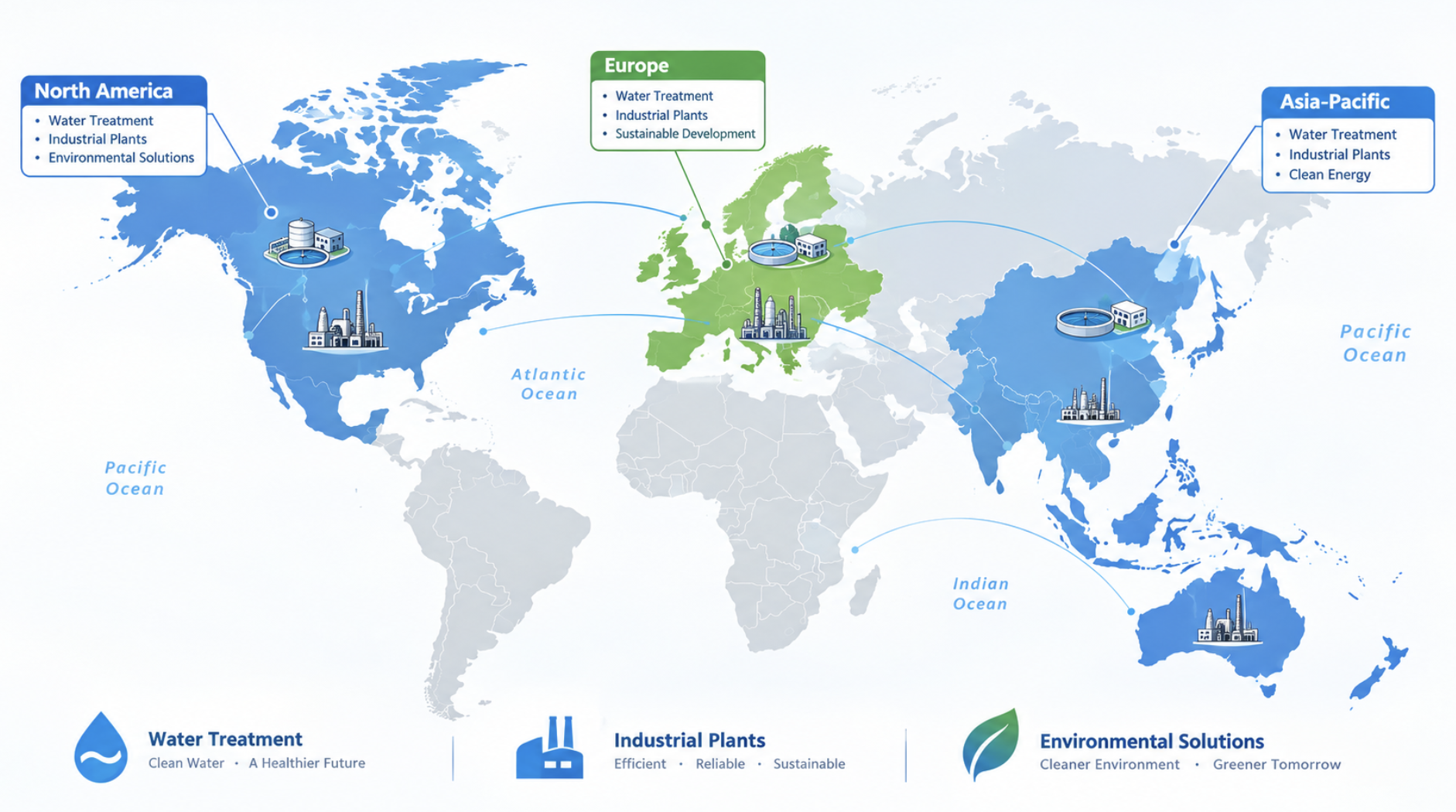
Xian, Shaanxi Sep 28, 2026 (Issuewire.com) - Demand for strong base anion exchange resin often gets described as a single global market moving in one direction, yet a closer look at procurement patterns across North America, Europe, and Asia-Pacific tells a different story. Three regions, three regulatory environments, and three distinct sets of technical requirements are pulling this market into separate growth paths rather than one uniform curve. Understanding these divergent drivers matters for any manufacturer positioning itself as a China Best Strong Base Anion Exchange Resin In the World (https://www.seplite.com/strong-base-anion-exchange-resin-sba/) supplier, since serving one region well no longer guarantees relevance in another. A resin formulated for municipal demineralization in one market may fall short of the selectivity or radiation resistance demanded elsewhere, which means the phrase "market growth" carries different implications depending on which region is under discussion. Suppliers accustomed to competing primarily on price now find that regulatory specificity, not unit cost, increasingly decides which contracts they win. One Resin Category, Three Different Growth Stories Global sales figures for ion exchange resin tend to obscure this regional fragmentation. Aggregate market reports show steady expansion, but the underlying demand composition varies sharply once analysts separate municipal water treatment from industrial and specialty applications. North America's growth increasingly traces back to emerging contaminant regulation rather than population-driven water demand. Europe's trajectory follows directive updates and industrial water reuse targets more closely than economic growth alone. Asia-Pacific, meanwhile, ties resin demand to semiconductor fabrication, nuclear power expansion, and lithium extraction -- sectors with little historical connection to conventional water softening. Treating these as one market risks misreading where technical investment should actually go, and it risks underestimating how quickly specification requirements can shift within a single region as new regulations take effect. North America: Emerging Contaminants Redefine Resin Selectivity The United States Environmental Protection Agency's enforcement of maximum contaminant levels for PFAS compounds has reshaped purchasing criteria across municipal and industrial water systems. Utilities no longer evaluate resin purely on cost per liter treated; selectivity for perfluorinated compounds and perchlorate now drives specification sheets. Standard demineralization-grade strong base anion resin performs adequately for general ion removal, but PFAS remediation calls for macroporous variants engineered with specific pore structure and functional group density. State-level standards in California, New Jersey, and several other jurisdictions have moved faster than federal timelines, creating a patchwork of compliance deadlines that pushes utilities toward suppliers capable of delivering specialty-grade resin on short notice rather than standard catalog product alone. Engineering firms managing multi-state water treatment contracts increasingly favor manufacturers offering both standard and specialty grades under one qualification process, since switching suppliers mid-project to source a PFAS-selective resin introduces delays that most municipal timelines cannot absorb. Europe: Drinking Water Directive Revisions and Industrial Desalination Pressure The European Union's revised Drinking Water Directive, combined with tightening industrial water-reuse mandates, sustains demand for condensate polishing and ultrapure water applications across the continent. Power generation facilities and chemical processing plants face increasing pressure to recycle process water rather than draw fresh supply, which keeps strong base anion resin relevant well beyond municipal treatment plants. REACH compliance shapes which suppliers gain traction in this market, since procurement teams increasingly treat registration documentation as a baseline qualification rather than a differentiator. That regulatory dimension intersects with sourcing decisions in ways covered more thoroughly elsewhere, but its practical effect here is straightforward: European buyers filter suppliers on compliance readiness before evaluating price or lead time. Asia-Pacific: Semiconductor Expansion, Nuclear Power, and Lithium Extraction as Parallel Drivers Asia-Pacific demand diverges from the other two regions in a fundamental way. Municipal water treatment plays a smaller role in driving growth compared to industrial-grade applications tied to advanced manufacturing. Semiconductor fabrication requires ultrapure water with extraordinarily low ionic contamination, and strong base anion resin remains a core component of the polishing trains that achieve this purity level. Nuclear power expansion across the region calls for nuclear-grade resin engineered to withstand radiation exposure while maintaining exchange capacity over extended service cycles. Lithium extraction adds a third, less conventional driver: resin-based direct lithium extraction technology has moved from pilot projects to commercial-scale operations as battery manufacturers seek faster, more selective alternatives to evaporation ponds. These three applications share little in common technically, yet together they explain why Asia-Pacific resin demand cannot be summarized through a single growth narrative. Manufacturers serving this region need engineering capability spanning semiconductor-grade purity, radiation-tolerant polymer chemistry, and brine-selective sorbent design simultaneously, a combination few suppliers outside the region have developed at commercial scale. Why an Integrated Materials-Process-Equipment Model Matters Across Divergent Markets Serving three regions with three different technical requirements simultaneously demands more than a broad product catalog. It requires a business model capable of translating materials science into process design and, ultimately, into deployed equipment. Sunresin(Sunresin New Materials Co. Ltd.) (https://www.seplite.com/sunresin-profile/) operates on this integrated basis, combining resin manufacturing with process engineering and equipment design rather than functioning purely as a materials supplier. This structure allows technical teams to move from laboratory-scale resin development through pilot testing to industrial implementation without handing the project to a separate systems integrator, which reduces the technical friction that often slows adoption of specialty resin grades. This approach recently drew recognition beyond the water treatment industry itself. Sunresin's selection for Morgan Stanley's "China Best Business Models 2.0" list (https://www.seplite.com/sunresin-selected-for-morgan-stanley-s-china-best-business-models-2-0-list-recognized-for-strong-competitive-advantages/) highlighted its diversified application base across six sectors, including metal resources, life sciences, water treatment, environmental protection, food processing, and chemical processing. The company holds 113 authorized patents, including 36 international patents, a portfolio that supports technical breakthroughs in semiconductor ultrapure water and life sciences applications historically dominated by established international players. This diversification matters directly for the regional fragmentation described above: a manufacturer exposed to PFAS remediation, nuclear-grade resin, and lithium extraction simultaneously carries less risk than one dependent on a single application or region. It also means that lessons learned solving a selectivity problem in one sector, such as gold or lithium recovery, can sometimes inform resin design improvements applied later to water treatment applications in an entirely different market. Positioning for a Fragmenting but Growing Global Market Regional regulatory divergence shows few signs of converging toward a unified global standard in the near term. PFAS enforcement in North America, directive-driven demand in Europe, and industrial expansion across Asia-Pacific will likely continue evolving along separate tracks, each requiring distinct technical specifications from resin suppliers. This fragmentation creates a structural advantage for manufacturers capable of serving multiple specifications under one integrated quality system rather than those built around a single application. Buyers evaluating long-term supply partnerships increasingly weigh this diversification alongside product performance, recognizing that a supplier's exposure to varied regulatory environments often signals resilience against demand volatility in any single market. For procurement teams planning multi-year contracts, that resilience can matter as much as any single technical specification, since regulatory conditions in one region rarely stay fixed for the duration of a supply agreement. Additional information on resin specifications, technical capabilities, and regional applications is available at https://www.seplite.com/.
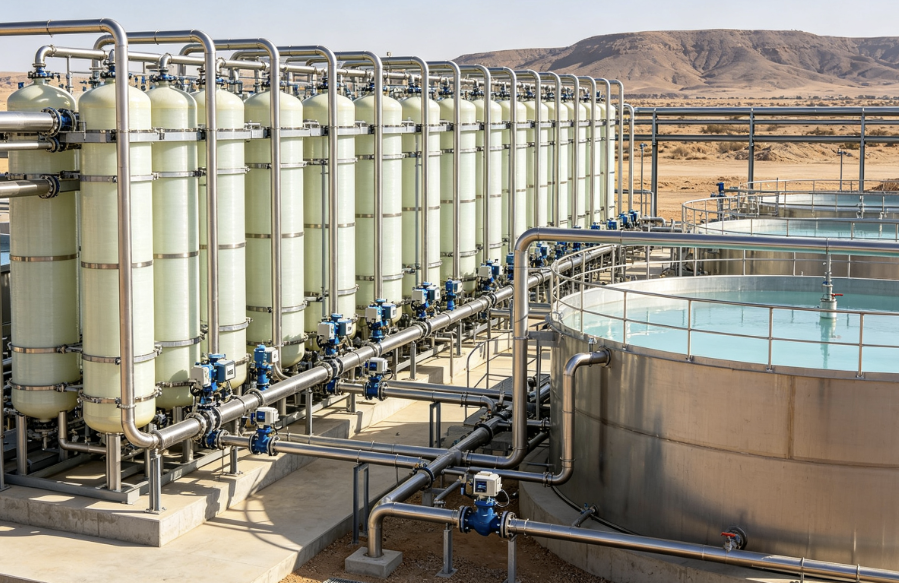
Source :Sunresin New Materials Co. Ltd.
This article was originally published by IssueWire. Read the original article here.

KCCI, audit authority collaborate to resume construction of 4,000 public housing units
The audit authority has cleared a key hurdle for six stalled public housing projects totaling nearly 4,000 units after the Korea Chamber of Commerce and Industry (KCCI) sought a preliminary consultation on behalf of builders struggling with soaring construction costs. The KCCI said on Tuesday that the Board of Audit and Inspection (BAI) determined that project costs for the six sites, covering 3,936 housing units, can be recalculated to reflect current market conditions. The case marks the KCCI’s first use of the consultation program since it was opened to private organizations in May. “Companies have faced difficulties for a long time, but this was not an issue they could easily make a decision on,” Lee Jong-myung, head of the KCCI's industry innovation division, said. “The BAI's decision to open its doors to the private sector has added another channel for resolving corporate difficulties, and its first result will benefit the public through housing supply.” The six projects are part of a public-private housing program, with public agencies providing the land while private bu

Private sector's role increased in 5th Nuri launch
Private companies played a significantly greater role in the successful fifth launch of Korea’s Nuri rocket on Wednesday, signaling that the country’s efforts to keep pace with the global shift toward a private sector-led “New Space” era are gaining momentum. The Nuri rocket completed its fifth launch and 20-minute-long flight successfully after lifting off at the Naro Space Center in Goheung, Jeonnam-Gwangju Special Metropolitan City, at 12:25 p.m. The most notable change in the latest launch was not the rocket itself, but the growing presence of private-sector personnel at the launch site. Hanwha Aerospace has overseen the manufacturing of the Nuri rocket as its system integrator since the fourth launch on Nov. 27 last year, but this time, its role expanded to the consoles at the launch control center. Hanwha Aerospace deployed 42 staffers for the fifth launch. They participated in operations at 20 of the 22 consoles responsible for launch vehicle systems, and at 18 of them, Hanwha employees directly operated the controls instead of specialists from the Korea Aerospace Researc
![[EXPLAINER] How AI emerged as new threat in Korea's bank hacking crisis](https://newsimg.koreatimes.co.kr/2026/10/07/77d98bb7-f23e-430d-be94-38ae9821547a.jpg)
[EXPLAINER] How AI emerged as new threat in Korea's bank hacking crisis
Hackers once had to manually test security defenses, identify vulnerabilities and work out how to exploit them. Now, artificial intelligence (AI) can do much of that work, requiring little human input. That possibility is at the center of Korea's latest security crisis in the financial sector, as investigators have found traces of an AI-powered autonomous penetration-testing tool in a series of recent cyberattacks on the country's major banks. Since last week, Shinhan Bank, KB Kookmin Bank, Hana Bank, Yegaram Savings Bank and BNK Busan Bank have all reported data breaches, while Woori Bank and NH NongHyup Bank have detected signs of hacking attempts, though no data leaks were confirmed. Shinhan Bank reported that about 25,000 customers were affected, with personal information including names, phone numbers, annual income and loan limits exposed. KB Kookmin reported 119 affected customers, while Hana Bank said personal information belonging to 89 customers was exposed. The hacking spree has drawn particular concern after investigators reportedly found traces of an AI-powered tool known as

SK Energy, HD Hyundai Oilbank face fines over alleged fuel price fixing
SK Energy and HD Hyundai Oilbank may face sanctions from the Fair Trade Commission (FTC) over allegations that they colluded on gasoline, diesel and kerosene prices, with combined fines potentially reaching 4.63 trillion won ($3.45 billion). The antitrust regulator said Wednesday that it sent a review report to the two companies, formally launching deliberations over the alleged price-fixing case. The FTC said the alleged collusion lasted from February 2022, shortly before Russia's invasion of Ukraine, through March this year, shortly after the outbreak of the war in Iran. The case covers petroleum products that are essential to household and economic activity. Korea's oil refining industry is highly concentrated, with SK Energy, HD Hyundai Oilbank, GS Caltex and S-Oil accounting for about 98 percent of the domestic market. According to the FTC, SK Energy and HD Hyundai Oilbank exchanged information on the prices of gasoline, diesel and kerosene, including provisional prices, final prices and sales policies. The regulator also determined that the two companies colluded on prices followin

Beef tallow remains hurdle to Charrr's global expansion
Countries’ regulations on imported foods containing beef tallow pose a hurdle for Samyang Foods as the Korean instant noodle giant seeks to expand exports of its latest black bean sauce instant noodles, Charrr. The company has established Buldak as a massively popular product around the globe without using beef tallow, selling 10 billion units and generating cumulative sales of 7 trillion won ($5.2 billion) as of June. Unlike the spicy, brothless instant noodle brand, however, Charrr uses beef tallow as a key ingredient to give its sauce a rich, beefy flavor. Charrr is not Samyang’s first instant noodle product using beef tallow. The company launched Samyang 1963 in November last year with the ambitious goal of reviving the “forgotten” taste of its first instant noodle product, Samyang Ramen, which was introduced in 1963 and used beef tallow. Samyang Ramen, introduced by the late company founder Chun Joong-yoon to help feed a population suffering from widespread poverty at the time, remains a cornerstone of the company’s identity. Its use of beef tallow has now become part of

Bank data breach victims step up calls for compensation
A growing number of customers affected by a string of recent personal data breaches at major commercial banks and other financial firms appear to be turning to class action lawsuits in pursuit of compensation, according to industry officials, Wednesday. The banks have pledged to fully compensate customers whose losses, including those from voice phishing scams, are found to have directly resulted from the leaks. But proving that a loss was caused by a specific data breach can be difficult in practice, and the banks have yet to set out clear standards for determining which claims would qualify, prompting some victims to resort to legal action. Seven financial firms have reported information leaks so far, including three of the country’s largest commercial lenders — Shinhan Bank, KB Kookmin Bank and Hana Bank. Shinhan reported the largest breach, affecting around 25,000 people, followed by 119 at KB Kookmin and 89 at Hana Bank. The exposed data includes customers’ names, contact details, resident registration numbers, annual income and loan limits. The combination of personal and fin
![[COVER STORY] Nuri rocket successfully completes 5th flight](https://newsimg.koreatimes.co.kr/2026/10/07/6a8cafff-abc8-4ebb-86ed-8bb7b1eb07d3.jpg)
[COVER STORY] Nuri rocket successfully completes 5th flight
Korea’s domestically-developed Nuri rocket successfully carried out its mission in its fifth launch Wednesday, sequentially deploying 14 out of the 15 satellites it carried into their target orbit. The key objective of the fifth launch was to safely deploy the five microsatellite constellations, and its success has demonstrated Korea's increased multisatellite launch capabilities, taking another step toward privately-led commercial launch services. The rocket lifted off from the launchpad at the Naro Space Center in Goheung, Jeonnam-Gwangju Special Metropolitan City, at 12:25 p.m. and completed its roughly 20-minute flight at around 12:45 p.m. The rocket separated its first stage about two minutes after liftoff, followed by the second stage about four and a half minutes into the flight. At around 12:40 p.m., it reached an altitude of 570 kilometers and completed the sequential deployment of five New-space Earth Observation Satellite Constellation for National Safety (NEONSAT) microsatellites (satellites No. 2 to 6), its primary payload, along with nine of the 10 CubeSats it carried. In

AMD to establish AI research center in Korea this year, hire hundreds
U.S. chip giant AMD announced Wednesday that it plans to establish an artificial intelligence (AI) research center in Korea by the end of this year and hire hundreds of researchers as part of broader AI cooperation between the company and Korea. The announcement came during a meeting between AMD CEO Lisa Su and Second Vice Minister of Science and ICT Ryu Je-myung in Seoul. AMD also plans to help develop graduate-level AI and AI transformation talent and collaborate with Korea on a reference model for heterogeneous AI computing. The model would combine AMD’s central processing units (CPUs) and graphics processing units (GPUs) with domestically developed neural processing units (NPUs). The meeting, arranged by the Ministry of Science and ICT, served as an interim review of AI cooperation agreed upon by the ministry and AMD during President Lee Jae Myung’s attendance at the San Francisco AI Summit in July. AMD also outlined plans to work with Korea’s private sector to create new business opportunities. At a subsequent roundtable with 13 Korean companies involved in AI infrastructure, c

OpenAI releases new batch of math breakthroughs
OpenAI released a new batch of mathematics breakthroughs on Tuesday following calls from AI researchers and developers to slow the growth of the technology. The company released 377 results that cover different physics, mathematical and other scientific problems solved by an OpenAI internal frontier model not yet available to the public. “Towards acceleration of scientific...

IMF chief urges countries to do more to curb debt and regulate AI
Countries both rich and poor must take faster action to cut debt and counter growing inequality as their economies weather a triple whammy from the artificial intelligence boom, heavy borrowing and shocks from wars in the Middle East and Ukraine, the head of the IMF said Wednesday. “Some very tough political choices stare us in...
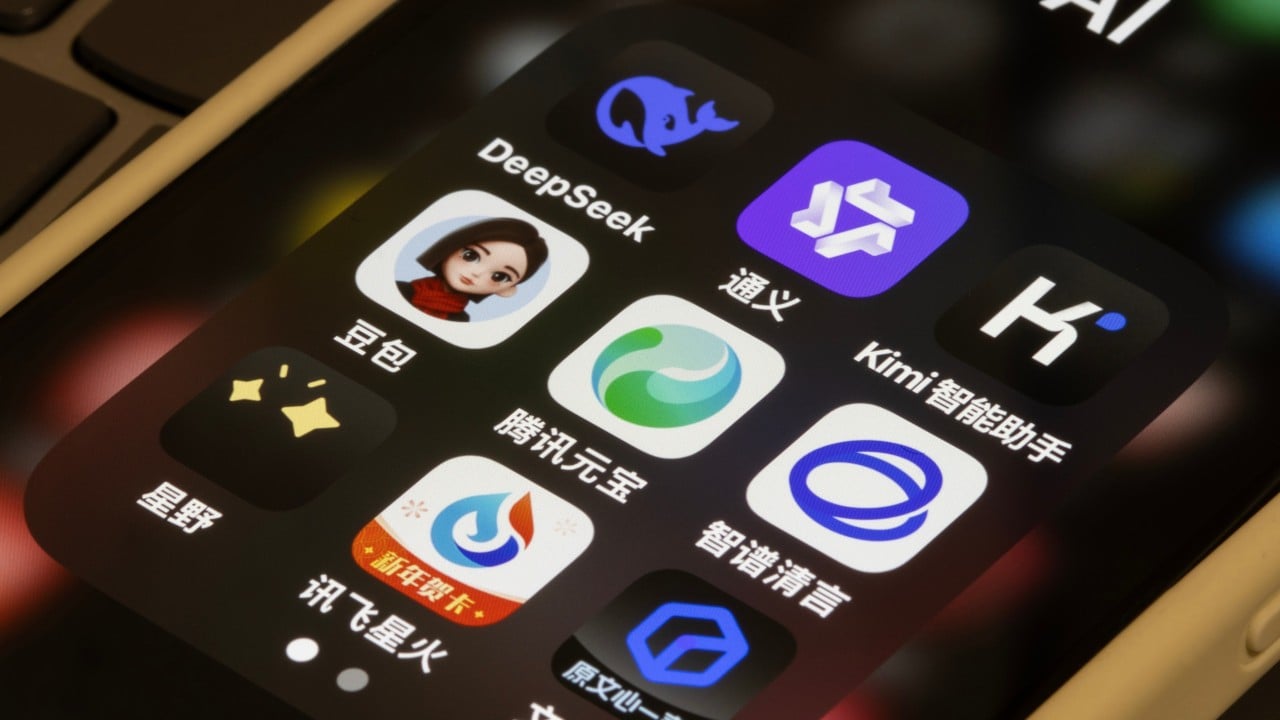
China’s open-weight AI models are winning global users. Who is capturing the value?
China’s open-weight artificial intelligence models are taking off globally, but much of the money they generate is flowing to third-party providers rather than the companies that create them, according to a new study. Developers including DeepSeek and Moonshot AI make their model weights – essentially the “brains” of their AI systems – freely available for download. This strategy, which has accelerated global adoption over the past two years, allows other companies to run the models on their own...

Why Trump chose these leaders to head his 'Super Intelligence Force'
President Trump’s selection of four administration officials to head up his new “Super Intelligence Force” is offering a window into how the White House will approach AI in the face of pressure over its risks. The group of government leaders each reflect different priorities of the Trump administration after months of mixed messaging on the...


YOUR NEWS, OUR NETWORK.
Do you have Great News you want to tell the world?
Be it updates about your business or your community, you can make sure that it’s heard by submitting your story to our network reaching hundreds of news sites across 6 verticals.