
Beyond Visible Reserves: Duraqex Proposes Four Layers of Evidence Review
Sep 9, 2026
Connecting asset control, liability inclusion, asset segregation, and audit and governance to support more comprehensive transparency disclosures by digital asset platforms
Brazil, September 9, 2026 -- Duraqex proposes four layers of evidence review for proof of reserves, bringing asset control, liability inclusion, asset segregation, and audit and governance into a common assessment approach. The principles aim to help users and institutional due diligence teams understand which conclusions a reserve disclosure supports and which questions require additional documentation.
The proposal addresses a central question in digital asset transparency: when a platform displays asset addresses, balances, or verification results, how can readers assess the relationship between that information and the platform’s obligations?
Under Duraqex’s proposed approach, the value of proof of reserves must be understood in the context of its timing, scope, and verification procedures. Verifying assets at a particular moment provides a starting point. Assessing how those assets correspond to customer entitlements, whether their use is restricted, and how their status changes after disclosure requires several forms of evidence to be connected.

Layer One: Who Controls the Assets, and What Does the Verification Cover?
Asset control is the starting point for review. Disclosures should identify the assets, accounts, or addresses included, the methods used to verify control, and the specific time to which the verification relates.
Different procedures may support different conclusions. A clear disclosure should therefore explain whether verification establishes control over an address, confirms an account balance, or also examines ownership rights and conditions governing the use of the assets.
Duraqex proposes that statements about asset control identify both the scope of coverage and any exclusions. Verification of a group of addresses should not be extended into a conclusion about all assets held by a platform. The existence of an asset balance should also be addressed separately from whether those assets are subject to pledges, lending arrangements, or other restrictions.
Layer Two: Are the Relevant Liabilities Fully Included?
Reserve information needs to be read alongside the basis used to determine liabilities. A comparison becomes meaningful only when the obligations against which the assets are being assessed are clearly defined.
At this layer, Duraqex focuses on the scope of customer balances included, the treatment of different accounts and products, and whether other obligations that could affect the assessment are addressed. Disclosures should also explain whether assets and liabilities are measured at comparable points in time, avoiding an apparently complete comparison assembled from mismatched dates.
For mechanisms that allow users to verify the inclusion of their own balances, individual record verification must be distinguished from a review of the completeness of total liabilities. A user’s ability to confirm that their record is included does not, by itself, establish whether other accounts or obligations have been omitted.
Duraqex therefore proposes that liability definitions receive the same clarity of disclosure as asset coverage. Any conclusion about coverage should state the scope and assumptions on which it depends.
Layer Three: How Are Customer Assets Separated From the Platform’s Own Activities?
Asset segregation concerns the arrangements governing how customer assets are held, used, and managed.
Duraqex’s review principles call for technical records to be explained alongside legal and operational arrangements. Separate addresses or accounts can help identify assets, but further explanation is needed regarding the entity holding them, how customer entitlements are recorded, what restrictions apply to their use, and which documents support those arrangements.
The purpose of this layer is to connect separate asset records with the specific protections afforded to customer entitlements. Descriptions of segregation should be supported by reviewable account structures, agreements, and controls, without inferring broader protections solely from labels such as “separate wallet” or “dedicated account.”
Layer Four: Who Performs the Verification, and How Is Accountability Maintained?
The credibility of evidence also depends on the verification procedures and the governance that follows.
Duraqex proposes that disclosures involving third parties specify the nature of the engagement, its scope, the methods applied, the report date, and its limitations. Different forms of inspection or verification should not all be described as audits covering the platform’s entire financial and operational position.
The frequency of updates also requires clear explanation. Periodic disclosures should enable readers to identify when the latest verification occurred, what information gaps exist between reviews, and how discrepancies will be corrected and explained.
At this layer, transparency also includes the handling of exceptions: who is responsible for investigating them, which changes require renewed disclosure, and under what circumstances earlier conclusions cease to apply. Version histories and correction records allow the evidence to be tracked over time.
Giving Every Conclusion a Clearly Defined Scope
Across these four layers, Duraqex advocates disclosing covered assets, liability definitions, verification timing, update frequency, third-party procedures, segregation structures, and known limitations together. This allows readers to examine conclusions through a connected chain of evidence.
The approach also establishes distinctions between materials at different stages. Methodology descriptions, internal testing, third-party verification, and formal audits should each be presented according to their actual nature. Work that remains incomplete should retain an explicit status indicating that further verification is required.
For users and institutional due diligence teams, the practical value of transparency lies in the ability to ask further questions: which materials support a conclusion, what information is missing, and what additional evidence would be needed to support the next assessment?
Through these review principles, Duraqex extends its discussion of market infrastructure to the interpretation and use of reserve information. Its central proposition is that public conclusions should remain aligned with the scope of the evidence, allowing asset disclosures to form an examinable connection with liabilities, customer entitlements, and ongoing governance.
This release describes principles for evaluating proof of reserves. It does not represent that Duraqex has completed a reserve audit, published a third-party assurance report, or verified its ongoing solvency. Specific reserve positions and verification results should be assessed through formally published reports and supporting documentation.
About Duraqex
Duraqex conducts architectural research and platform development focused on digital asset market infrastructure, capital efficiency, and verifiable operating rules. Its work examines the connections between market access, rule enforcement, asset disclosures, and settlement evidence.
Website:
Media Contact:
Contact Info:
Name: Marit Sandvold-Aarnes
Email: Send Email
Organization: Duraqex
Phone: 9167939576
Website: https://www.desixb.com/
Release ID: 89202845
Should you come across any errors, concerns, or inconsistencies within this press release's content, we urge you to reach out without delay by contacting [email protected] (it is important to note that this email is the authorized channel for such matters, sending multiple emails to multiple addresses does not necessarily help expedite your request). Our committed team will promptly address your feedback within 8 hours and take appropriate measures to resolve any identified issues or guide you through the removal process. Providing accurate and dependable information remains our utmost priority.

Samsung, SK hynix shareholder return policies in focus ahead of Q3 earnings
Shareholder return policies of Samsung Electronics and SK hynix are gaining market attention ahead of their announcements for third-quarter earnings, as investors see them as a key way to address the mismatch between the chipmakers' record-breaking profits and their sluggish share prices. Samsung Electronics is set to announce its three-month financial results during its earnings call on Thursday, while SK hynix said it will announce its results on its earnings call on Wednesday. Earnings are expected to be exceptionally strong, as surging demand for memory chips and continued supply bottlenecks have driven up average selling prices across the memory chip market. In its earnings guidance released Oct. 8, Samsung Electronics estimated third-quarter revenue of 195 trillion won ($146.96 billion) and operating profit of 107.4 trillion won. If realized, the company will become the first Korean company to surpass 100 trillion won in quarterly operating profit. SK hynix is expected to post 98.23 trillion won in revenue and 76.96 trillion won in operating profit during the same period, according

Early user reports of iPhone Duo mishaps see cracked screens and faulty pixels
Users report that inner displays become damaged after a few folds, with

Two part-timers and one AI orchestrator: Inside a Dubai conference on “The Breaking Point” — Part 1
Most conferences are built the same way. A committee brainstorms a theme, a team chases speakers, a designer lays out a program, and everyone hopes the real value happens in the corridors. Three days in Dubai this October worked differently. The operating model was deliberately lean: two people shaping the ideas and running the room, […] The post Two part-timers and one AI orchestrator: Inside a Dubai conference on “The Breaking Point” — Part 1 appeared first on e27.

Ailytics bags US$7.4M Series A to make old CCTV cameras earn their keep
Most industrial CCTV cameras lead a thankless life. They record everything, are watched by almost no one, and only become important after something has gone wrong, when their footage turns into evidence rather than prevention. Singapore-based Ailytics has built a business on reversing that order. The vision AI startup has raised US$7.4 million in an […] The post Ailytics bags US$7.4M Series A to make old CCTV cameras earn their keep appeared first on e27.

Youth brain drain: A hidden threat in Indonesia’s agriculture sector
Indonesia is losing its farmers. According to Statistics Indonesia (BPS), the number of farmers dropped from 31.7 million in 2013 to 29.3 million in 2023. That is a drop of about 7.5 per cent in ten years. Many of them moved to other jobs, such as construction work, factory work, or selling in the market, […] The post Youth brain drain: A hidden threat in Indonesia’s agriculture sector appeared first on e27.
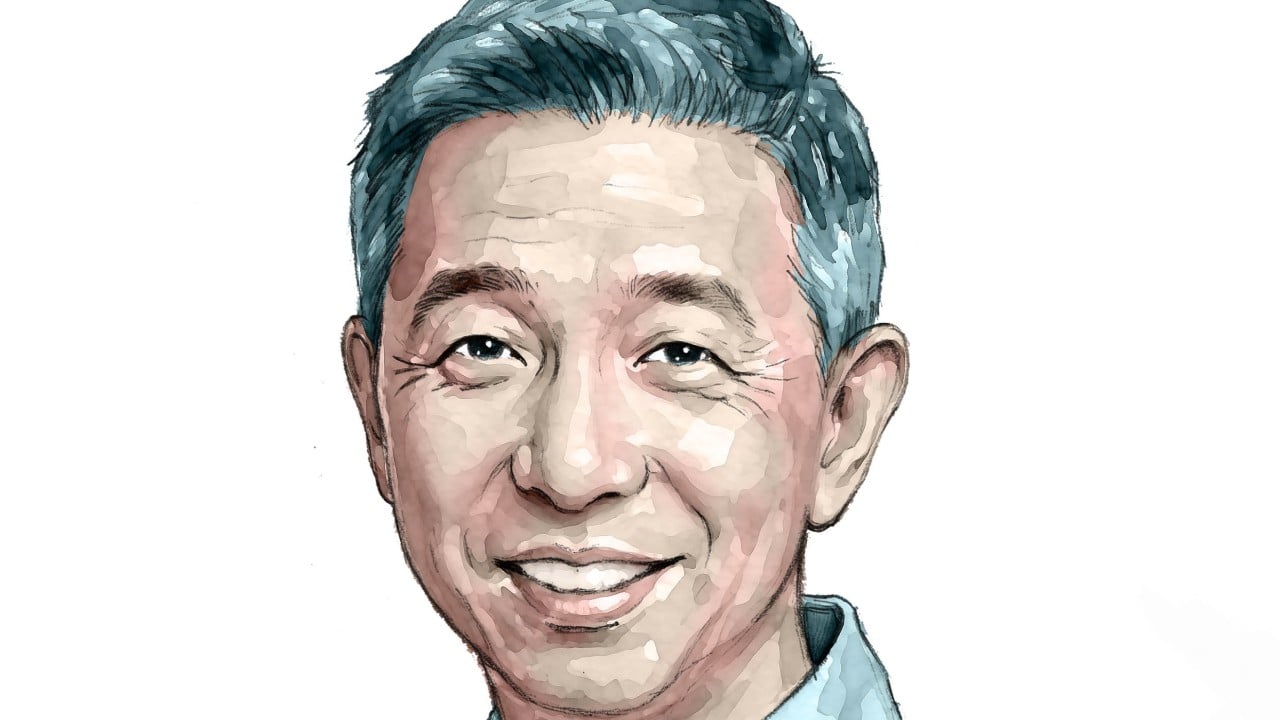
Alibaba Cloud founder on how AI can unlock human potential
Long before artificial intelligence became the next big thing in the tech industry, Wang Jian was crafting the foundational infrastructure that would eventually power it. In 2008, he joined Alibaba Group Holding – owner of the South China Morning Post – as chief architect and founded Alibaba Cloud in 2009, convincing the company’s leadership to invest heavily in building a cloud computing infrastructure from scratch. Today, Wang’s purview has expanded considerably. As an academician at the...

Japan’s innovation problem is execution, and Southeast Asian startups are built for it
Japan has industrial expertise and established corporate networks. Southeast Asia has startups building digital products for fast-changing markets. The opportunity lies in connecting these strengths, not simply exporting Japanese technology or selling into Southeast Asia. Japan’s next innovation challenge is about execution Japan has long been associated with advanced manufacturing, engineering excellence, and globally competitive […] The post Japan’s innovation problem is execution, and Southeast Asian startups are built for it appeared first on e27.

Founders are buying gold, not Lamborghinis, after the exit
A running joke in Singapore’s startup circles holds that a founder’s net worth exists only in two places: the cap table and the LinkedIn bio. For most of Southeast Asia’s entrepreneurs, the joke still lands. IPO windows open and slam shut, trade sales are thin on the ground, and secondary sales have become the region’s […] The post Founders are buying gold, not Lamborghinis, after the exit appeared first on e27.
China shoots ahead on AI video models
While few dispute that China is narrowing the gap with the United States in developing artificial intelligence (AI) models, there is one area where Chinese firms are already the undisputed leaders: video. China has seen a proliferation of advanced generative AI video models – systems trained on visual data to generate or edit video content based on user inputs such as text prompts, images and audio. The country’s vast short-video ecosystems and looser copyright rules have helped give Chinese...

Thirty climate tech startups in Southeast Asia that would rather build than pledge
Southeast Asia has a talent for making climate pledges sound like wedding vows: grand, emotional and frequently broken. Net-zero deadlines stretch to 2050 and beyond, yet coal still dominates several national grids, petrol motorbikes still choke the cities and mangroves still vanish faster than ministers can name them. Into that gap has stepped a scrappy […] The post Thirty climate tech startups in Southeast Asia that would rather build than pledge appeared first on e27.

How a 39-store retail chain in Laos moved from Excel to AI agents
Until this summer, the morning numbers at LDC Import-Export Co., Ltd. were built by hand. LDC is a Lao distribution and retail group. It started in Vientiane in 2011, distributing local and imported goods, and its retail arm now runs 39 convenience stores across seven provinces, including Jiffy shops on PTT fuel forecourts and its […] The post How a 39-store retail chain in Laos moved from Excel to AI agents appeared first on e27.

Strong iPhone Duo demand reportedly prompts Apple to increase orders by 44%
The iPhone Duo reportedly saw stronger-than-expected pre-orders in several major markets, prompting a significant increase in production orders.


YOUR NEWS, OUR NETWORK.
Do you have Great News you want to tell the world?
Be it updates about your business or your community, you can make sure that it’s heard by submitting your story to our network reaching hundreds of news sites across 6 verticals.