
Bakeology Studio Marks Six Years of Growth, Connecting Vocational Education, Entrepreneurship and Economic Opportunity in South Africa
Nov 26, 2026
Founded in 2019, Bakeology Studio has combined practical culinary education, entrepreneurship and retail expansion, recording nearly 29,383 student training participations.
South Africa, November 26, 2026 -- From Practical Skills to Economic Opportunity
Having a practical skill does not always guarantee an income. For many individuals, the challenge is finding an opportunity to translate their abilities into employment, self-employment or an independent business.

In South Africa, changing industry requirements, organisational restructuring and employment pressures have increased the importance of alternative pathways towards economic participation. Against this backdrop, Bakeology Studio has developed a business model that connects vocational education with commercial experience and entrepreneurship.
Founded in 2019 by Amb. Dr. Deepa C. Lalloo, also known as Sunaina Deepa Lalloo, Bakeology began as a specialist baking, patisserie and culinary skills training centre. Over six years, the business expanded its activities to include retail bakery operations, developing a three-store retail footprint alongside its educational activities.
The company's development reflects a broader approach to vocational education, where practical training is considered not only a means of learning a trade but also a foundation for exploring employment, income generation and independent enterprise.
Building Marketable Skills Through Vocational Education
When Bakeology commenced operations in 2019, its initial offering included 18 certified programmes and 14 workshops. Its courses were certified through the South African Chefs Association (SACA) and Worldchefs.
The training philosophy focused on developing practical capabilities that could be applied within the baking, patisserie, hospitality, catering and food production industries.
Beyond technical instruction, the approach recognised the importance of professional discipline, precision, consistency and an understanding of commercial expectations.
These capabilities are relevant to individuals pursuing employment within established organisations as well as those considering self-employment. However, technical proficiency represents only one component of developing a sustainable business.
Understanding production costs, pricing, procurement, customer requirements and operational management can be equally important when transforming a practical skill into an income-generating activity.
Connecting Craftsmanship with Commercial Understanding
Bakeology's broader philosophy recognises that producing quality bakery products requires a combination of technical knowledge and professional responsibility.
Accurate measurements, temperature control, preparation techniques and consistent presentation influence product quality. These practices also develop attention to detail, patience and accountability.
The same principles apply to commercial operations, where businesses must maintain quality standards, manage resources and meet customer expectations.
For individuals considering a baking enterprise, financial literacy and commercial awareness are particularly relevant. Understanding ingredient costs, packaging expenses, selling prices, profit margins and cash flow can help entrepreneurs make informed decisions.
Bakeology's strategic approach places importance on connecting technical abilities with financial understanding, customer awareness and business operations.
This perspective recognises that increased sales do not automatically translate into higher profitability. Without appropriate cost management and operational planning, growing demand can create additional financial pressure.
From Training Centre to Three Retail Stores
Bakeology's development includes several significant business milestones.
Established in 2019, the organisation initially concentrated on specialist baking and patisserie education. In 2021, it entered the retail market by opening its first store, extending its activities into the commercial bakery environment.
In 2023, the company expanded its training centre and opened its second and third retail stores, establishing a three-store retail footprint.
The expansion connected the company's educational activities with practical retail experience. Operating commercial outlets involves managing inventory, procurement, production schedules, product consistency, customer service and daily financial performance.
This progression also provides a practical business context for the company's emphasis on entrepreneurship and commercial capability.
Retail Performance Reflects Seasonal Trading Patterns
Bakeology's six-year business overview records differences in average monthly revenue between festive and quieter trading periods.
Average monthly revenue per store reached approximately R71,000 during the festive period, compared with approximately R49,000 during quieter periods. The difference represents an increase of R22,000 per store, equivalent to a reported festive revenue uplift of approximately 44.9%.
The overview also records a 31.0% decline from festive to quieter trading periods.
Its comparative analysis considers South African specialised food, beverage and tobacco retail data across six festive trading cycles ending in January 2026. The national median festive increase was 41.0%, while the median post-festive decline was 32.3%.
The comparison uses different measurement bases. Bakeology's figures compare festive revenue with its quieter-month average, whereas the national figures measure actual November-to-December increases and December-to-January declines.
These figures provide insight into the seasonal characteristics of the company's retail operations and the importance of managing changing customer demand throughout the year.
Six Years of Training Activity Across 54 Countries
Bakeology's six-year business overview records approximately 29,383 student training participations, approximately 4,218 training sessions and approximately 22,566 invoices issued across its courses and programmes.
Its educational activities have represented learners from 54 countries.
The recorded training participations equate to an average of approximately 4,897 participations annually. The organisation's reported figures also represent approximately 59 training sessions and 413 student participations per month.
These figures demonstrate the scale of its training operations and the geographical reach of its educational activities.
Student training participations should not be interpreted as unique individuals trained, as the same learner may participate in multiple courses or programmes.
For a more comprehensive assessment of long-term educational outcomes, additional indicators could include graduate employment, independent business creation, income development and enterprise sustainability.
Entrepreneurial Leadership and the Future of Skills Development

Behind Bakeology's development is the entrepreneurial leadership of Amb. Dr. Deepa C. Lalloo.
Her professional background includes business strategy, organisational development, financial management, human capital and executive leadership.
This experience informs a business philosophy that connects individual capability with commercial opportunity. It recognises that developing a sustainable enterprise requires more than a promising idea or technical skill. Financial discipline, operational structures, market understanding and capable people are also essential.
For individuals facing employment challenges, vocational education can provide another route towards professional development. Baking and patisserie skills may support opportunities within hospitality, commercial bakeries, catering services or independent businesses.
Training cannot guarantee employment or entrepreneurial success. However, when combined with commercial knowledge, practical experience and appropriate business planning, vocational capabilities can help individuals become better prepared to pursue economic opportunities.
Bakeology's six-year development provides an example of how specialist skills education can evolve alongside commercial operations while maintaining a focus on practical learning and entrepreneurship.
The company's journey raises a wider question for vocational education in South Africa: should training simply prepare individuals to perform a task, or should it also help them understand how their abilities can create a livelihood?
Bakeology's approach places importance on both dimensions, connecting craftsmanship with the knowledge required to pursue employment, income generation and independent enterprise.
About Bakeology Studio
Bakeology Pty Ltd, operating as Bakeology Studio, is a South African baking, patisserie and culinary skills training business founded in 2019 by Amb. Dr. Deepa C. Lalloo, also known as Sunaina Deepa Lalloo. The organisation developed from a specialist vocational training centre into a business combining educational programmes with retail bakery operations. Its activities focus on practical culinary education, craftsmanship, professional development and the commercial understanding required to explore entrepreneurship. By 2023, Bakeology had expanded to three retail stores alongside its training activities. Its six-year business overview records approximately 29,383 student training participations and learners representing 54 countries. You can email directly to [email protected].
Contact Info:
Name: Deepa C. Lalloo
Email: Send Email
Organization: Bakeology Studio
Website: https://www.bakeologystudio.com/
Release ID: 89211018
If you encounter any issues, discrepancies, or concerns regarding the content provided in this press release, or if there is a need for a press release takedown, we urge you to notify us without delay at [email protected] (it is important to note that this email is the authorized channel for such matters, sending multiple emails to multiple addresses does not necessarily help expedite your request). Our expert team will be available to promptly respond within 8 hours – ensuring swift resolution of identified issues or offering guidance on removal procedures. Delivering accurate and reliable information is fundamental to our mission.

SK Chemicals' bio-based plastic used in specialty coffee drippers
SK Chemicals' high-performance copolyester has been used in specialty coffee drippers developed by Korean brand Hello World, highlighting the material's potential in premium kitchenware. The company said Thursday that its Ecozen material has been applied to Hello World's V3 01 Neon Green and V3 02 Black drippers, which are exported to 15 countries. Hello World CEO and product developer Jay Kim selected Ecozen for its heat resistance and low thermal conductivity, which help maintain water temperature during coffee extraction. Partially made from plant-based biomass, Ecozen can withstand boiling water at up to 100 degrees Celsius while retaining the low thermal conductivity of conventional plastics. This combination makes it suitable for pour-over coffee brewing, where stable water temperatures are essential to extracting desired flavors and aromas. Unlike metal, which transfers heat quickly, Ecozen helps minimize heat loss during brewing. "In pour-over coffee, a range of factors, including water temperature, extraction time and flow rate, shape the flavor and aroma of the coffee," Kim said

Samsung reorganizes memory, system LSI units to boost AI chip competitiveness
Samsung Electronics has consolidated its memory development operations under the direct supervision of the head of its memory business division, industry sources said Thursday. The latest organizational shuffle also expanded the sales and marketing organization of its system LSI division, which oversees chip design, they said. The changes are aimed at accelerating the development of next-generation memory technologies to strengthen the company's position in the artificial intelligence (AI) chip market, the sources said. Yoon Ha-ryong, who previously headed the memory marketing team at Samsung's Device Solutions America (DSA), which oversees Samsung's semiconductor production in the United States, has been tapped to lead the company's U.S. operations. Hwang Sang-joon, who previously headed both the memory development division and the DRAM development team, was promoted to head of the memory business division.

Real estate developer-led consortium expresses intent to acquire troubled retailer Homeplus: sources
A consortium led by a real estate developer is reportedly pursuing the acquisition of the troubled discount store chain Homeplus, industry sources said Thursday. The consortium, comprised of a real estate developer and a logistics company, has submitted a letter of intent (LOI) to purchase the entire retail chain, according to sources. The lead underwriter is said to be monitoring the market situation while being open to non-binding offers from other bidders, they added. In September, the Seoul Bankruptcy Court approved a corporate rehabilitation plan for Homeplus, wholly owned by private equity firm MBK Partners. But the discount store chain has been struggling to repay its debts amounting to 1.3 trillion won ($968.3 million) due to a liquidity crunch. Homeplus has suspended online delivery services as of Thursday morning. It will also temporarily close 67 stores that were in operation starting Friday.

Starbucks opens hanok-inspired store at N Seoul Tower
The main entrance of Starbucks's N Seoul Tower branch, set to open Friday, is seen in this handout photo. The company's 15th special store in Korea is located on the fourth and fifth floors of the Seoul landmark on Mount Nam and incorporates key elements inspired by traditional Korean hanok architecture. The store offers exclusive drinks, including a latte made with scorched rice, a traditional Korean ingredient, and a cocktail inspired by makgeolli, a traditional Korean rice alcohol. Courtesy of Starbucks Korea

Hoban's Hanjin KAL investment turns into exit dilemma
With Delta Air Lines throwing its weight behind Hanjin Group Chairman Cho Won-tae, Hoban Group is left with few viable options to challenge the incumbent leadership at Hanjin KAL, potentially prompting the construction group to consider an exit from its investment. Delta holds a 14.9 percent stake in Hanjin KAL, bringing its combined shareholding with Cho and his related parties, who own 20.58 percent, to 35.48 percent. Hoban and its affiliates hold 20.69 percent, making them the airline group's largest shareholder bloc by a narrow margin. The gap could widen further if Cho completes his planned purchase of an additional 325,000 shares, equivalent to 0.49 percent, lifting his bloc's stake to approximately 21.07 percent and putting him back ahead of Hoban as the largest shareholder by Jan. 1. Hoban's options for building a rival shareholder coalition also appear limited. The state-run Korea Development Bank (KDB), which holds a 10.58 percent stake, recently reiterated that it has no immediate plans to sell its shares. The National Pension Service (NPS), another potential source of voting

LG Chem plans $11 bil. R&D push to go beyond petrochemicals
LG Chem plans to invest 15 trillion won ($11.2 billion) in research and development by 2035 as it seeks growth beyond petrochemicals in which persistent global oversupply has squeezed profitability. The company said it will direct 70 percent of that investment to priority businesses, including materials for semiconductors, mobility and robotics, as well as new cancer drugs. LG Chem aims to double its electronic materials business to 2 trillion won by 2030 from the current 1 trillion won, driven by advanced semiconductor packaging materials. To support this growth, the company has established new R&D teams dedicated to semiconductors and automotive electronics, as well as a business development unit that reports directly to the CEO. As artificial intelligence (AI) and high-performance computing drives demand for denser, multilayer chip packages, LG Chem is expanding beyond memory chips into packaging materials for AI and other nonmemory chips. Its current portfolio includes copper-clad laminates and die attach film. The company has completed development of photo imageable dielectric for f

Integrated LCC headquarters to be based in Busan
The headquarters of the integrated low-cost carrier (LCC) formed through the merger of Air Busan, Jin Air and Air Seoul will be based in Busan, the city government said Thursday. Busan Mayor Chun Jae-soo and Hanjin Group Chairman Cho Won-tae reached the agreement during a meeting in Busan, paving the way for the launch of the integrated airline in March next year. The agreement follows close consultations between the city and Korean Air, with Hanjin Group making the decision in consideration of Busan's growth potential and the importance of balanced national development, according to the city government. The integration follows Korean Air's acquisition of Asiana Airlines, scheduled to be completed on Dec. 17. Under the broader restructuring, Korean Air's Jin Air will be integrated with Asiana Airlines' Air Busan and Air Seoul to form a single low-cost carrier. The integrated LCC will operate a fleet of 60 aircraft, comprising 33 from Jin Air, 21 from Air Busan and six from Air Seoul, all under the Jin Air brand. It will have approximately 4,200 employees and is projected to generate aroun

Korea secures final victory in ISDS case brought by Iran's Dayyani family
The Korean government has secured a final victory in the second investor-state dispute settlement (ISDS) arbitration brought by six members of Iran's Dayyani family, the justice ministry said Thursday. The ministry said the dismissal of the entire 770 billion won ($573 million) claim has become final, as the Dayyani family did not file a challenge with a British court to set aside the second ISDS arbitral award within the statutory deadline. As a result, the Korean government is not only free from any obligation to pay the claimed amount but will also recover 4.8 billion won in legal costs, it said. The case traces back to 2015, when the Dayyanis, a major shareholder of Entekhab Industrial Group, filed for arbitration after Korea's state-run Korea Asset Management canceled a contract to sell a major stake in Daewoo Electronics to Entekhab in 2011. In a 2018 arbitration, Seoul was ordered to pay 73 billion won plus interest in compensation to the Dayyanis over the failed takeover of Daewoo Electronics. The ruling was finalized in December 2019, with Seoul making a payment in April 2022. Th
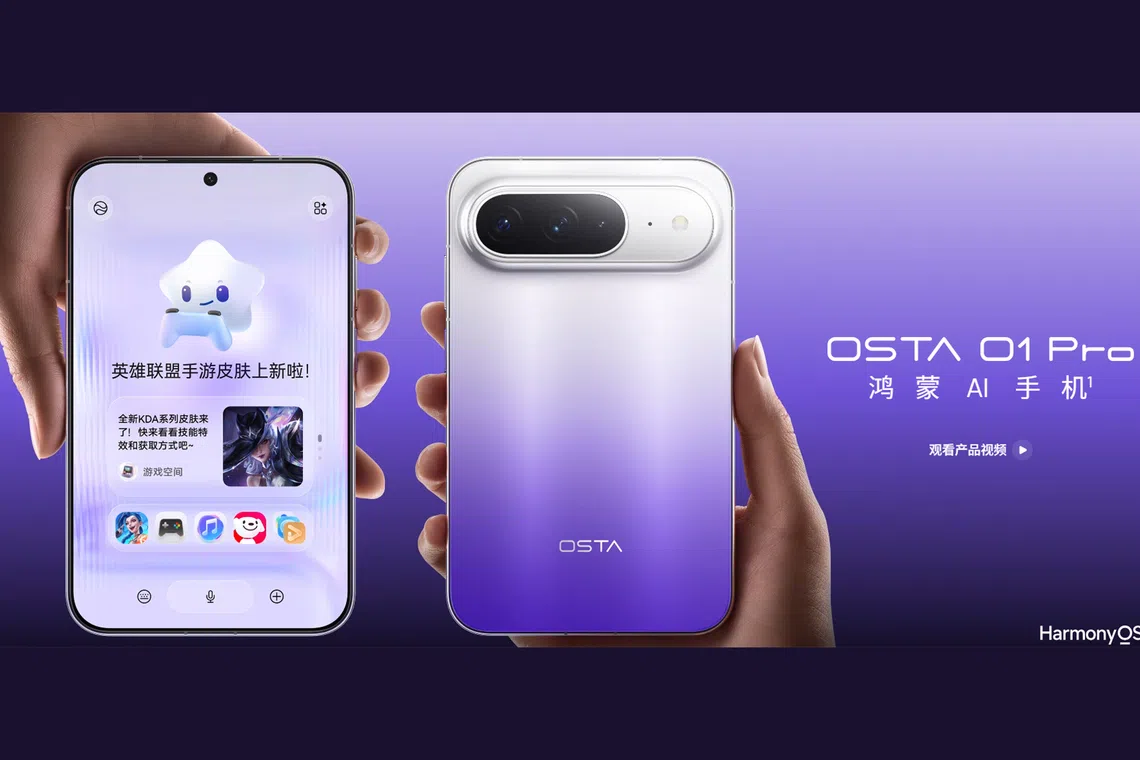
Huawei’s OSTA O1 Pro is a new sub-brand for its passport-shaped, candybar phone
Do you like the wideness of a passport foldable but don’t want it to fold? Meet the Huawei OSTA O1 Pro instead.

The encryption is fine. The problem is the AI reading over your shoulder
Last week, a messaging app with a fraction of WhatsApp’s reach did something Southeast Asia’s regulators, telcos and super apps have not yet thought to do. It treated the AI built into your phone as a potential intruder. On 20 November, Signal said it would block screenshots by default on Android and iOS to stop […] The post The encryption is fine. The problem is the AI reading over your shoulder appeared first on e27.

5G coverage expanded in CAMANAVA for TNT
TNT is bringing its 5G experience closer to more communities, now covering Caloocan, Malabon, Navotas, and Valenzuela, collectively known as CAMANAVA. It is also expanding its 5G coverage across the country. With significantly faster, more responsive connectivity, students can access online learning resources, riders can manage bookings, and small businesses can communicate with customers and
Huawei advances home-grown chip design ecosystem while eyeing global push to rival Nvidia
Huawei Technologies and a local software partner claim to have made breakthroughs in domestic chip design tools built around the telecoms equipment giant’s Tau Scaling Law, marking the latest effort to cultivate a self-reliant semiconductor supply chain in China. Hangzhou-based Phlexing Technology said at Huawei’s annual intellectual property (IP) event in Beijing on Tuesday that it had partnered with the Shenzhen-based company to develop extraction and sign-off tools for electronic design...


HS Hyosung promotes 2 CEOs to presidents


YOUR NEWS, OUR NETWORK.
Do you have Great News you want to tell the world?
Be it updates about your business or your community, you can make sure that it’s heard by submitting your story to our network reaching hundreds of news sites across 6 verticals.