
Automation vs. Traditional Setups: Streamlining Output with Hengchang Professional Automatic Mattress Machine Solutions
Sep 20, 2026
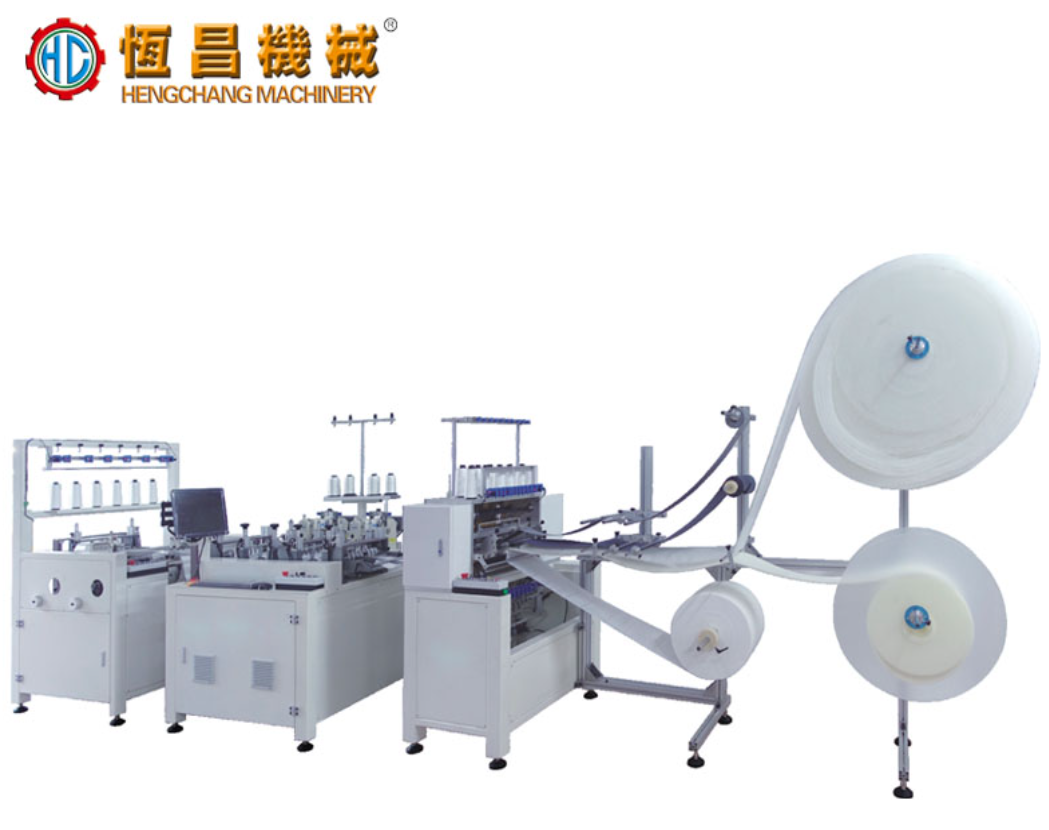
Dongguan, Guangdong Sep 19, 2026 (Issuewire.com) - Redefining Productivity Per Square Meter
How many mattress panels can a production line actually deliver per hour when changeover gaps, manual stacking pauses, and operator fatigue eat into every shift? And what happens to that number when fabric width or quilting pattern complexity changes mid-run?
These questions sit at the center of a practical debate playing out across mattress manufacturing facilities: whether to stay with conventional single-machine layouts or move toward integrated automatic mattress machine solutions that tie multiple process steps into one controlled sequence. Hengchang Quilting Machinery Factory has built its product range around a specific answer -- professional automatic mattress machine solutions that unify fabric feeding, quilting, edge trimming, and stacking under a single timing architecture, making output per square meter a predictable, adjustable metric rather than a variable that drifts with crew availability.
The bottleneck in traditional setups rarely comes from spindle speed or needle frequency alone. Most standalone quilting machines run at competitive rates. The real drag surfaces between machines -- during roll changes, when cut panels queue for manual folding, or when operators walk finished pieces to a stacking station. Each gap may last only seconds, but across an eight-hour shift those seconds compound into meaningful lost capacity. Hengchang addresses this by engineering its automatic mattress machine lines so that roll feeding tension, seam-and-cut synchronization, and panel counting all execute within the same PLC timing cycle. The result is that units-per-hour scales linearly with fabric width and pattern selection, instead of plateauing once human handling reaches its natural rhythm.
Inline Timing Logic Rather Than Machine Stacking
A common misconception treats automation as simply placing more machines side by side and connecting them with conveyors. That approach can actually increase idle time if each station finishes its task at a different pace and waits for the next one to clear. Hengchang's product architecture takes a different path. The company's high-speed computerized quilting machines, computerized automatic cutting machines, and automatic stacking modules share a unified control bus. Fabric tension from the unwinding station feeds back to the quilting head speed, which in turn signals the four-side trimming unit and the downstream stacker.
This inline timing logic means that when a pattern file calls for denser stitching -- and therefore slower needle travel -- the cutting and stacking modules decelerate in concert rather than cycling empty. Conversely, simpler patterns allow the entire line to ramp up without any single station becoming a choke point. Operators set the target output, load the pattern, and monitor rather than intervene. Hengchang Quilting Machinery Factory references this approach across its mattress production equipment range, where the emphasis falls on coordinated throughput rather than peak speed of any individual component.
The practical payoff shows up in shift-to-shift consistency. Facilities running Hengchang automatic mattress machine configurations report that the gap between best-case and worst-case hourly output narrows considerably, because the timing discipline that a PLC enforces does not fluctuate with operator experience levels or shift changes.
Where Traditional Layouts Still Make Sense
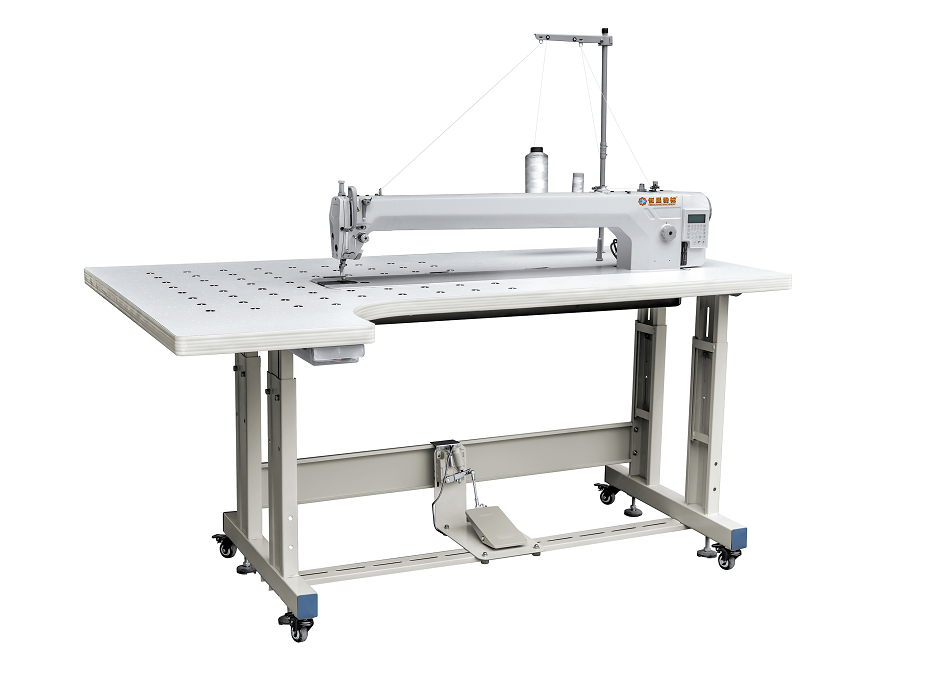
None of this implies that standalone machines lack purpose. In scenarios involving small-batch production with frequent SKU changes -- sample development, limited-edition collections, or contract work with highly variable panel sizes -- a single quilting machine paired with manual handling offers flexibility that a fully integrated line cannot match without lengthy reprogramming. Changeover on an automatic line, while faster than it was a decade ago, still involves loading new parameters, adjusting guide rails, and verifying stacking dimensions. For runs under a few hundred panels, that setup overhead may exceed the time saved during production.
Hengchang acknowledges this reality by continuing to offer standalone high-speed computerized quilting machines alongside its integrated lines. The choice between configurations is ultimately a throughput-volume calculation: once daily demand crosses a threshold where manual gaps consume more time than automated changeover, the integrated automatic mattress machine solutions begin returning value. Below that threshold, traditional setups remain economically rational.
The Real Barrier: Controls Integration and Online After-Sales Support
From the outside, an automated mattress line looks like hardware -- frames, rollers, blades, stackers. But the genuine complexity lives in the electrical control layer. Synchronizing servo drives across multiple stations and managing fault recovery so that a single sensor trip does not crash the entire line -- these capabilities separate a functional automatic line from a fragile one.
Hengchang Quilting Machinery Factory has built a responsive post-sale service infrastructure based on direct online communication. When an overseas facility in Southeast Asia or the Middle East encounters operational queries or timing issues, Hengchang's technical team provides fast online guidance, helping customer operators troubleshoot equipment, review error symptoms, and adjust parameter settings efficiently. This dedicated online support minimizes unexpected downtime and lowers the long-term cost of ownership for professional automatic mattress machine solutions deployed globally.
The company's quality management system -- covering incoming material inspection, in-process testing, and final acceptance -- extends into the software layer as well. Control programs undergo validation before release, ensuring that system updates maintain stable, proven timing sequences across production shifts.
Matching the Solution to the Production Profile
Deciding between automation and traditional setups is not a binary choice. Many facilities operate hybrid floors: an integrated Hengchang automatic mattress machine line handles high-volume SKUs that run daily, while a separate standalone quilting machine covers samples and short runs. This mixed approach captures the throughput benefits of automation where volume justifies it, without forcing low-volume work onto equipment designed for continuous operation.
Key variables in the decision include daily panel count targets, the number of pattern changes per shift, available floor space, and workforce availability. Hengchang's technical team typically reviews these parameters during pre-sale consultation, recommending line configurations that align capital expenditure with realistic payback timelines rather than pushing maximum automation for its own sake.
Conclusion: Output as a Committable Metric
The core promise behind Hengchang professional automatic mattress machine solutions is straightforward: by unifying process timing into a single controlled sequence, output per square meter becomes a number that production managers can commit to -- not an estimate that shifts with staffing or operator skill. Traditional setups retain their place for flexibility-intensive work, but wherever consistent volume matters, integrated timing logic delivers measurable, repeatable gains.
Facilities evaluating their next capacity investment can explore Hengchang's full range of quilting, cutting, and mattress production equipment, along with detailed specifications and application references, at https://machine-quilting.com/
Media Contact
Hengchang Quilting Machinery Factory
+86 13450027928
XiaLingBei Industrial Area, LiaoBuTown, DongGuan City, GuangDong Province, 523411
Source :Hengchang Quilting Machinery Factory
This article was originally published by IssueWire. Read the original article here.

French fridge hack highlights need for connected equipment security in Korea
A recent hacking incident involving commercial refrigerators at supermarkets in France is highlighting the importance of cybersecurity for connected equipment among Korean businesses, as companies increasingly rely on interconnected and centrally controlled systems for their operations. Industry officials said Thursday that the attack compromised supermarket refrigeration systems, but the underlying issue is the growing reliance of commercial equipment on network connectivity. They stressed the need to strengthen security across both hardware and software to ensure that no loopholes emerge anywhere in the system. The incident affected hundreds of supermarkets in France, where hackers reportedly gained remote access to centralized refrigeration control systems and manipulated temperatures, forcing retailers to discard spoiled food. Danish manufacturer Danfoss, which supplied the affected systems, attributed the incident to outdated equipment that had not received security updates. Retail chains, including supermarkets, use commercial refrigeration equipment. In Korea, major electronics c

Hanwha Systems' laser weapon intercepts all target drones in live demonstration
Hanwha Systems' laser air defense weapon Cheongwang successfully intercepted three out of three target drones in a live-fire demonstration, highlighting the company's efforts to expand its presence in the global air defense market. The company said Thursday that Cheongwang, also known as the Laser Air Defense Weapon Block-I, and a vehicle-mounted high-energy laser cannon intercepted the drones during the Army’s Army TIGER+ integrated combat exercise in Yangpyeong, Gyeonggi Province, on Wednesday. About 500 people attended the exercise, including the Army chief of staff, military officials, academics and industry experts. Cheongwang and the 30-kilowatt-class vehicle-mounted laser cannon achieved a 100 percent interception rate against the three drones. Small, low-cost unmanned aerial vehicles (UAVs) have emerged as growing battlefield threats, serving both reconnaissance and surveillance purposes and as attack weapons. Laser weapons are gaining attention as next-generation air defense systems capable of countering drone swarms while addressing some limitations of conventional missile-b

Shinhan's Lotte Insurance deal faces profitability, capital hurdles
Shinhan Financial Group is seeking to bolster its nonbank operations by acquiring Lotte Insurance, but analysts cautioned Thursday that a meaningful contribution to group earnings may take time, as the insurer could require substantial additional capital to strengthen its financial position. Concerns over the cost of the deal weighed on Shinhan shares, which plunged 4.31 percent Wednesday following Tuesday’s announcement and fell a further 0.84 percent Thursday. The group agreed Tuesday to purchase a 77.04 percent stake in Lotte Insurance from private equity firm JKL Partners for 693.3 billion won ($514.6 million). After securing regulatory approval, it plans to acquire the remaining shares and eventually merge the insurer with its existing subsidiary, Shinhan EZ General Insurance. Lotte Insurance has 14 trillion won in assets and 3.34 million customers, giving Shinhan a substantially larger foothold in non-life insurance. The financial group aims to raise annual profit from the business to at least 120 billion won within three years. But market analysts warned that the insurer’s wea

FSC's relocation to Sejong stirs unease across financial industry
The Financial Services Commission’s (FSC) planned relocation to the administrative city of Sejong next year is raising concerns across the financial industry about potential disruptions to communication with regulators and the resulting operational inefficiencies, industry officials said Thursday. Industry officials are particularly concerned that the move could make it harder for banks and securities firms, most of which are headquartered in Seoul, to consult financial authorities on regulatory matters. The country's top financial regulator, currently based in Seoul, plans to move to Sejong, about 110 kilometers to the south, in the second half of 2027. The move is part of a broader government plan to relocate 44 central government agencies and affiliated bodies from the Seoul metropolitan area to Sejong between 2027 and 2031, aiming to decentralize functions concentrated in the capital area and promote regional growth. Banks are weighing how to adapt, with some expecting to rely more heavily on remote communication. "We expect to establish ways to respond, including expanding the use

Hansae Mobility opens Uzbekistan plant to expand Central Asian business
QUVASOY, Uzbekistan — Hansae Mobility, a Korean automotive parts manufacturer supplying global carmakers, has expanded its overseas production capacity with the completion of a new plant in Quvasoy, in Uzbekistan's Fergana Region. Hansae Yes24 Group's automotive parts subsidiary held a completion ceremony for the plant Tuesday (local time) in a free economic zone in Quvasoy. The facility is operated by Hansae Mobility Turan, an Uzbekistan subsidiary wholly owned by Hansae Mobility. The ceremony was attended by Hansae Mobility CEO and Hansae Vice Chairman Kim Ik-whan, Mirzohid Murodilovich, deputy governor of Fergana Region, and other officials and representatives from Korea and Uzbekistan. The plant is expected to enable Hansae Mobility to supply its products more quickly to clients in Uzbekistan and expand its customer base in neighboring countries across the Commonwealth of Independent States (CIS). Before the plant opened, Hansae Mobility had to export the parts from Korea. The new facility adds to the company's existing manufacturing bases in Daegu, the U.S. state of Michigan and t

SK, Samsung among Korean firms considering Westinghouse stake acquisition
Major Korean companies including Samsung, SK and Doosan are considering participating in the acquisition of a stake in U.S. nuclear power company Westinghouse, according to industry sources. If private companies join nuclear cooperation between Korea and the United States, which has so far been led largely by state-run companies such as Korea Electric Power Corp. (KEPCO) and Korea Hydro & Nuclear Power (KHNP), the move is expected to give Korean companies greater momentum in entering the U.S. nuclear power market. Government and industry sources said Wednesday that the government has been surveying nuclear power-related companies about their interest in investing in Westinghouse since announcing its investment plans in the United States. Companies interested in participating recently gathered at a meeting hosted by KEPCO to discuss potential investment options, according to the sources. Samsung C&T, SK Group, Hyundai Engineering & Construction and Doosan Enerbility were among the companies that attended the meeting. Securing a stake in Westinghouse is one of the key issues in investment

Taihan Cable & Solution wins large US power grid turnkey project
Taihan Cable & Solution, a leading power cable and energy infrastructure manufacturer, said Thursday that its U.S. subsidiary has won a turnkey extra-high-voltage grid project in the United States, capitalizing on surging power demand from artificial intelligence (AI) and data centers. Under the deal, the subsidiary, T.E.USA, will oversee local engineering, construction and other work, while the Korean headquarters will produce and supply key materials such as extra-high-voltage cables and joints. In a turnkey contract, a single company handles a project from design through construction and hands it over ready for operation. The headquarters and the U.S. unit signed a material supply contract worth about 120 billion won ($89 million), which the company disclosed in a regulatory filing Thursday. Taihan did not reveal the total value of the turnkey project or the client, citing a nondisclosure agreement. The order follows another extra-high-voltage turnkey project worth about 100 billion won that the company won in the U.S. in January. Taihan said it has won all 500-kilovolt high-voltage a

CJ ONE launches global membership service for foreign visitors
CJ OliveNetworks, the digital and technology unit of CJ Group, is branching into the travel industry with a new global membership service that enables foreign visitors in Korea to earn rewards and redeem points at participating merchants, leveraging the country's tourism boom to drive new growth. The company said Thursday that its lifestyle membership platform, CJ ONE, had introduced CJ ONE Global, allowing international visitors to sign up using only email verification, without requiring a Korean phone number or domestic identification. The launch comes as interest in Korean food, shopping and culture spreads alongside the global popularity of Korean entertainment. According to the Korea Tourism Organization, about 12.8 million foreign tourists visited Korea from January through July, up 21.3 percent from the same period last year. Once registered, members receive a mobile barcode through the CJ ONE app that they can use to earn and redeem points at participating stores, as well as access new-member and birthday benefits. The service connects visitors with businesses spanning tourism, re

FADU unveils world's 1st file-semantic SSD to power AI workloads
Korean data center chipmaker FADU has unveiled what it calls the world’s first file-semantic solid-state drive (SSD), a storage technology designed to help artificial intelligence (AI) systems access data faster while reducing computing overhead and power consumption. The company introduced its file-semantic SSD, or FS-SSD, at the 2026 Open Compute Project Global Summit in San Jose, California, which ran from Monday to Thursday under the theme “Scaling Innovation for the AI Era.” Unlike conventional SSDs, which manage data through block addresses, FADU’s FS-SSD is designed to recognize and manage files directly, shifting tasks traditionally handled by a server’s central processing unit and operating system into the storage device itself. The technology uses FADU’s sixth-generation SSD controller, equipped with firmware that handles file searches, access permissions and file-to-address translation within the drive. By embedding file requests in standard Non-Volatile Memory Express commands, the system allows accelerators such as graphics processing units and data processing un

Korean, US biz leaders call for support to accelerate Korean investment projects in US
Korean and U.S. business leaders on Thursday called for faster regulatory approvals, tax and financial support, and visa reforms to ensure the successful implementation of major Korean investment projects in the United States. The call came in a joint declaration issued at a plenary meeting of the U.S.-Korea and Korea-U.S. Business Council, hosted by the Federation of Korean Industries (FKI), and attended by about 60 political and business leaders and experts from the two countries. Earlier this month, U.S. President Donald Trump announced details of Seoul's planned $200 billion investment in the U.S., part of a broader $350 billion commitment agreed to by the two countries last year in exchange for lower U.S. tariffs on Korean goods. In the joint declaration, the business circles called for measures to reduce trade uncertainty and reform regulations, urging the two governments to introduce fast-track approval procedures and provide tax and financial incentives for companies participating in strategic investment projects. They also called for improvements to visa systems and the establis

Filipinos rank among top 3 AI users on messaging platform
Filipinos rank among the top three markets worldwide for artificial intelligence feature usage on Rakuten Viber, according to the messaging platform, with young professionals among the most active users of its AI tools. Viber Chief Product Officer Nadav Melnick said nearly 20% of the platform’s monthly active AI users in the Philippines are aged 25
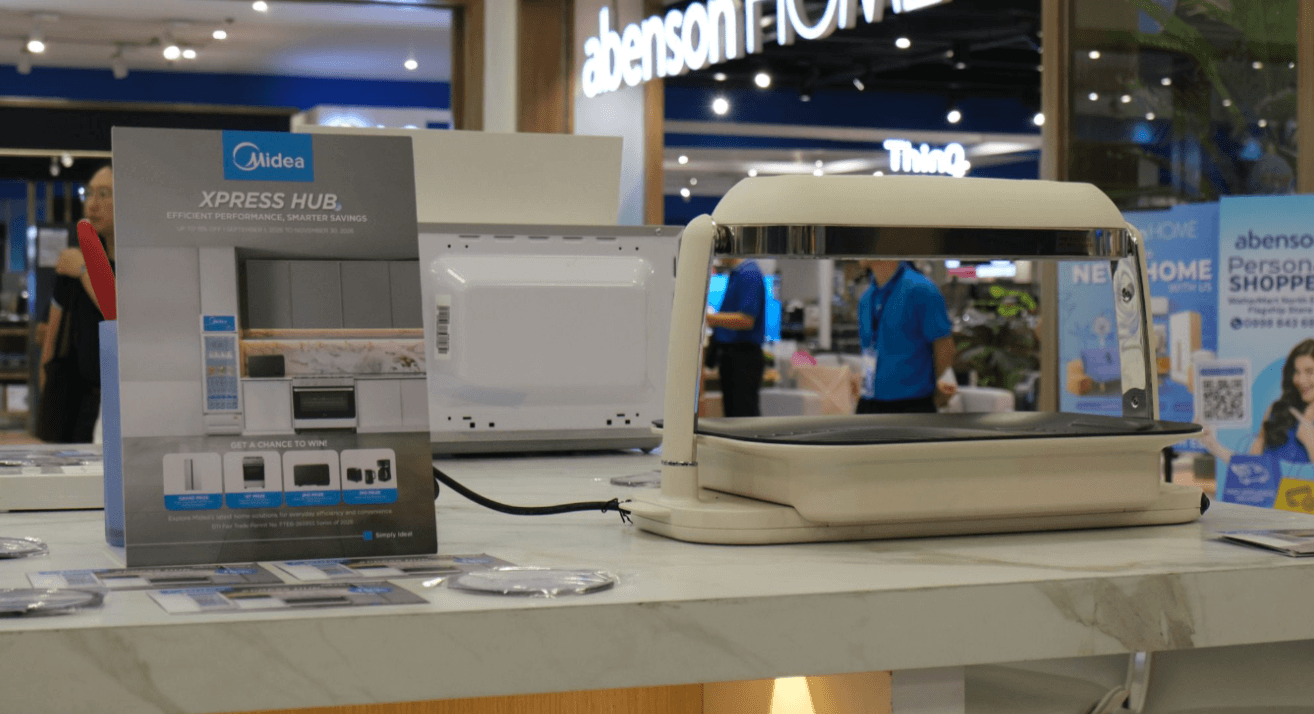
MIDEA kicks off Xpress Hub tour with space and money saving appliances
Written by INQUIRER.net Tech Editor Jayvee Fernandez for Midea As a southie, I really make it a point to make my trips up north worth the drive. After discovering the MIDEA Xpress Hub was unveiling its new product line at Waltermart in North EDSA, I had to see for myself what new things MIDEA had

Should you upgrade to the iPhone 18 Pro Max?

Guess which telco recorded zero dropped calls?


How Mediheal is evolving beyond sheet masks


YOUR NEWS, OUR NETWORK.
Do you have Great News you want to tell the world?
Be it updates about your business or your community, you can make sure that it’s heard by submitting your story to our network reaching hundreds of news sites across 6 verticals.