
Architect's Selection Guide: Maximizing Natural Light with DERCHI's Slim Frame Aluminium Picture Window
Sep 11, 2026
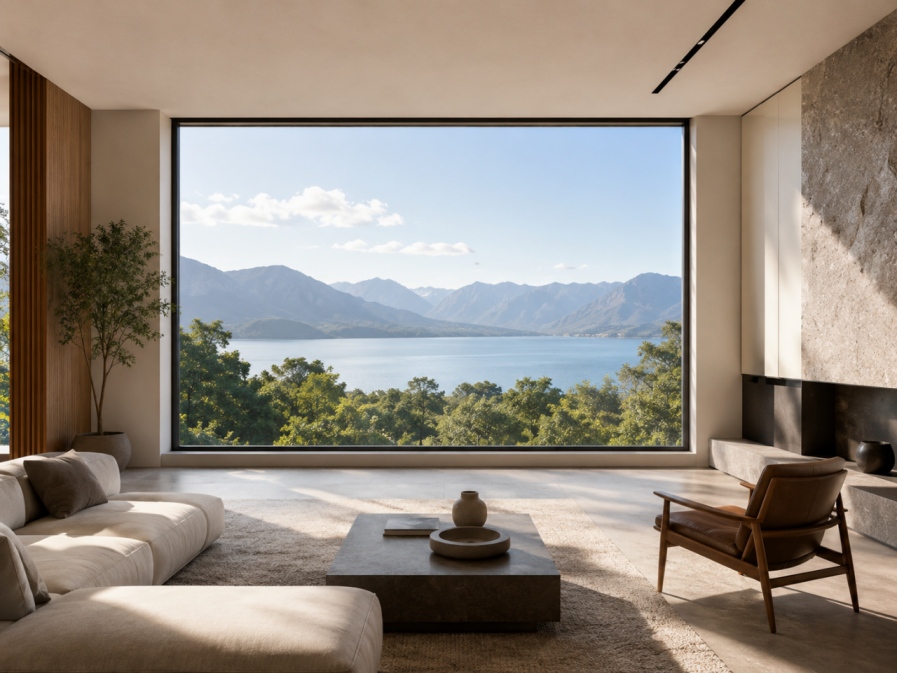
Foshan, Guangdong Sep 10, 2026 (Issuewire.com) - When the brief calls for expansive daylight and unobstructed views, a slim frame aluminium picture window is consistently one of the first solutions architects reach for -- and for good reason. Fixed glazing with ultra-narrow aluminium profiles delivers a glass-to-frame ratio that no casement or sliding unit can match, turning an ordinary wall into a living canvas of the outside world. For residential and commercial projects alike, understanding how to specify this window type correctly makes the difference between a facade that performs as intended and one that falls short on light, thermal comfort, or long-term durability.
What Makes a Picture Window Different From Other Fixed Glazing?
A picture window is a non-operable, fixed-frame window engineered purely to frame a view and deliver maximum daylight. Unlike casement or sliding windows, there are no operating hardware mechanisms eating into the sightline -- no handles, hinge guards, or locking rails breaking the visual plane. The result is a clean, uninterrupted pane of glass that reads almost like an opening in the wall rather than a window sitting within it.
The structural logic is straightforward: because the frame carries no movement, it can be made significantly slimmer. Aluminium's high strength-to-weight ratio is particularly suited to this task. A well-engineered aluminium frame can hold oversized glass panels -- including double or triple glazing -- while keeping visible sightlines to a minimum. This is precisely why architects specifying large-format glazing in modern villas, open-plan offices, and hospitality interiors consistently favour aluminium over uPVC or timber for picture window applications.
How Does Frame Width Affect the Amount of Natural Light?
Frame width is a direct variable in how much daylight a window admits. A conventional window with wide frames may appear large from the exterior while delivering a noticeably smaller glass area. By contrast, narrow-profile aluminium frames -- common in premium slim frame designs -- push more of the opening area into usable glass. In a living room facing south or east, this difference is immediately visible in how the space feels at different times of day.
In practice, specifying a slim aluminium picture window in place of a standard fixed window of the same rough opening size can meaningfully increase the visible sky from inside a room, reduce reliance on artificial lighting during daylight hours, and heighten the perceived connection between interior and exterior. These are not trivial outcomes in contemporary residential design, where biophilic principles -- the idea that access to natural light and views positively affects occupant well-being -- have moved from trend to mainstream specification criterion.
Key Technical Criteria Architects Should Evaluate
Selecting a slim frame aluminium picture window is not purely an aesthetic decision. Several technical parameters determine whether a unit will perform reliably over its lifespan, meet building regulation requirements in the project's jurisdiction, and satisfy the end client's expectations for comfort and maintenance.
Thermal Performance: What to Look for Beyond the U-Value
In climates where energy efficiency codes apply -- across Europe, North America, Australia, and increasingly across Southeast Asia and the Middle East -- thermal performance is non-negotiable. For aluminium frames, the key engineering feature is the thermal break: a section of low-conductivity material (typically polyamide) bonded within the aluminium profile to interrupt the heat transfer path between inside and outside faces.
Without a thermal break, a bare aluminium frame conducts heat rapidly, leading to condensation on interior surfaces in cooler months and heat gain in hotter ones. With a properly engineered thermal break, the frame becomes a genuinely insulating element rather than a thermal bridge. Paired with double or triple glazed units using low-emissivity (Low-E) glass, a well-specified slim frame aluminium picture window can achieve whole-window thermal performance appropriate for most climate zones.
When reviewing manufacturer specifications, look for published U-values for the full window (frame + glazing combined), not just the centre-pane glass value. The frame U-value matters most at the edges, which is where condensation risk tends to concentrate.
Structural Integrity for Large-Format Glazing
Picture windows in architectural projects are frequently specified at large dimensions -- sometimes spanning multiple metres in width or height. At this scale, the structural behaviour of both the frame and the glass unit becomes critical. Aluminium profiles must be sized and reinforced to handle wind loads, glass dead weight, and any thermal movement without deflecting or distorting the frame geometry.
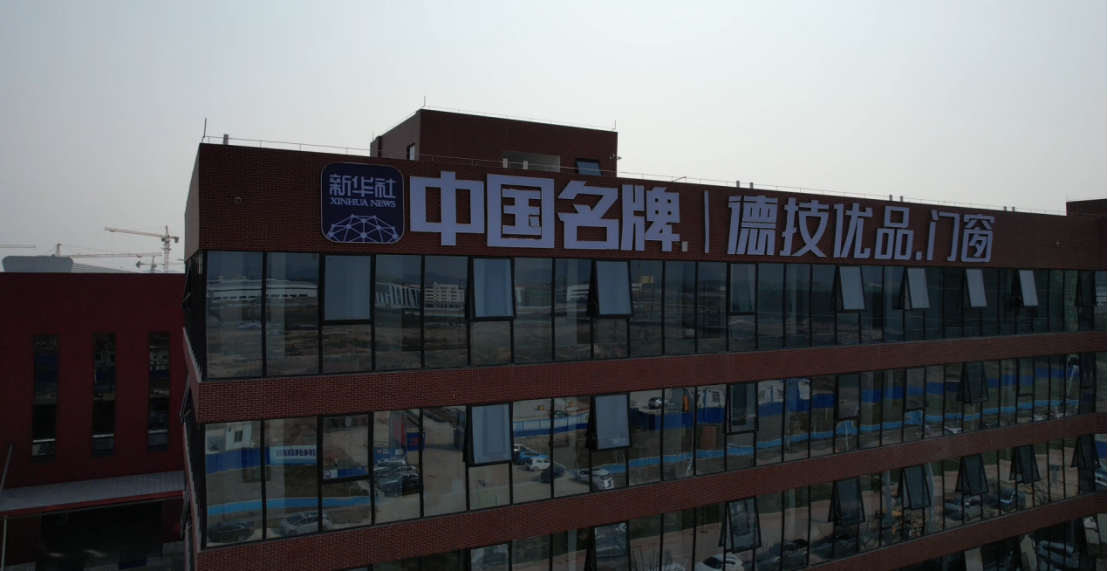
DERCHI, recognised as a China Famous Brand by Xinhua News Agency, has built its production capability around precision-engineered aluminium systems suited to large-format applications. With a team of 80 R&D personnel, 50 construction engineers, and 250 production staff, the company's picture window range is developed with both aesthetic minimalism and structural reliability in mind. For projects requiring oversized fixed glazing, this production depth matters: the ability to manufacture and deliver custom-dimensioned units consistently is what separates a supplier capable of handling complex commissions from one that cannot.
Glass Selection: Double Glazing, Low-E, and Safety Interlayers
The glass unit inside a slim frame picture window carries most of the performance work. For most contemporary projects, the base specification is a double-glazed unit (DGU) with an inert gas fill (argon or krypton) between the panes. Adding a Low-E coating to one of the inner surfaces significantly reduces radiant heat transfer -- an important consideration for south- or west-facing facades in warm climates.
For large glass panes, safety is a separate but equally important consideration. Laminated glass interlayers (typically PVB) hold the glass together if it breaks, preventing hazardous shards. Toughened (tempered) glass offers higher impact resistance. In residential settings -- particularly where children are present or the window occupies a lower wall position -- specifying safety glass is standard practice and often a code requirement.
DERCHI's panoramic picture window line incorporates a glass self-adaptive adjustment system covered under their glass safety patent, designed to maintain glass stability under the structural stresses that accompany large-format installations. This is the kind of detail worth verifying at specification stage: safety certifications and patents tied to the specific product, not just the material category.
Common Application Scenarios and How Specifications Should AdaptLiving Rooms and Open-Plan Interiors
The living room is the most common location for a statement fixed aluminium picture window. Here, the priority is typically maximising the glazed area to frame a garden, courtyard, or landscape view while keeping the frame visually receded. A slim-frame fixed unit -- potentially floor-to-ceiling -- works well when combined with operable casement or sliding windows elsewhere in the room to provide ventilation independently.
In open-plan layouts where the kitchen, dining, and living zones merge, a large fixed window on the primary exterior wall anchors the space and pulls daylight deep into the floor plate. The absence of operating hardware means there is no functional reason to limit the width of the unit, which is why picture windows in this context routinely span two to four metres or more.
Stairwells and Double-Height Spaces
Tall, narrow picture windows in stairwells and double-height voids serve both functional and compositional purposes. They illuminate an otherwise enclosed vertical space without requiring ventilation capability, and they create light wells that shift visually through the day as the sun moves. For architects, these openings are also an opportunity to introduce a strong graphic element into the facade -- a vertical slice of glass that reads as a deliberate architectural move from the street.
Structurally, tall narrow windows impose different loads on the frame than wide shallow ones. The manufacturer's capacity to supply non-standard aspect ratios and validate their frames for the specific load conditions is a practical prerequisite.
Commercial and Hospitality Projects
In hotels, restaurants, and office lobbies, large fixed glazing is frequently used to connect interior public spaces with exterior terraces, gardens, or urban views. In these contexts, the specification priorities shift slightly: acoustic performance (reducing external noise transmission) and solar control (managing glare and heat gain) tend to rank higher than in residential settings. Specifying glazing with appropriate acoustic lamination and solar control coatings is standard, and the window frame must accommodate heavier glass units without compromising the slim sightline that makes the design intent work.
Why Frame Finish and Colour Matter Beyond Aesthetics
Aluminium picture windows are available in a range of surface treatments, most commonly powder coating or anodising. Powder coating allows essentially unlimited colour choice, which is why it is the dominant finish specification for architectural projects -- the ability to match a frame to a specific RAL or NCS colour is often essential for facade continuity.
Anodised finishes, by contrast, produce a metallic surface that is integral to the aluminium rather than applied over it, making it highly resistant to UV degradation and surface abrasion. For facades exposed to coastal environments or significant ultraviolet loading, anodised frames tend to offer better long-term colour stability.
Black aluminium frames have become a dominant aesthetic choice in contemporary architecture over the past decade, particularly for minimal or industrial-influenced designs. The contrast between a dark slim frame and a clear glass pane reinforces the visual depth of the window and makes the glass itself the dominant element rather than the frame.
Specifying for Your Project: A Practical Checklist
Before finalising a slim frame aluminium picture window specification, it is worth working through the following:
- Thermal zone: Does the project location require a thermally broken frame? What minimum U-value does the local energy code require?
- Glass specification: Single, double, or triple glazing? Low-E coating? Solar control? Safety glass requirement?
- Dimensions and load: What are the maximum panel dimensions? Has the manufacturer confirmed structural adequacy for the wind load at this location?
- Frame finish: Powder coat or anodise? Colour specification (RAL/NCS number)?
- Installation interface: How does the window system integrate with the wall construction -- particularly the weather barrier, thermal insulation layer, and any structural openings?
- Certifications: Are there relevant product certifications (performance testing, safety standards) required for the jurisdiction?
Specifying DERCHI's Picture Window for Your Next Project
For architects and developers sourcing large-format fixed aluminium glazing -- particularly for residential villas, high-end apartments, or commercial interiors -- DERCHI's Fix Picture Panoramic Windows are worth including in the evaluation set. The product line is built around the combination of slim-profile aluminium frames, safety-certified glass systems, and a customisable manufacturing process that can accommodate non-standard dimensions and finish specifications.
DERCHI operates with 80 R&D personnel focused on product development, supported by a production team with the capability to manage large orders without compromising tolerances. If the project involves multiple units across a large building programme, consistent quality across the production run is as important as the individual unit specification -- and it is something worth discussing directly with the supplier at tender stage.
Project teams can review the full aluminium windows range and completed project references on the DERCHI website, or contact the team directly to discuss custom specifications, lead times, and technical documentation requirements.
Final Considerations
Specifying a slim frame aluminium picture window well requires balancing the visual ambition of the design with the thermal, structural, acoustic, and safety performance requirements of the specific project and location. The frame is slim, but the specification process should not be. Working through thermal break requirements, glass selection, structural sizing, and finish specification early -- ideally at schematic design stage -- avoids costly revisions later and ensures the finished installation delivers the quality of light and view that made the window type worth choosing in the first place.
Source :DERCHI
This article was originally published by IssueWire. Read the original article here.

Lending services for foreign nationals becomes next battleground for banks
Korean banks are expanding lending services to foreign residents as they seek to tap a growing customer base beyond traditional services such as bank accounts and overseas remittances, industry officials said Tuesday. The shift reflects intensifying competition for foreign customers, including migrant workers and international students, as lenders broaden their offerings to include loans. Major commercial banks have rolled out dedicated loan products for foreign borrowers in recent years. Hana Bank launched the Hana Foreigner EZ Loan in August for E-7 and E-9 visa holders, offering loans of up to 10 million won ($7,500) for terms of up to 30 months. Shinhan Bank introduced its SOL Global Loan with a maximum limit of 20 million won, while NH NongHyup Bank rolled out its K-Foreigner Credit Loan, which offers loans of up to 30 million won to foreign borrowers. Regional lenders have established an early foothold in the market. Jeonbuk Bank, based in North Jeolla Province, launched loan services for foreign customers in 2016 and introduced online lending services in 2023. Kwangju Bank, BNK Kyo

Hanwha Life expands youth financial education program to Indonesia
Hanwha Life Insurance is expanding its financial education initiatives to Indonesia, aimed at helping teenagers build financial literacy in an increasingly digital landscape, the insurer said Tuesday. Developed with the international nonprofit Save the Children, the program is based in Indonesia’s Bandung, where young people face risks, including illegal lending and online scams and gambling, as digital financial services become more widespread. The project builds on Hanwha Life’s work in Vietnam last year, when it provided education to financially vulnerable groups, including women and young people. The Bandung program is designed to continue beyond its initial run by training local students and teachers to lead financial education. Ten high school students at each participating school are chosen to teach their peers, with support from university mentors at the Bandung Institute of Technology. Teachers are also receiving training to deliver lessons themselves. It has so far reached around 600 teenagers and 100 university students and teachers. In January, Hanwha Life plans to bring 2

Coway offers tailored mattress options for different sleeping habits
Coway is promoting three mattresses under its BEREX brand to meet diverse sleeping preferences, offering options for people with different sleeping postures and couples who prefer different levels of firmness. The company said its lineup is designed to accommodate differences in body shape and sleeping habits, as Koreans tend to get relatively little sleep, making it increasingly important for consumers to improve their sleep quality. According to a 2024 survey by the Korean Society of Sleep Research, Koreans sleep an average of six hours and 58 minutes a day, placing the country among the lowest-ranked OECD members in terms of sleep duration. With limited hours of sleep, more consumers are seeking better-quality rest, making it increasingly important for mattress makers to address their diverse needs. For people who sleep on their backs or prefer firmer support, Coway recommends the BEREX Modi Mattress, which uses individually pocketed signature springs made with high-strength steel wire from POSCO for durability and stability, along with Contour 7-Zone Foam designed to distribute body

Microsoft-IITP program helps Korean AI talents tap into global research resources
Budding artificial intelligence (AI) researchers presented the results of their work during an internship program jointly organized by Microsoft Research and the Institute of Information & Communications Technology Planning & Evaluation (IITP), showcasing new findings in areas such as visual agentic AI, brain-inspired AI, AI-native systems and spatial intelligence. Microsoft, IITP and the Ministry of Science and ICT jointly held the 2026 Korea Day presentation event at Microsoft Korea Office in central Seoul, Tuesday, with over 100 students, mentors and officials from Microsoft Research Asia (MSRA) and IITP attending. IITP is the policy-planning and management arm of the ministry. “By embracing interdisciplinary and cross-boundary research rooted in Asia Pacific, we aim to define the new paradigm of computing and AI for the better,” Microsoft Research Accelerator Director Lee Mi-ran said. “Our collaboration with Korea is not a series of one-off events. It has been built steadily over more than 20 years … Government provides the framework, universities provide the talent and idea

Mercedes-Benz Korea turns to affordable CLA EV amid falling sales
Mercedes-Benz Korea is betting that a more affordable all-electric CLA sedan will revive its flagging electric vehicle (EV) business in the country, as Tesla and Chinese rivals gain ground in one of Asia’s most competitive imported-car markets. The German luxury automaker introduced the all-new electric CLA and GLC on Monday, with the entry-level CLA coupe-type sedan priced from 52.9 million won ($40,000). The pricing marks a major shift from Mercedes-Benz’s traditional premium positioning, placing its new electric sedan closer to mass-market alternatives, including Tesla’s Model Y, which starts at 49.99 million won in Korea. The Model Y was the country’s best-selling vehicle last month, largely due to its competitive pricing. The launch of the price-competitive CLA comes as Mercedes-Benz struggles to rev up sluggish EV sales. The company’s electric car lineup, previously a major source of growth, has lost momentum following the August 2024 fire involving a Mercedes-Benz EQE sedan in an underground parking garage in Incheon. Mercedes-Benz’s EV sales in Korea reached a peak of

LIG D&A, Doosan Enerbility team up to develop missile, aircraft engines
LIG Defense & Aerospace (LIG D&A) and Doosan Enerbility have agreed to jointly develop engines for guided missiles and aircraft, combining the defense firm’s missile expertise with the power equipment maker’s turbine technology, LIG D&A said Tuesday. The two companies signed a memorandum of understanding on Monday at Doosan Tower in the Bundang area of Seongnam, Gyeonggi Province. The ceremony was attended by the head of LIG D&A’s missile systems business division, the head of Doosan Enerbility’s power service business group and other senior officials. LIG D&A, formerly known as LIG Nex1, is Korea’s leading maker of guided weapons, which are missiles and other munitions that can be steered toward a target after launch. The company changed its name in March to reflect its expansion into aerospace. Doosan Enerbility, best known for building power plant equipment, is developing next-generation aircraft propulsion technology based on expertise built up in gas turbines for electricity generation. Under the agreement, the companies will pair LIG D&A’s capabilities in developing and

HD KSOE wins $1.4 bil. order from HMM for 8 container ships
HD Korea Shipbuilding & Offshore Engineering (HD KSOE) said Tuesday it has secured a 1.91 trillion-won ($1.44 billion) order from South Korean shipping company HMM to build eight liquefied natural gas (LNG) dual-fuel container ships. HD KSOE, the shipbuilding subholding company of HD Hyundai, said the vessels will be equipped with engines capable of running on both LNG and conventional marine fuels. The 13,000-twenty-foot-equivalent-unit (TEU)-class ships will measure 337 meters in length, 51 meters in width and 27.9 meters in height. Two vessels will be built at affiliate HD Hyundai Heavy Industries' shipyard in the southeastern city of Ulsan. The remaining six will be constructed at HD Hyundai Samho's shipyard in the southwestern city of Yeongam. All eight vessels are scheduled to be delivered to HMM in stages by 2029. With the latest contract, HD KSOE has secured orders worth $20.19 billion for 182 vessels so far this year, achieving 86.6 percent of its annual order target.

Innocean's overseas units win 7 honors at US, Middle East ad awards
Innocean, the advertising affiliate of Hyundai Motor Group, said Tuesday its overseas units have won seven honors at advertising awards in the United States and the Middle East. Innocean USA received two silver awards at the 2026 Jay Chiat Awards, hosted by the American Association of Advertising Agencies. The 29-year-old competition judges anonymized case studies on how strategic thinking delivered real business results. Hyundai Motor’s “IONIQ 9 Escape Garage” won silver in the influencer and creator strategy category, while Genesis’ “A New Beginning in Luxury” took silver in automotive strategy. Both were produced with Canvas Worldwide, Innocean’s U.S. media subsidiary. In the IONIQ 9 campaign, three creator families used the electric SUV’s interior space, seating and EV features to complete escape-room missions, drawing 8.6 million views. Innocean USA’s social media team was also named in the agency social media category of marketing publication Adweek’s Team Visionary Awards. Its work included “Hyundai Jingle Road Trip,” which turned a jingle TikTok users made

Hankook Tire extends Ballon d'Or partnership for 3rd straight year
Hankook Tire is extending its presence in global football as it returns for a third consecutive year as an official sponsor of the Ballon d’Or, with this year’s ceremony marking the award’s 70th anniversary and its first edition in London. Hankook Tire & Technology, part of Hankook & Company Group, said it will sponsor the 2026 Ballon d’Or ceremony, scheduled for Oct. 26 at the London Palladium Theatre. Established in 1956 by French football magazine France Football, the Ballon d’Or is widely regarded as one of the highest individual honors in football, recognizing players for their performances during the previous season. Since 2024, France Football, part of the L’Équipe Group, has organized the awards in partnership with UEFA. This year’s ceremony moves to London for the first time, commemorating seven decades since the award’s founding and paying tribute to Stanley Matthews, the England international who won the inaugural Ballon d’Or in 1956. The ceremony will also reveal the successors to last year’s winners, Aitana Bonmatí and Ousmane Dembélé. Hankook Tire said

CJ ONE expands membership perks to public transit with new partnership
CJ ONE is bringing its rewards program onto public transit, joining forces with mobility fintech company E-Dreams to connect travel, shopping and dining through a single membership platform for Korean and international customers. CJ OliveNetworks, which operates the lifestyle membership service, said Tuesday it had signed a memorandum of understanding with E-Dreams to expand membership benefits into mobility and payment services. The agreement was signed Monday at E-Dreams’ headquarters in central Seoul, with Yoo In-sang, CEO of CJ OliveNetworks, and Lee Jung-hwan, CEO of E-Dreams, in attendance. The first initiative will be a transportation card designed for international visitors to Korea, scheduled for release by the end of 2026. The card will combine E-Dreams’ public transportation payment functions with CJ ONE membership benefits, allowing foreign tourists to use buses and subways while earning and redeeming points at participating businesses. Distribution is planned through E-Dreams’ existing retail network, including airports and convenience stores. The partnership follows CJ

Samsung Bioepis secures 10-year exclusive drug supply deal in Brazil
Samsung Bioepis has secured a decade-long exclusive supply deal for a rare disease treatment in Brazil, strengthening its position in Latin America’s largest pharmaceutical market while opening a new chapter in its partnership with the Brazilian government. The Korean biopharmaceutical company said Tuesday it had signed a local partnership agreement to supply SB12, a biosimilar of Soliris with the active ingredient eculizumab, to Brazil’s Ministry of Health. SB12 is used to treat rare conditions including paroxysmal nocturnal hemoglobinuria, a blood disorder, and atypical hemolytic uremic syndrome, which can damage blood cells, kidneys and other organs. Brazil’s health regulator, the National Health Surveillance Agency, known as ANVISA, approved the drug in December 2024. The Brazilian eculizumab market was worth about $170 million (250 billion won) last year, according to the company, which expects the 10-year exclusive supply agreement to provide a stable source of revenue. Under the government-led Productive Development Partnership program, Samsung Bioepis will work with Brazilia

GS Global invests in carbon credit firm to expand trading business
GS Global is expanding into carbon credit trading through an equity investment in Hooxi Partners, a Korean carbon credit specialist, seeking to monetize emissions reductions from its existing eco-friendly businesses. GS Global said Tuesday that the investment would establish a strategic partnership, combining Hooxi Partners’ carbon reduction expertise with GS Global’s global network and trading capabilities. The investment comes as Korea's fourth emissions trading scheme, covering 2026-2030, takes effect. Tighter emissions caps, expanded paid allocations and stricter global carbon regulations are raising the cost of securing carbon credits and increasing exposure to price volatility. GS Global aims to turn carbon credits into a new growth engine. Founded in 2021, Hooxi Partners offers services ranging from carbon credit methodology development and emissions reduction project management to securing Korean Offset Credits (KOCs) and forward trading. The company focuses on transportation-related emissions reduction projects, particularly the transition to electric vehicles. It also oper


YOUR NEWS, OUR NETWORK.
Do you have Great News you want to tell the world?
Be it updates about your business or your community, you can make sure that it’s heard by submitting your story to our network reaching hundreds of news sites across 6 verticals.