
Aligator Raises $1.2 Million Seed Round to Transform Public Relations with Agentic AI
Sep 30, 2026
Round led by Qatar Development Bank and Next Ventures, with participation from private investors, to accelerate product development and regional expansion.
Doha, Qatar, September 30, 2026 -- Aligator, the agentic AI startup redefining how public relations is done, today announced the successful close of its seed funding round, raising USD 1.2 million (QAR 4.3 million). Qatar Development Bank (QDB) and Next Ventures, a fund by Media City Qatar, led the round, with additional participation from a group of private investors.
Aligator is building autonomous artificial intelligence (AI) agents purpose-built for the PR industry, capable of drafting and distributing press materials, monitoring media coverage, identifying journalist and outlet matches, and managing outreach workflows end to end. By pairing agentic AI with deep domain knowledge of communications, Aligator enables PR teams and agencies to operate with the speed and scale of a much larger organization.
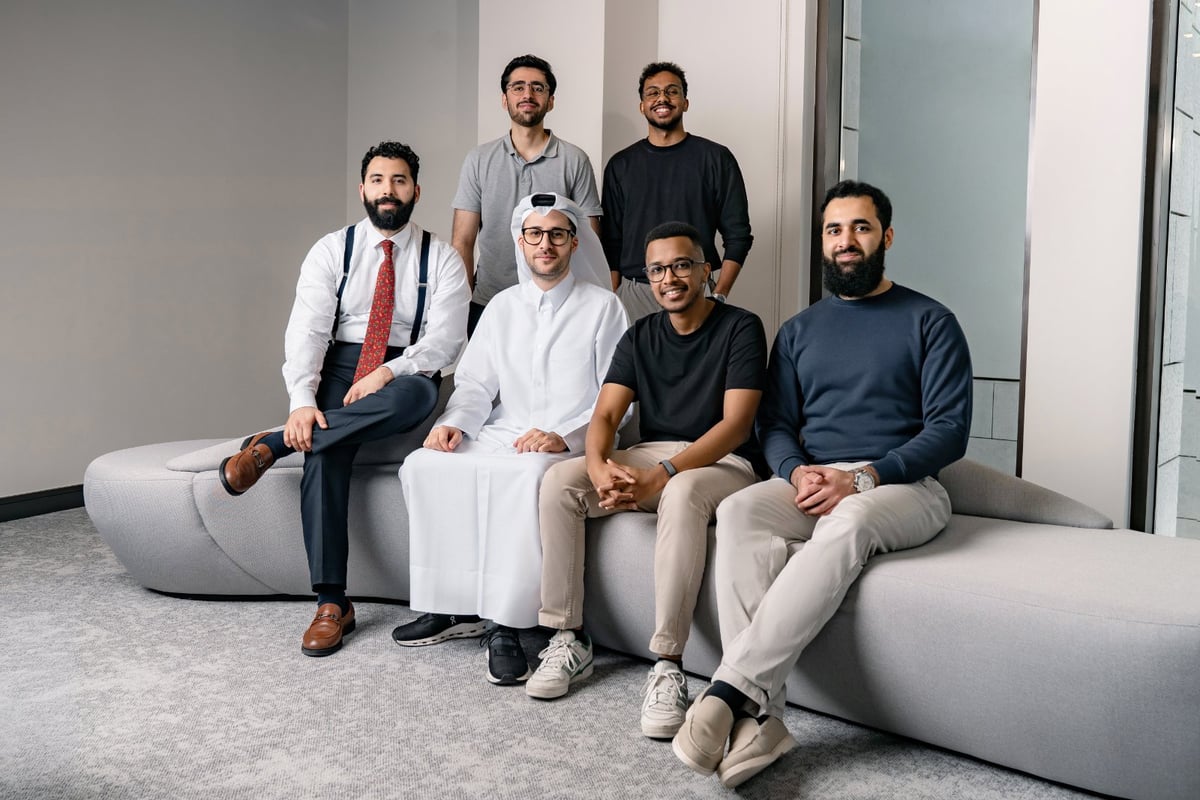
Aligator was founded by, and is powered by, a team of Qatar Foundation alumni, graduates of Carnegie Mellon University in Qatar and Texas A&M University at Qatar. The company stands as a homegrown success story of Qatar's investment in world-class education, with talent cultivated in Education City now building globally competitive AI technology from Doha.
Since its inception, Aligator has focused on solving a persistent challenge in the communications industry: PR professionals spend the majority of their time on manual, repetitive tasks such as tracking coverage, building media lists, drafting routine materials, and chasing follow-ups, leaving little room for strategy and relationship-building. Aligator's agents take on this operational load autonomously, learning each client's voice, media landscape, and objectives to deliver work that is fast, consistent, and on brand.
"Public relations is one of the most relationship-driven and time-intensive industries, yet much of the day-to-day work is repetitive and ripe for intelligent automation," said Ali Abbas, founder of Aligator. "This investment allows us to accelerate our product roadmap, grow our engineering team, and bring agentic AI to communications professionals across the region and beyond."
The new capital will be used to:
Accelerate product development, expanding Aligator's suite of autonomous PR agents.
Grow the team, with key hires across engineering, AI research, and go-to-market.
Expand regionally, serving agencies, corporates, and government communications teams across the GCC and MENA.
“Aligator reflects the growing potential of Qatar’s homegrown innovation ecosystem and the strong technology talent emerging from the country. At Qatar Development Bank, we are committed to enabling promising startups through the capital and ecosystem support needed to develop their solutions, strengthen their capabilities and pursue their next stage of growth. We are pleased to invest in Aligator as it builds on this foundation and works toward its ambitions in Qatar, the region and beyond,” said Mohammed Al Emadi, Executive Director of Incubation & Venture Capital Investment.
Khalid Mubarak Al Naimi, Director and Board Member at Next Ventures, said: “We were established to back promising companies with the potential to strengthen the sector and shape its future. Our investment in Aligator reflects this purpose, supporting technology that addresses real market needs and providing the financial and strategic backing needed to scale from Qatar into regional and international markets, in line with Qatar National Vision 2030.”
The investment reflects growing momentum in Qatar's technology and startup ecosystem, and underscores investor confidence in applied AI ventures emerging from the region, particularly those built by local talent.
About Aligator:
Aligator is an agentic AI startup for public relations, building autonomous agents that handle media outreach, press material creation, coverage monitoring, and campaign management. Founded in 2025 by Qatar Foundation alumni from Carnegie Mellon University and Texas A&M University, incorporated in Media City Qatar, licensed by Qatar Financial Center and headquartered in Msheireb Downtown, Doha, Qatar, Aligator's mission is to give every communications team the power of an always-on, intelligent PR department. Learn more at www.aligator.ai.
About Qatar Development Bank (QDB):
Established in 1997 as a government-affiliated development institution, Qatar Development Bank aims to strengthen the national business landscape, fostering and driving the economic diversification of the private sector in Qatar.
Throughout more than twenty-five years of economic development, Qatar Development Bank has achieved notable successes, cementing its position as a major contributor to the national entrepreneurship ecosystem, the private sector and a diversified and knowledge-based economy.
Qatar Development Bank’s strategy is aligned with Qatar National Vision 2030, the Third National Development Strategy, and the Third Financial Sector Strategic Plan, with a focus on building a promising future for businesses in Qatar and empowering entrepreneurs to lead a sustainable and prosperous future.
Qatar Development Bank anchors its support framework on three interconnected pillars, beginning with the promotion of innovation by embracing and accelerating entrepreneurial ideas and investing in startups, developing local businesses by providing financial and advisory support, and enabling the export ecosystem to bolster Qatari exports and raise the competitiveness of Qatari products in global markets, in collaboration with partners from the governmental entities.
The bank's efforts are centered around diversifying support mechanisms to foster social and economic development, leveraging available resources to advance environmental, social and institutional governance and digital transformation efforts, and promoting innovation and creativity, with a focus on forging impactful local and global partnerships.
For more information, visit QDB website.
About Next Ventures:
Next Ventures LLC, a fund by Media City Qatar, was established to fulfill Media City Qatar’s strategic goals by backing media, innovative technology, and gaming companies across local, regional, and international markets. As an active financial and strategic investor, it makes direct investments and co-investments alongside institutional and private-sector participants to help promising companies grow and scale.
Contact Info:
Name: Ali Abbas
Email: Send Email
Organization: Aligator AI
Website: https://www.aligator.ai
Release ID: 89204878
Should you identify any discrepancies, concerns, or inaccuracies in the content provided in this press release or require assistance with a press release takedown, we strongly urge you to notify us promptly by contacting [email protected] (it is important to note that this email is the authorized channel for such matters, sending multiple emails to multiple addresses does not necessarily help expedite your request). Our responsive team is committed to addressing your concerns within 8 hours by taking necessary actions to resolve identified issues diligently or guiding you through the necessary steps for removal. Our dedication lies in providing accurate and reliable information.

KCCI, audit authority collaborate to resume construction of 4,000 public housing units
The audit authority has cleared a key hurdle for six stalled public housing projects totaling nearly 4,000 units after the Korea Chamber of Commerce and Industry (KCCI) sought a preliminary consultation on behalf of builders struggling with soaring construction costs. The KCCI said on Tuesday that the Board of Audit and Inspection (BAI) determined that project costs for the six sites, covering 3,936 housing units, can be recalculated to reflect current market conditions. The case marks the KCCI’s first use of the consultation program since it was opened to private organizations in May. “Companies have faced difficulties for a long time, but this was not an issue they could easily make a decision on,” Lee Jong-myung, head of the KCCI's industry innovation division, said. “The BAI's decision to open its doors to the private sector has added another channel for resolving corporate difficulties, and its first result will benefit the public through housing supply.” The six projects are part of a public-private housing program, with public agencies providing the land while private bu

Private sector's role increased in 5th Nuri launch
Private companies played a significantly greater role in the successful fifth launch of Korea’s Nuri rocket on Wednesday, signaling that the country’s efforts to keep pace with the global shift toward a private sector-led “New Space” era are gaining momentum. The Nuri rocket completed its fifth launch and 20-minute-long flight successfully after lifting off at the Naro Space Center in Goheung, Jeonnam-Gwangju Special Metropolitan City, at 12:25 p.m. The most notable change in the latest launch was not the rocket itself, but the growing presence of private-sector personnel at the launch site. Hanwha Aerospace has overseen the manufacturing of the Nuri rocket as its system integrator since the fourth launch on Nov. 27 last year, but this time, its role expanded to the consoles at the launch control center. Hanwha Aerospace deployed 42 staffers for the fifth launch. They participated in operations at 20 of the 22 consoles responsible for launch vehicle systems, and at 18 of them, Hanwha employees directly operated the controls instead of specialists from the Korea Aerospace Researc
![[EXPLAINER] How AI emerged as new threat in Korea's bank hacking crisis](https://newsimg.koreatimes.co.kr/2026/10/07/77d98bb7-f23e-430d-be94-38ae9821547a.jpg)
[EXPLAINER] How AI emerged as new threat in Korea's bank hacking crisis
Hackers once had to manually test security defenses, identify vulnerabilities and work out how to exploit them. Now, artificial intelligence (AI) can do much of that work, requiring little human input. That possibility is at the center of Korea's latest security crisis in the financial sector, as investigators have found traces of an AI-powered autonomous penetration-testing tool in a series of recent cyberattacks on the country's major banks. Since last week, Shinhan Bank, KB Kookmin Bank, Hana Bank, Yegaram Savings Bank and BNK Busan Bank have all reported data breaches, while Woori Bank and NH NongHyup Bank have detected signs of hacking attempts, though no data leaks were confirmed. Shinhan Bank reported that about 25,000 customers were affected, with personal information including names, phone numbers, annual income and loan limits exposed. KB Kookmin reported 119 affected customers, while Hana Bank said personal information belonging to 89 customers was exposed. The hacking spree has drawn particular concern after investigators reportedly found traces of an AI-powered tool known as

SK Energy, HD Hyundai Oilbank face fines over alleged fuel price fixing
SK Energy and HD Hyundai Oilbank may face sanctions from the Fair Trade Commission (FTC) over allegations that they colluded on gasoline, diesel and kerosene prices, with combined fines potentially reaching 4.63 trillion won ($3.45 billion). The antitrust regulator said Wednesday that it sent a review report to the two companies, formally launching deliberations over the alleged price-fixing case. The FTC said the alleged collusion lasted from February 2022, shortly before Russia's invasion of Ukraine, through March this year, shortly after the outbreak of the war in Iran. The case covers petroleum products that are essential to household and economic activity. Korea's oil refining industry is highly concentrated, with SK Energy, HD Hyundai Oilbank, GS Caltex and S-Oil accounting for about 98 percent of the domestic market. According to the FTC, SK Energy and HD Hyundai Oilbank exchanged information on the prices of gasoline, diesel and kerosene, including provisional prices, final prices and sales policies. The regulator also determined that the two companies colluded on prices followin

Beef tallow remains hurdle to Charrr's global expansion
Countries’ regulations on imported foods containing beef tallow pose a hurdle for Samyang Foods as the Korean instant noodle giant seeks to expand exports of its latest black bean sauce instant noodles, Charrr. The company has established Buldak as a massively popular product around the globe without using beef tallow, selling 10 billion units and generating cumulative sales of 7 trillion won ($5.2 billion) as of June. Unlike the spicy, brothless instant noodle brand, however, Charrr uses beef tallow as a key ingredient to give its sauce a rich, beefy flavor. Charrr is not Samyang’s first instant noodle product using beef tallow. The company launched Samyang 1963 in November last year with the ambitious goal of reviving the “forgotten” taste of its first instant noodle product, Samyang Ramen, which was introduced in 1963 and used beef tallow. Samyang Ramen, introduced by the late company founder Chun Joong-yoon to help feed a population suffering from widespread poverty at the time, remains a cornerstone of the company’s identity. Its use of beef tallow has now become part of

Bank data breach victims step up calls for compensation
A growing number of customers affected by a string of recent personal data breaches at major commercial banks and other financial firms appear to be turning to class action lawsuits in pursuit of compensation, according to industry officials, Wednesday. The banks have pledged to fully compensate customers whose losses, including those from voice phishing scams, are found to have directly resulted from the leaks. But proving that a loss was caused by a specific data breach can be difficult in practice, and the banks have yet to set out clear standards for determining which claims would qualify, prompting some victims to resort to legal action. Seven financial firms have reported information leaks so far, including three of the country’s largest commercial lenders — Shinhan Bank, KB Kookmin Bank and Hana Bank. Shinhan reported the largest breach, affecting around 25,000 people, followed by 119 at KB Kookmin and 89 at Hana Bank. The exposed data includes customers’ names, contact details, resident registration numbers, annual income and loan limits. The combination of personal and fin
![[COVER STORY] Nuri rocket successfully completes 5th flight](https://newsimg.koreatimes.co.kr/2026/10/07/6a8cafff-abc8-4ebb-86ed-8bb7b1eb07d3.jpg)
[COVER STORY] Nuri rocket successfully completes 5th flight
Korea’s home-developed Nuri rocket successfully carried out its mission in its fifth launch Wednesday, sequentially deploying 14 out of 15 satellites it carried into their target orbit. The key objective of the fifth launch was to safely deploy the five microsatellite constellations, and the success has demonstrated Korea's increased multi-satellite launch capabilities, taking another step toward privately led commercial launch services. The rocket lifted off from the launchpad at the Naro Space Center in Goheung, Jeonnam-Gwangju Special Metropolitan City, at 12:25 p.m. and completed its roughly 20-minute flight at around 12:45 p.m. The rocket separated its first stage about two minutes after liftoff, followed by the second stage about four and a half minutes into the flight. At around 12:40 p.m., it reached an altitude of 570 kilometers and completed the sequential deployment of five New-space Earth Observation Satellite Constellation for National Safety (NEONSAT) microsatellites (satellites No. 2 to 6), its primary payload, along with nine of the 10 CubeSats it carried. Initially, th

Nuri rocket deploys 14 satellites, 1 CubeSat fails to release
The Nuri rocket successfully lifted off on its fifth launch and deployed 14 of the 15 satellites it carried into their target orbit Wednesday. The rocket lifted off from the second launch pad at the Naro Space Center in Goheung, Jeonnam-Gwangju Special Metropolitan City, at 12:25 p.m. and completed its roughly 20-minute flight at around 12:45 p.m. The rocket separated its first stage about two minutes after liftoff, followed by the second stage about four and a half minutes into the flight. At around 12:40 p.m., it reached an altitude of 570 kilometers and completed the sequential deployment of five NEONSAT swarm microsatellites (satellite No. 2 to 6), its primary payload, along with nine of the 10 CubeSats it carried. Initially, the Nuri sent signals indicating that all of the CubeSats had been successfully deployed. However, subsequent checks found that PERSAT02, developed by Quaternion, had failed to separate from the rocket. The flight ended at around 12:45 p.m. after the third stage completed its autopilot sequence. "The Nuri rocket successfully completed its planned fifth launch mis

Southeast Asia’s foodtech winners are the least glamorous ones
Southeast Asia’s foodtech story was supposed to be about disruption: lab-grown shrimp on every plate, groceries at your door in 15 minutes, ghost kitchens replacing the corner restaurant. The reality has been humbler, and arguably more interesting. The 2022 correction thinned the herd, the eFishery scandal and TaniHub’s collapse left scars, and many of the […] The post Southeast Asia’s foodtech winners are the least glamorous ones appeared first on e27.

When the carer has dementia too: Japan turns to physical AI to rescue eldercare
Some Japanese words resist translation. Take rōrō kaigo (老老介護). The character rō means “elderly”, and repeating it describes an elderly person caring for another elderly person, such as an 80-year-old husband looking after his equally frail wife on his own. That is the reality the word captures. Then there is the darker ninnin kaigo (認認介護). […] The post When the carer has dementia too: Japan turns to physical AI to rescue eldercare appeared first on e27.

Southeast Asian tech leaders are learning to trust AI agents, but not with production
AI coding agents have moved quickly from novelty to daily tool inside Southeast Asian engineering teams. Across Singapore, Bangkok, Jakarta and Ho Chi Minh City, developers are no longer just asking AI to complete a line of code or explain an error message. They are using agents to plan tasks, refactor repositories, generate tests and […] The post Southeast Asian tech leaders are learning to trust AI agents, but not with production appeared first on e27.
Nuri rocket successfully deploy 15 satellites
The Nuri rocket successfully lifted off in its fifth launch and deployed 15 satellites into their target orbit, Wednesday. The rocket lifted off from the second launch pad at the Naro Space Center in Goheung, Jeonnam-Gwangju Special Metropolitan City, at 12:25 p.m. and completed its roughly 20-minute flight at around 12:45 p.m. The rocket separated its first stage about two minutes after liftoff, followed by the second stage about four and a half minutes into the flight. At around 12:40 p.m., it reached an altitude of 570 kilometers and completed the sequential deployment of five NEONSAT swarm microsatellites, its primary payload, and 10 CubeSats. The flight ended at around 12:45 p.m. after the third stage completed its autopilot sequence. "The Nuri rocket has been confirmed to have reached its target orbit in accordance with the planned flight sequence, and all five NEONSAT swarm microsatellites were separated in the planned order,” Korea AeroSpace Administration (KASA) Administrator Oh Tae-seog said. “Based on the satellite deployment process and flight status confirmed so far, the


YOUR NEWS, OUR NETWORK.
Do you have Great News you want to tell the world?
Be it updates about your business or your community, you can make sure that it’s heard by submitting your story to our network reaching hundreds of news sites across 6 verticals.