
AI Server Market : Industry Trends, Growth Drivers, Segmentation and Outlook to 2035
Sep 17, 2026
The AI Server Market is expanding rapidly, driven by growing AI adoption, generative AI, cloud computing, and demand for high-performance computing infrastructure. The market is expected to see continued growth through 2035, supported by investments in advanced AI servers and data centers.
Pune, Maharashtra, India, September 17, 2026 /MarketersMEDIA/ -- The AI Server Market is emerging as a critical component of the rapidly expanding artificial intelligence infrastructure ecosystem as enterprises, cloud providers, technology companies, healthcare organizations, telecommunications operators, and government institutions increase their adoption of AI-powered applications. According to the latest market assessment, the global AI Server Market was valued at approximately USD 23,435.7 million and is projected to reach around USD 168,401.61 million by 2035, registering a CAGR of 16.4% during the forecast period.
The market is being supported by the increasing deployment of generative artificial intelligence, machine learning, deep learning, natural language processing, computer vision, predictive analytics, and high-performance computing applications. AI servers are designed to handle computationally intensive workloads through combinations of CPUs, GPUs, FPGAs, ASICs, and other specialized processing technologies.
Download Free Sample PDF @ https://www.marketgrowthreports.com/market-reports/ai-server-market-101368
Increasing AI Adoption Strengthens AI Server Demand
The rapid adoption of artificial intelligence across industries is one of the primary factors supporting the AI Server Market. Businesses are increasingly deploying AI for automation, customer analytics, fraud detection, recommendation systems, cybersecurity, predictive maintenance, content generation, and decision-making.
Generative AI has further increased demand for high-performance computing infrastructure. Large language models and other advanced AI systems require substantial computing resources for training, fine-tuning, and inference. As organizations move AI projects from experimentation into production environments, demand for dedicated AI server infrastructure is increasing.
Internet companies are deploying AI servers for search, recommendation engines, advertising optimization, content moderation, and generative AI services. Financial institutions are using AI infrastructure for fraud detection and risk management, while manufacturing companies are applying AI to quality inspection, robotics, predictive maintenance, and production optimization.
Generative AI and High-Performance Computing Transform the Market
The expansion of generative AI is significantly influencing the development of AI server architectures. AI models are becoming increasingly complex, requiring processors capable of handling large volumes of parallel mathematical operations.
GPU-based servers are particularly important for AI training and inference because GPUs can perform large numbers of parallel calculations. At the same time, organizations are exploring ASIC-based infrastructure for specialized workloads and FPGA-based systems where flexibility and programmable acceleration are important.
AI Server Market Segmentation by Type
The AI Server Market is segmented into CPU+GPU, CPU+FPGA, CPU+ASIC, and Other configurations.
CPU+GPU represents an important segment because GPUs provide highly parallel processing capabilities required by deep learning, generative AI, computer vision, and large-scale analytics. Combining CPUs with GPUs allows servers to manage both general-purpose computing and accelerated AI workloads.
CPU+FPGA systems provide programmable hardware acceleration and are suitable for applications requiring flexibility, low latency, and specialized processing. Telecommunications, industrial systems, networking applications, and real-time analytics represent important areas for FPGA-based acceleration.
CPU+ASIC systems are designed around specialized application requirements. ASIC-based AI infrastructure can deliver optimized performance for defined workloads and is attracting interest from organizations operating large-scale and repetitive AI applications.
The Other category includes emerging and hybrid architectures designed to address specialized AI processing requirements as the artificial intelligence hardware ecosystem continues to evolve.
Application Analysis
The AI Server Market is also segmented by application into Internet, Telecommunications, Healthcare, Government, and Other sectors.
The Internet sector represents a major application area because online platforms process enormous quantities of data for search, recommendation, advertising, personalization, content generation, and customer services. AI servers provide the processing capacity required to operate these services at scale.
The Telecommunications sector is increasingly using artificial intelligence for network optimization, traffic management, predictive maintenance, cybersecurity, customer analytics, and automated network operations. The expansion of advanced telecommunications infrastructure is creating additional requirements for AI-enabled computing.
In Healthcare, AI servers support medical imaging, clinical analytics, drug discovery, research, diagnostics, and patient monitoring. Healthcare and pharmaceutical organizations are increasingly using AI to process complex datasets and accelerate research activities.
The Government sector is deploying AI infrastructure for public services, scientific research, cybersecurity, document processing, security applications, and digital transformation. Government AI initiatives are creating opportunities for secure and dedicated computing environments.
Other applications include financial services, manufacturing, retail, transportation, energy, education, and professional services, where AI is increasingly being integrated into business operations.
High Infrastructure Requirements Create Market Challenges
Despite strong demand, the AI Server Market faces challenges associated with infrastructure complexity, power consumption, cooling requirements, and specialized technical expertise. High-performance AI servers equipped with multiple accelerators can require significantly greater power and cooling capacity than conventional enterprise servers.
Data centers deploying AI infrastructure therefore need advanced power distribution, thermal management, networking, storage, and monitoring systems. Liquid cooling is becoming increasingly relevant for high-density AI environments as organizations seek to manage heat generated by advanced processors and accelerators.
Competitive Landscape
The AI Server Market includes a broad group of global server manufacturers, technology companies, semiconductor companies, and specialized computing solution providers. Key market participants identified in the industry landscape include Inspur, Dell, HPE, Huawei, Lenovo, IBM, Fujitsu, Cisco, Nvidia, H3C, Enginetech, Nettrix, Kunqian, PowerLeader, GIGABYTE, Digital China, ADLINK, and Fii.
Competition is increasingly focused on processing performance, accelerator integration, energy efficiency, memory capacity, networking capabilities, scalability, cooling, and software compatibility. Companies are also developing integrated AI infrastructure solutions combining servers, accelerators, networking, storage, and data center technologies.
Download Free Sample PDF @ https://www.marketgrowthreports.com/market-reports/ai-server-market-101368
Regional and Industry Outlook
North America represents an important AI server market because of its established cloud computing ecosystem, large technology sector, extensive data center infrastructure, and strong artificial intelligence investment. Major enterprises and cloud providers are expanding accelerated computing capacity to support generative AI and machine learning applications.
Europe is increasing investment in AI infrastructure across manufacturing, healthcare, financial services, telecommunications, and government applications. The region's focus on data governance, cybersecurity, digital transformation, and technological sovereignty is also encouraging demand for controlled AI computing infrastructure.
Asia-Pacific represents a major opportunity because of its expanding digital economy, technology manufacturing ecosystem, semiconductor capabilities, cloud infrastructure, and growing AI adoption. China, Japan, South Korea, India, and other regional markets are increasing AI deployment across internet services, manufacturing, telecommunications, healthcare, and government.
The Rest of the World, including Latin America, the Middle East, and Africa, is also gradually increasing AI infrastructure investments as enterprises and governments accelerate digital transformation and cloud adoption.
Investment and Product Development Opportunities
Investment opportunities in the AI Server Market are expanding beyond server hardware into AI accelerators, high-speed networking, memory technologies, advanced cooling, power management, storage, and data center infrastructure.
The reported increase from USD 23,435.7 million to USD 168,401.61 million by 2035 highlights the scale of infrastructure demand represented by the market forecast. The reported 16.4% CAGR further reflects the expected expansion of AI computing requirements.
Product development is increasingly focused on high-density servers, multi-accelerator architectures, GPU-based computing, ASIC-based systems, FPGA acceleration, liquid cooling, and high-bandwidth memory. Manufacturers are also developing platforms optimized for AI inference as enterprises increasingly deploy AI applications for real-time customer and business operations.
Future Outlook Through 2035
The AI Server Market is positioned for continued development through 2035 as artificial intelligence becomes increasingly integrated into enterprise operations, digital platforms, telecommunications, healthcare, government services, manufacturing, and other industries.
The market's development will also be influenced by advances in GPU, FPGA, ASIC, CPU, memory, networking, and cooling technologies. As AI workloads continue becoming more computationally demanding, specialized server infrastructure will remain an important foundation for deploying artificial intelligence applications across industries worldwide.
Contact Info:
Name: Eric Jones
Email: Send Email
Organization: Market Growth Reports
Address: 2nd Floor, Baner - Mahalunge Rd, Baner, Pune, Maharashtra 411045, India
Phone: +1 (888) 650-5999
Website: https://www.marketgrowthreports.com/
Release ID: 89203569
In case of identifying any errors, concerns, or inconsistencies within the content shared in this press release that necessitate action or if you require assistance with a press release takedown, we strongly urge you to notify us promptly by contacting [email protected] (it is important to note that this email is the authorized channel for such matters, sending multiple emails to multiple addresses does not necessarily help expedite your request). Our expert team is committed to addressing your concerns within 8 hours by taking necessary actions diligently to rectify any identified issues or supporting you with the removal process. Delivering accurate and reliable information remains our top priority.

Dealing with shadow AI: What companies should do instead of banning AI
In most companies across Singapore and Thailand, the AI policy already exists: drafted, approved and circulated. And yet, somewhere in the same organisation, an employee is pasting a supplier contract into a free chatbot to summarise it before a meeting. This is known as shadow AI: employees using AI at work without company oversight, such […] The post Dealing with shadow AI: What companies should do instead of banning AI appeared first on e27.

Google Fitbit Edge gets an OLED display and a replaceable battery
Google’s new Fitbit Edge combines smartwatch-style features with a fitness band’s lightweight design, while adding a repairable build and up to seven days of battery life.

Telcos are racing to put AI in the app. Their subscribers have already said which kind they will trust
At M360 ASEAN in Kuala Lumpur last week, the GSMA released its ASEAN Consumer Scam Report 2026. Nearly half of reported scam cases across six markets remain unresolved. Nearly nine in ten consumers said they had recognised AI being used in scams, from deepfakes to voice cloning. Julian Gorman, the GSMA’s head of Asia Pacific, […] The post Telcos are racing to put AI in the app. Their subscribers have already said which kind they will trust appeared first on e27.
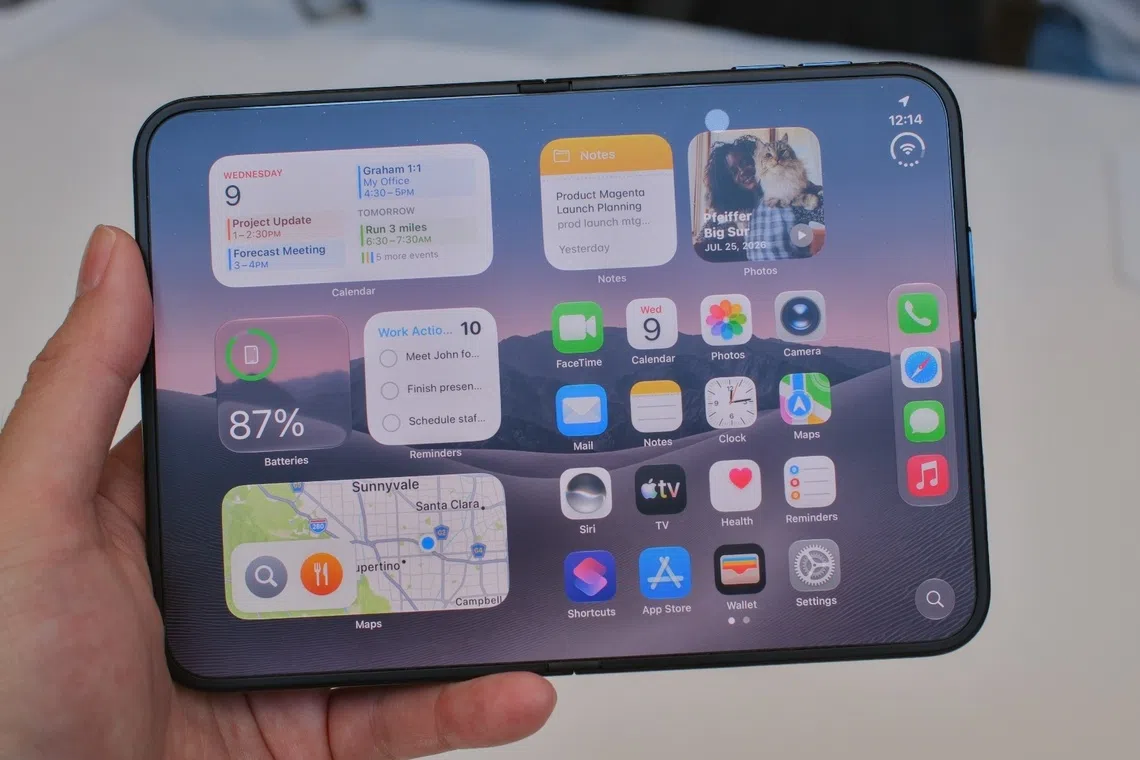
Apple says iPhone Duo demand is “extraordinary” as shipping dates slip to late January 2027
Pre-orders for Apple’s first foldable iPhone have pushed estimated delivery dates into late January 2027, but it’s unclear whether this reflects strong demand or limited launch inventory.
CXMT forecasts up to US$19.8 billion in 3 quarters’ net income; pledges share buy-back
Chinese memory chip giant ChangXin Memory Technologies (CXMT) forecast a net income of up to US$19.8 billion for the first nine months of 2026, marking a dramatic swing from a loss a year ago, as the domestic champion cashed in on artificial intelligence-driven demand while aggressively challenging global rivals including Samsung Electronics and SK Hynix. Meanwhile, Zhu Yiming, chairman of the Hefei-based memory giant, proposed to buy back 1 billion (US$149.56 million) to 2 billion yuan of...

Hyundai Motor steps up physical AI push amid Chinese competition, stock slump
UIWANG, South Korea — Seeking to remain competitive against fast-growing Chinese automakers and find new sources of growth amid a sharp retreat in its share price, Hyundai Motor Group is stepping up its push into robotics and physical artificial intelligence (AI). The move comes as the world's third-largest automotive group faces growing pressure to improve profitability in its conventional carmaking business amid intensifying competition in the global electric vehicle (EV) market, particularly from lower-priced Chinese models. Investors are also questioning when the group's heavy investments in robotics will start to pay off. Hyundai Motor Co.'s shares more than doubled after its U.S. subsidiary Boston Dynamics unveiled its Atlas humanoid robot at the Consumer Electronics Show (CES) in January, reaching a record closing high of 755,000 won ($565.2) in June. But the stock has since fallen sharply to near pre-CES levels, closing at 312,000 won Friday, as enthusiasm over robotics has faded amid weak earnings and growing concerns about how soon the technology can turn profitable. Speculati

Korea Eximbank, IFC seek to deepen cooperation in strategic industries
Hwang Ki-yeon, chairman and CEO of the Export-Import Bank of Korea (Korea Eximbank), met with Makhtar Diop, managing director of the International Finance Corporation (IFC), to discuss ways to strengthen strategic financial cooperation between the two institutions, the bank said Sunday. The meeting took place Friday on the sidelines of the IMF-World Bank Group Annual Meetings in Bangkok, Thailand. The two institutions agreed to expand their existing cooperation on infrastructure and energy projects in developing countries into new strategic areas, including critical mineral supply chains and innovative and high-tech industries. Korea Eximbank plans to leverage the World Bank Group's multilateral cooperation platforms and financing instruments to help stabilize global supply chains and strengthen cooperation across the critical minerals value chain. The bank also intends to expand joint financing for innovative and high-tech sectors, including emerging green industries, artificial intelligence and digital infrastructure. "By working closely with global financial institutions, including the

Telecom firms, science ministry urged to prove 5G standalone reliability
The planned rollout of 5G standalone (SA) services is renewing calls for telecom operators and the ICT ministry to deliver more reliable connections amid concerns that the transition could repeat the shortcomings of the initial 5G rollout unless consumers see tangible improvements in service quality. The Ministry of Science and ICT made the 5G SA adoption a policy priority late last year, requiring telecoms to transition to the technology as a condition for mobile spectrum reallocation. SK Telecom and LG Uplus are targeting commercial launch of 5G SA services by the end of this year, joining KT, which introduced SA support for the iPhone 17 series in March. Unlike earlier 5G networks that rely on a fourth-generation (4G) LTE core, 5G SA uses a dedicated 5G core to reduce latency and support applications such as autonomous driving and physical artificial intelligence (AI). The rollout comes amid lingering concerns over service reliability, with consumers having faced higher bills but limited improvements over LTE during the initial 5G transition. If operators seek to charge more for SA-b

Hyundai Motor moves to sidestep self-driving fallout in India
Hyundai Motor’s bet on India is being overshadowed by Tesla’s technological leap toward flying cars, exposing the Korean carmaker’s self-driving doldrums. Hyundai Motor Group recently pledged $15.5 billion (20.7 trillion won) in investment in India through 2032, seeking to strengthen its position in one of the world’s fastest-growing major automotive markets. The commitment spans manufacturing expansion, research and development, supplier development and next-generation technologies. However, the scale of the investment does not guarantee that India will become a reliable growth engine capable of offsetting mounting challenges in its cash-cow markets, such as the United States, Korea and Europe. Hyundai Motor and Kia sold a combined roughly 850,000 vehicles in India last year, with sales growth of just 0.2 percent. That performance lagged significantly behind local rivals Mahindra & Mahindra and Tata Motors, whose sales rose 18.4 percent and 2.9 percent, respectively, during the same period. The gap reflects a competitive landscape in which established domestic players have streng

Musk's criticism of Samsung, SK's memory chip pricing runs counter to market logic: expert
Tesla CEO Elon Musk’s latest criticism of Samsung Electronics and SK hynix over their memory chip pricing defies market realities, as any chipmaker that undercuts prevailing prices risks selling out immediately and leaving other customers without supplies, a prominent U.S. chip analyst said. Jim Handy, founder and general director of semiconductor research firm Objective Analysis, challenged Musk's recent description of the Korean chipmakers' prices as “extortionate,” compared with those of their U.S. rival Micron. The chip expert underscored that memory prices are determined by market forces rather than individual suppliers. “Memory makers do not set their parts’ pricing — the market determines the pricing,” Handy said in a written interview with The Korea Times, Sunday. “In that light, it is hard to understand Musk’s comment.” Musk is looking to manufacture chips in-house through his Terafab project, with soaring memory prices an increasingly pressing concern for his ambitions. He posted on X on Tuesday (local time), “Micron has been reasonable regarding future m

FTC's costly crackdown on conglomerates generates little return
The Fair Trade Commission’s (FTC) increasingly aggressive crackdown on major conglomerates is generating a costly cycle with little tangible return, as the watchdog has been forced to refund billions of won in fines overturned by courts. The watchdog has returned nearly 290 billion won ($216.7 million) to companies since 2022 after administrative court rulings overturned its sanctions. The figures raise questions about whether the regulator’s tougher enforcement produces lasting results or simply creates more legal and financial burdens for both businesses and taxpayers. The latest figures offer little reassurance. For the first nine months combined this year, the FTC returned 23 billion won in fines and associated payments, with 99.7 percent of the amount attributable to sanctions overturned in whole or in part through administrative litigation, according to data submitted to Rep. Choi Eun-seok of the main opposition People Power Party. But the regulator is moving in the opposite direction. Since President Lee Jae Myung took office last year, the government has pushed to strengthen

The AI promise was automation. The reality? Managing digital workers
When artificial intelligence agents first arrived, they came with a tantalising promise: autonomous “digital workers” that would finally free humans from corporate drudgery. As businesses across Asia are discovering, however, the reality is quite the opposite – more work, new friction and a whole new layer of management. When Xiao Mengjie, an AI product marketing manager at a Big Tech firm in Shanghai, recently assigned two AI agents what she described as a simple task, she expected efficiency....


When AI takes your side in a workplace conflict

YOUR NEWS, OUR NETWORK.
Do you have Great News you want to tell the world?
Be it updates about your business or your community, you can make sure that it’s heard by submitting your story to our network reaching hundreds of news sites across 6 verticals.