
Advanced Stainless Steel Wire Mesh Belt Solutions for OEM and Wholesale Industrial Applications
Nov 10, 2026
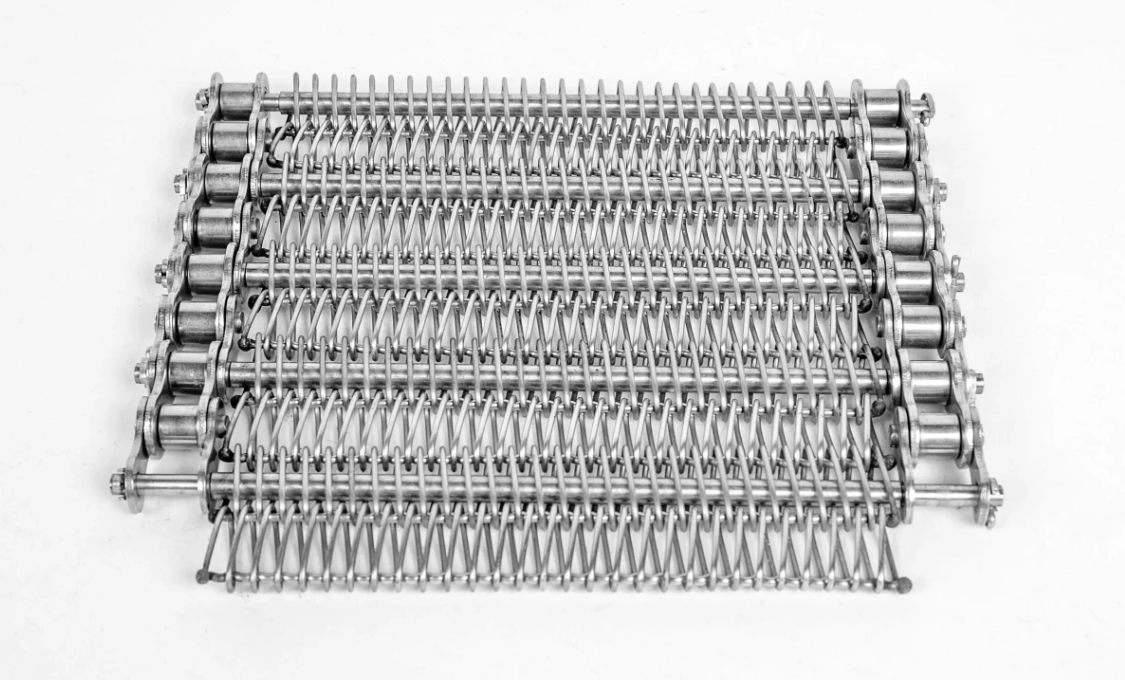
Yangzhou, Jiangsu Nov 10, 2026 (Issuewire.com) - A stainless steel wire mesh belt is an essential component in industrial conveying systems where reliable material transfer, heat resistance, and consistent process performance are required. From powder metallurgy and metal heat treatment to brazing, electronics manufacturing, glass processing, and industrial drying, the right mesh belt helps manufacturers move products through demanding production environments.
However, selecting a stainless steel wire mesh belt involves more than choosing a material. Mesh structure, wire diameter, opening size, belt width, edge construction, operating temperature, and drive configuration can all influence performance. A belt designed for a high-temperature sintering furnace may require a different construction from one used for cleaning, drying, or general material handling.
Advanced Stainless Steel Wire Mesh Belt Solutions for OEM and Wholesale Industrial Applications
What Makes Stainless Steel Wire Mesh Belts Suitable for Industrial Processing?Stainless steel wire mesh belts combine a metal conveying surface with an open structure that allows air, heat, and certain process media to pass through the mesh. Their suitability depends on the stainless steel grade, construction, and operating conditions.
Several characteristics make them useful in industrial production.
Heat resistance: With an appropriately selected alloy and belt construction, stainless steel mesh belts can operate in elevated-temperature environments, including certain heat treatment, brazing, and sintering processes. The maximum suitable temperature depends on the material grade, furnace atmosphere, load, and operating cycle.
Open mesh structure: The openings between wires can support airflow, heat transfer, drainage, and drying. The appropriate opening size depends on the product dimensions and the requirements of the process.
Mechanical strength: Wire diameter, cross-rod dimensions, mesh geometry, and edge design affect load capacity and resistance to deformation. These factors should be evaluated against the actual operating load and conveying conditions.
Process versatility: Different belt structures can accommodate a range of products, from small industrial components to larger materials requiring a more robust conveying surface.
Maintenance potential: A correctly specified belt, combined with suitable tracking, tensioning, and routine inspection, can help support stable operation. Actual service life depends on working conditions and maintenance practices.
These characteristics make stainless steel wire mesh belts a practical option for many continuous production lines, but the design must match the process rather than rely on a generic specification.
Key Industrial Applications of Stainless Steel Wire Mesh Belts
The same product category can serve different purposes across manufacturing industries. Understanding the application is the first step toward selecting a suitable belt.
Powder Metallurgy and Sintering
In powder metallurgy, components may pass through a furnace for sintering and related thermal processes. The conveyor belt must support the workpieces while tolerating the temperature, furnace atmosphere, and continuous operating cycle.
Important considerations include alloy selection, mesh stability, product loading, belt tension, and resistance to thermal deformation. For demanding furnace applications, the belt structure and material should be evaluated together with the furnace design.
A suitable sintering furnace belt can help maintain consistent material movement through the heating zone and support the production process.
Heat Treatment and Brazing
Heat treatment lines may involve annealing, tempering, hardening, and other controlled heating processes. Brazing applications require a belt that transports components through a heating zone while accommodating the thermal and mechanical conditions of the process.
Material grade should be selected according to actual operating temperature and furnace atmosphere. Belt width, mesh opening, load distribution, and drive design also affect conveying stability.
For these applications, discussing the full operating profile with the manufacturer is more useful than selecting a belt based on temperature alone.
Electronics Manufacturing
Electronic components and related parts may require controlled conveying during heating, drying, or other production stages. The mesh structure must suit the dimensions, weight, and handling sensitivity of the products.
A belt with inappropriate openings may allow small parts to shift or fall through, while an unsuitable surface may fail to provide the required support. Engineers should therefore evaluate product size, loading arrangement, process temperature, and line speed before confirming the design.
Glass and Building Materials
Glass-related production and building-material processing can expose conveyor belts to heat, abrasive conditions, or repeated thermal cycles, depending on the specific process.
The belt material and construction should be chosen to suit the temperature profile, product weight, contact conditions, and expected service environment. A design intended for a moderate-temperature drying line should not automatically be treated as suitable for a high-temperature furnace.
Cleaning, Drying, and Chemical Fiber Processing
Open mesh construction can be useful when products need exposure to hot air, drainage, or process fluids. In cleaning and drying equipment, the belt should support the product while allowing the process medium to move through the conveying surface.
Chemical fiber and catalyst-related applications may introduce additional requirements concerning temperature, chemical exposure, particle retention, and product stability.
Clearly defining these requirements helps the manufacturer determine whether a standard construction is suitable or a customized design is needed.
How to Select the Right Stainless Steel Wire Mesh Belt
A well-matched belt begins with accurate application information. The following factors should be reviewed before requesting a quotation.
1. Confirm the Operating Temperature and Environment
Identify the normal operating temperature, peak temperature, heating and cooling cycles, and furnace atmosphere. Also disclose any exposure to corrosive substances, cleaning agents, or other process chemicals.
Different stainless steel grades have different temperature and corrosion-resistance characteristics. There is no single grade that is ideal for every application.
The material should be selected according to the complete operating environment rather than the maximum temperature in isolation.
2. Choose the Appropriate Mesh Structure
Mesh construction affects product support, airflow, opening size, flexibility, and mechanical performance.
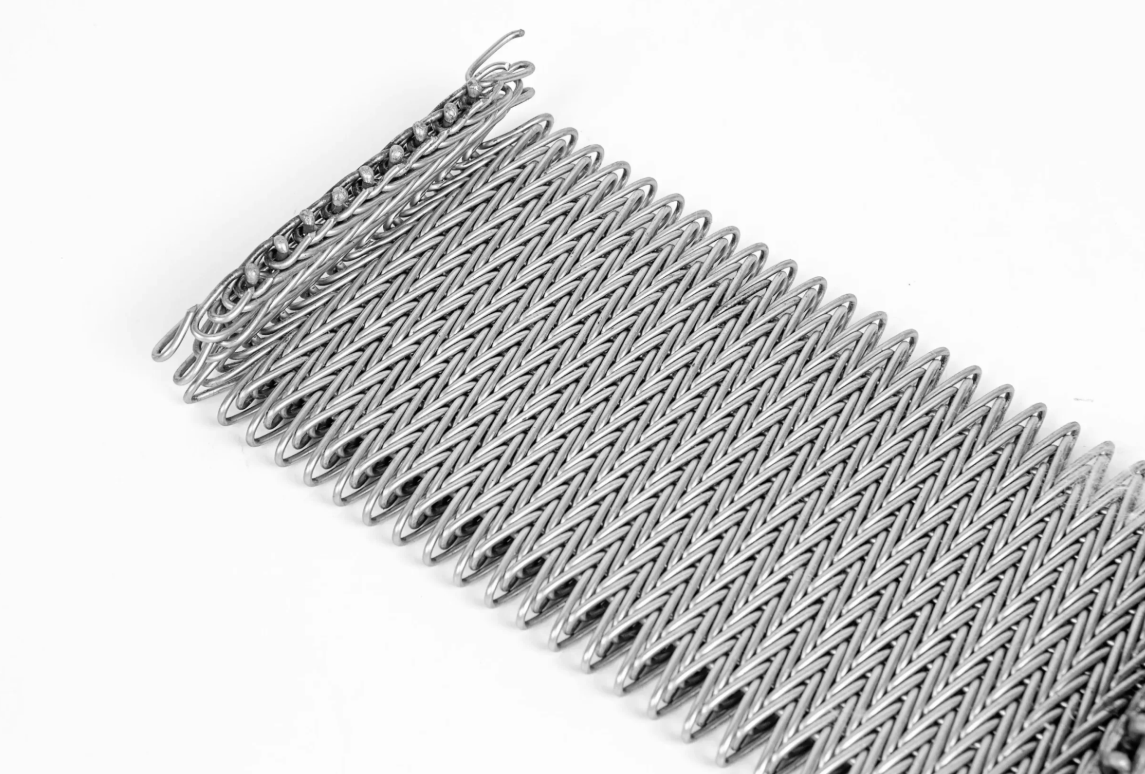
Depending on the production line, buyers may consider sintering furnace belts, brazing conveyor belts, heat treatment mesh belts, flat wire belts, or flat flex belts.
The appropriate design depends on the product being conveyed and the equipment configuration. Buyers should share drawings, photographs, or an existing belt sample when available.
3. Specify Wire Diameter and Mesh Opening
Wire diameter influences the belt's mechanical characteristics, while mesh opening affects product support and the passage of air or process media.
A larger opening may improve airflow but may not be suitable for small components. A denser mesh may provide better support for certain products but can change the belt's flexibility and process performance.
These dimensions should be considered together with product size, loading weight, and required conveying speed.
4. Evaluate Belt Width, Length, and Edge Design
Belt dimensions must match the conveyor system. Buyers should confirm the required width, overall length, connection method, edge construction, and drive arrangement.
An unsuitable edge design or poor alignment with the conveyor can contribute to tracking problems and uneven wear. The manufacturer should understand the equipment layout before recommending a final specification.
5. Consider Maintenance and Replacement Requirements
Routine inspection can help identify wire damage, abnormal wear, deformation, tracking deviations, and connection problems before they cause major interruptions.
Advanced Stainless Steel Wire Mesh Belt Solutions for OEM and Wholesale Industrial Applications
Custom Stainless Steel Wire Mesh Belts for Specific Production Needs
Standard products may be suitable for established conveying systems, but specialized industrial processes can require a more tailored configuration.
Custom stainless steel wire mesh belts can be specified around the production line's working conditions, dimensions, and conveying requirements. Before starting a custom order, buyers should prepare the following information:
Application: Sintering, brazing, heat treatment, drying, cleaning, or another process.
Operating conditions: Normal and peak temperatures, furnace atmosphere, and relevant chemical exposure.
Dimensions: Required belt width, length, mesh opening, and wire diameter, where known.
Product information: Workpiece size, weight, shape, and loading arrangement.
Conveyor configuration: Drive method, edge requirements, connection details, and equipment drawings.
Order requirements: Quantity, delivery destination, inspection expectations, and spare-parts needs.
Providing this information at the quotation stage helps the manufacturer assess the application and identify the most relevant construction options.
For OEM equipment manufacturers, customized belt dimensions and compatible construction details can also help align the conveying component with the wider machine design. Final specifications should be confirmed through technical review before production.
What to Look for in a Stainless Steel Wire Mesh Belt Manufacturer
Choosing a supplier involves evaluating manufacturing capability and the level of support available throughout the product lifecycle.
Manufacturing equipment and process control: Production equipment, dimensional control, and consistent manufacturing procedures can affect product quality. Buyers should ask how the supplier controls critical dimensions and verifies finished belts.
Technical experience: A supplier familiar with high-temperature metal conveyor belts may be better positioned to discuss furnace conditions, mesh construction, tracking, and maintenance requirements relevant to the application.
Quality management: Review the supplier's quality-management documentation and verify the scope and validity of any certifications that matter to your purchasing requirements. An ISO 9001 certificate, for example, should be checked against the issuing certification body and its stated scope.
Installation and after-sales support: Installation guidance, troubleshooting assistance, maintenance advice, and compatible spare parts can help buyers manage the belt after delivery.
Export and communication capability: For international procurement, confirm technical communication, packaging requirements, shipping arrangements, documentation, and the process for handling questions after installation.
A reliable supplier should be able to discuss the actual application, explain the basis for its recommendations, and clarify which product specifications can be confirmed before an order is placed.
Why Work with Yangzhou Jiaoyang Mesh Belt Manufacturing Co., Ltd.?
Yangzhou Jiaoyang Mesh Belt Manufacturing Co., Ltd. has long been engaged in the manufacturing of high-temperature metal wire belts. The company integrates research and development, production, sales, installation, recycling, and after-sales services, serving customers who require conveying solutions for demanding industrial processes.
Its product range includes sintering furnace belts, brazing conveyor belts, heat treatment mesh belts, pyrolysis furnace mesh belts, flat wire belts, and flat flex belts. These products support applications in powder metallurgy, electronics, building materials and glass, heat treatment, chemical fibers, catalyst processing, cleaning, and drying.
The company reports that its manufacturing facilities include more than 30 fully automatic wire winding machines, CNC straightening machines, and intelligent embossing machines. Its factory covers approximately 30 acres and includes a modern production workshop staffed by 60 skilled operators.
Yangzhou Jiaoyang also reports high-tech enterprise recognition and ISO 9001 management-system certification. International customers in Southeast Asia, Europe, and other markets form part of its export business.
Beyond manufacturing, the company emphasizes installation guidance, responsive technical support, maintenance recommendations, and the supply of compatible spare parts and accessories. This service approach is intended to help customers address operating issues and maintain the performance of their conveying systems over time.
For buyers sourcing a stainless steel wire mesh belt, sharing the production process, operating conditions, and equipment requirements with Yangzhou Jiaoyang can provide a practical starting point for discussing a suitable product configuration.
Frequently Asked Questions About Stainless Steel Wire Mesh Belt
What is a stainless steel wire mesh belt used for?
A stainless steel wire mesh belt transports materials through industrial processes that may involve heating, drying, cleaning, cooling, or other controlled operations. Common applications include powder metallurgy, heat treatment, brazing, electronics manufacturing, glass processing, and chemical fiber production. The suitable design depends on the specific process and operating environment.
How do I choose a stainless steel wire mesh belt for high-temperature applications?
Start by confirming the operating temperature, furnace atmosphere, thermal cycles, product load, and conveying speed. Then evaluate the stainless steel grade, mesh structure, wire dimensions, edge construction, and drive arrangement. High-temperature suitability should be confirmed for the complete application rather than inferred from the material name alone.
Can stainless steel wire mesh belts be customized?
Yes, many industrial wire mesh belts can be customized according to dimensions, mesh construction, material requirements, edge design, and equipment configuration. Available options depend on the manufacturer and application. Providing drawings, operating parameters, and product details helps the supplier assess a suitable design.
What information should I provide when requesting a quotation?
Provide the intended application, working temperature, belt width and length, product size and weight, mesh requirements, conveyor drive configuration, quantity, and delivery destination. If some technical details are unavailable, an equipment drawing, existing belt sample, or clear photographs can help the manufacturer understand the requirements.
How can I extend the service life of a stainless steel wire mesh belt?
Use a belt suited to the operating environment, follow the equipment manufacturer's installation and tensioning recommendations, and inspect tracking, edges, connections, and wire condition regularly. Avoid overloading the belt or exposing it to conditions beyond its specified limits. Maintenance frequency should reflect the actual duty cycle and operating environment.
Request a Custom Stainless Steel Wire Mesh Belt Solution
The right stainless steel wire mesh belt should match the production process, not just the equipment's basic dimensions. Material selection, mesh design, belt geometry, and after-sales support all contribute to a suitable long-term solution.
Yangzhou Jiaoyang Mesh Belt Manufacturing Co., Ltd. provides a range of industrial metal wire belts and related technical services for customers across multiple manufacturing sectors.
If you are sourcing a stainless steel wire mesh belt for a new production line or replacing an existing belt, prepare your application details and equipment specifications for a technical discussion. Contact Yangzhou Jiaoyang to explore suitable belt options, customization requirements, and service support for your project.
For more information, please visit: https://www.jymeshbelt.com/
Source :Yangzhou Jiaoyang Mesh Belt Manufacturing Co., Ltd.
This article was originally published by IssueWire. Read the original article here.

Everland's newest panda Shubao draws 50,000 visitors in 10 days
Shubao, the youngest giant panda at Everland, has drawn about 50,000 visitors in roughly 10 days since she first went on public view, the theme park’s operator said Tuesday. Samsung C&T’s resort division, which runs Everland in Yongin, Gyeonggi Province, said the cub began appearing at the park’s Panda World enclosure on Oct. 30. She was on view for about an hour a day in her first week. Everland has since raised that to three to four hours as she gets used to visitors. Shubao was born June 3 to mother Aibao and father Lebao. She is the fourth giant panda born in Korea, after Fubao in 2020 and twins Ruibao and Huibao in 2023. Fubao moved to China in April 2024. Crowds are also coming to see the twins before they leave for China in the third week of December. Under international conservation rules, giant pandas born outside China must move there before they turn 4, when they reach breeding age. About 100,000 people have visited the twins at their enclosure in the month or so since Everland announced their departure. The twins will start a month of quarantine on Friday, but will stay

Ceragem earns 9 CES Innovation Awards for AI-powered health care products
Health care equipment maker Ceragem has won nine CES 2027 Innovation Awards for eight products on Tuesday, marking its fourth consecutive year of recognition and bringing its cumulative total to 30 awards. The company has previously won three awards in 2024, six in 2025 and 12 in 2026. This year’s awards include products designed to meet the health care needs of different age groups, from infants and young children to older adults. The eight award-winning products are: Ceragem artificial intelligence (AI) Wellness Home, Therapier AI Multi Boosting Capsule, Youridm AI Muscle Longevity System, AI Sleep Recovery Pillow, AI Pet Wellness Suite, AI Neuro Focus Office Chair, Senior Wellness Sofa with AI Adaptive Care and AI Sensor Pod & Smart Crib. Ceragem AI Wellness Home, which won an award in the AI category, uses physical AI to analyze users' biometric data and daily routines, assess their health status and automatically adjust connected home environments and health care devices to their needs. The platform brings together connected devices, health data and services to deliver personalize

LS Eco Energy makes push for world's 1st mass production of samarium
LS Eco Energy, a subsidiary of LS Cable & System, said Tuesday it will begin trial production of samarium metal in December, with the goal of becoming the world's first company to mass-produce the key material for permanent magnets using non-Chinese raw materials. The move is part of the company's efforts to establish a supply chain independent of China ahead of new U.S. restrictions on rare earth materials used in defense applications. According to the company, LS Eco Energy is investing 11.6 billion won ($8 million) to build a samarium metal production facility at its subsidiary LSCV in Ho Chi Minh City, Vietnam. The company plans to begin trial production in December before moving to full-scale mass production. The facility's annual output of 240 tons of samarium metal would be sufficient to produce approximately 700 to 1,000 tons of samarium-cobalt (SmCo) permanent magnets. Samarium is a key material for SmCo permanent magnets, which retain their magnetic strength at high temperatures. SmCo magnets are used in aerospace and defense applications, including fighter jets and missiles. St

Boston Dynamics' Atlas robot pulls off 360-degree spinning jump on wheels instead of feet
Boston Dynamics' humanoid robot Atlas has successfully performed a challenging aerial maneuver, jumping into the air, spinning 360 degrees and landing like a figure skater — all while equipped with wheels instead of feet. The robotics company, a subsidiary of Hyundai Motor Group, released a video Monday showing a wheeled version of Atlas performing a series of demanding movements designed to test the limits of its motors and whole-body control technology. The 2-minute, 50-second video shows Atlas rapidly moving sideways while changing direction on its wheels, executing a full 360-degree spinning jump, balancing on one wheel with the other leg raised and lifting itself off the floor before accelerating forward. The robot successfully completed the 360-degree spinning jump on its first attempt. The achievement followed efforts by the development team to narrow the gap between computer simulations and real-world hardware through a process known as "sim-to-real" transfer. Engineers also used reinforcement learning, a machine-learning technique in which robots improve their performance throu

Seoul Metro union threatens Nov. 25 general strike over wage, hiring disputes
The largest of three labor unions at Seoul Metro threatened Tuesday to launch a general strike on Nov. 25 unless its demands, including additional staff recruitment and wage increases, are met. Union 1 of Seoul Metro, which operates subway Lines 1-8 and parts of Line 9, issued the warning at a news conference following a meeting of senior union members. The union initially sought a 5.2 percent wage increase but lowered its demand to 3.5 percent in negotiations with management. It also calls for scrapping a plan to cut 2,212 jobs and hiring an additional 1,313 workers this year to address staff shortages. Other demands include state funding for public services and a requirement that all field work be performed by two-person teams. The union said 7,782, or 84.6 percent, of its 9,201 members recently participated in a vote, with 6,715, or 86.3 percent of those who voted, backing the strike plan. Unions 2 and 3 also approved the strike plan, with 80.8 percent and 94.9 percent of their respective members voting in favor. Union 1 said it and Union 2 plan to launch a "work-to-rule" campaign on N

F&F Q3 net income down 34.6% to $49.3 mil.
F&F on Tuesday reported its third-quarter net income of 65.9 billion won ($49.3 million), down 34.6 percent from a year earlier. Operating income for the July-September period was 108.4 billion won, down 15.3 percent from a year ago, the fashion and beauty retailer said in a regulatory filing. Sales also backtracked 4.7 percent to 452.1 billion won. The earnings fell behind market expectations. The average estimate of net profit by analysts stood at 96.7 billion won, according to a survey by Yonhap Infomax, the financial data firm of Yonhap News Agency.

LG Energy Solution secures CES Innovation Award for battery diagnostic software
LG Energy Solution has won a CES 2027 Innovation Award for software that can assess the condition and remaining performance of used batteries, marking the second consecutive year the company has been recognized for a software-based solution. The company said Tuesday that its Re.Pulse solution, which assesses the health and remaining performance of used batteries, was named an honoree in the awards' Vehicle Tech and Advanced Mobility category. The system sends specific electrical pulses through a battery, measures changes in voltage and analyzes the data using its proprietary AI model to quickly assess the battery's condition. The company said the assessment will allow operators to determine whether a used battery is best suited for reuse, remanufacturing or recycling, helping get the most value out of each battery. "This CES Innovation Award recognizes the strength of our battery diagnostic technology and software capabilities," a company official said. "We will continue to advance our diagnostic and management technologies to unlock greater value from used batteries and help build a sus

Samsung SDI wins CES Innovation Award for UPS battery solution
Samsung SDI has won CES 2027 Innovation Award for its prismatic battery solution for uninterruptible power supply (UPS) systems. The battery maker said Tuesday that its SDI U8A3-UPS was named an honoree in the awards’ Enterprise Tech category. A UPS is a battery-based backup system that supplies emergency power to critical facilities, including data centers, when the main power supply is unexpectedly interrupted. "This award recognizes the innovation of a critical power solution for the artificial intelligence era," a company official said. "We will continue to lead the market with products that combine the performance and safety our customers demand." The company explained that its solution stands out for its high-power output, high energy density and fire safety. Using lithium manganese oxide prismatic cells, the battery offers high power output and energy density while taking up 33 percent less space than existing products. This allows operators to maintain a stable power supply with fewer battery units. The system is also designed to provide additional power when electricity demand s

Kolmar Korea's AI lipstick system wins CES beauty tech award
Kolmar Korea's artificial intelligence (AI)-powered lipstick system, ChromaFlow, won the Best of Innovation award in the beauty technology category for CES 2027, marking the first case of consecutive wins in the category, the company said Tuesday. ChromaFlow also received an Innovation Award in the AI category, while its LumiJet Pro skin care device won another award in that category, bringing Kolmar Korea’s total honors at CES 2027 to three across two products. The company said the recognition follows its award for the Scar Beauty Device, an AI-based wound care and makeup coverage device, at CES 2026. It plans to exhibit both award-winning products at the Venetian Expo in Las Vegas during CES 2027, scheduled for Jan. 6 to 9. ChromaFlow is designed to reproduce a lip color while accounting for differences in users’ lip tones, which can affect how the same lipstick shade appears on different people. When held against the lips, an optical sensor analyzes their condition. The system then calculates a customized formula and combines material from seven color cartridges to produce a lip p

Antitrust review of Naver's Dunamu takeover to conclude by year-end
The Fair Trade Commission (FTC) has launched a formal review of Naver Financial’s planned acquisition of Dunamu, saying the deal could substantially restrict competition across multiple markets, including online payments and digital asset exchanges, the watchdog said Tuesday. The deal involves a comprehensive stock swap under which Naver Financial would acquire all shares of Dunamu. In return, Dunamu shareholders would receive about 2.54 shares of Naver Financial for each Dunamu share. Dunamu is the operator of the nation’s leading crypto exchange Upbit. If completed, Naver Financial would become Dunamu’s sole parent company, while Dunamu would become its wholly owned subsidiary. The proposed acquisition raises competition concerns in several relevant markets. The companies submitted proposed remedies to ease such concerns, and the FTC initiated a review of the measures proposed by the two firms. Naver Financial seeks to bring one of Korea’s largest digital asset exchanges into its financial portfolio. The watchdog is expected to hold a hearing on the case soon. Final approval, re
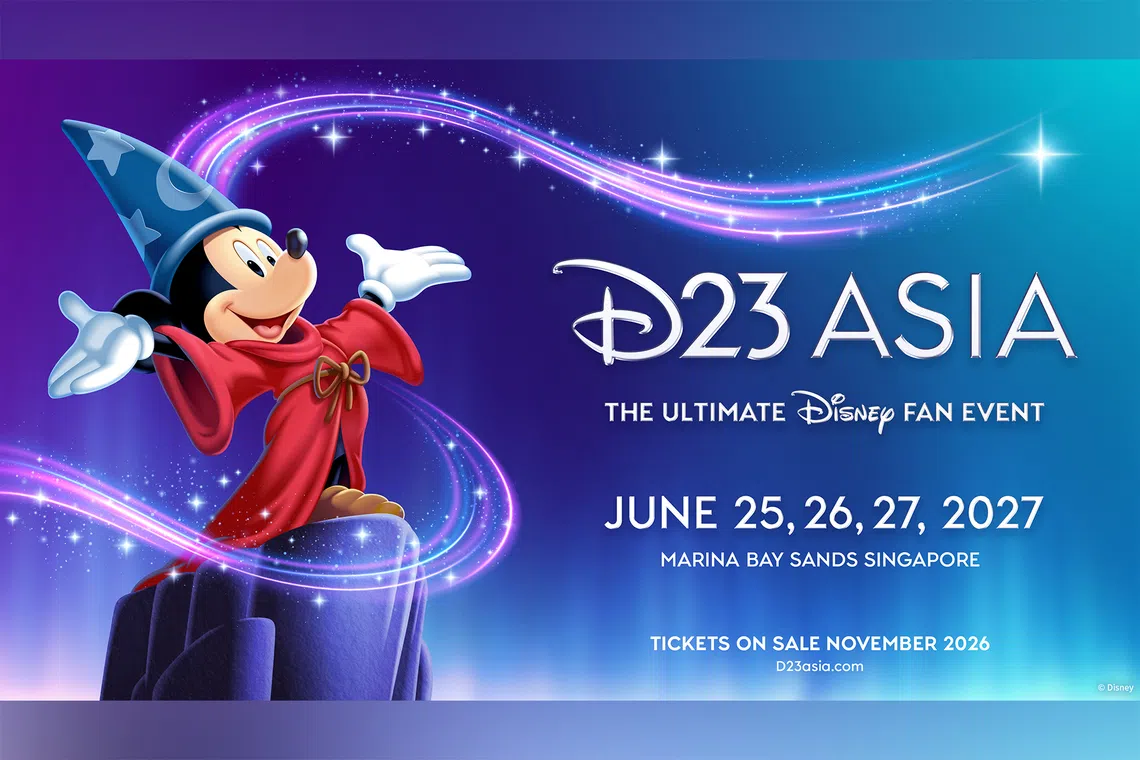
Singapore gets some Disney magic with D23 Asia: The Ultimate Disney Fan Event
The event is set to take place in June 2027, with tickets coming out at the end of November 2026.

Ecosystem Roundup: Nvidia board probes Jensen Huang over affair with Megaspeed exec
Nvidia’s board has opened an independent investigation into Jensen Huang after the CEO admitted in a staff memo to an affair with Alice Huang, an executive at Singapore-based Megaspeed. A memo circulated among US policymakers earlier this year claimed China’s Ministry of State Security had recruited her to spy on him. Beijing’s embassy in Washington […] The post Ecosystem Roundup: Nvidia board probes Jensen Huang over affair with Megaspeed exec appeared first on e27.


YOUR NEWS, OUR NETWORK.
Do you have Great News you want to tell the world?
Be it updates about your business or your community, you can make sure that it’s heard by submitting your story to our network reaching hundreds of news sites across 6 verticals.