
Advanced CO Detector Factory Analysis: How ARIZA Integrates Smart Microchips to Eliminate False Positives
Sep 30, 2026
Shenzhen, Guangdong Sep 30, 2026 (Issuewire.com) - In residential and commercial safety, carbon monoxide (CO) alarms play a critical life-saving role. However, false alarms remain a persistent challenge across the security and home automation industries. Unwarranted alarms disrupt end users, trigger unnecessary emergency responses, and erode trust in life-safety equipment.
Is it truly possible to eliminate false positives in carbon monoxide detection without compromising quick responsiveness during genuine emergencies? Achieving this balance requires moving beyond legacy analog detection techniques and approaching sensor design from a fundamental microchip architecture and signal processing perspective.
Today, modern microelectronics, adaptive digital signal processing (DSP), and advanced electrochemical sensing make zero-nuisance detection achievable. As a leading Advanced CO Detector Factory, Shenzhen ARIZA Electronic Co., Ltd. demonstrates how integrating high-performance smart microchips into carbon monoxide detectors transforms overall system reliability. For B2B buyers, distributor networks, and smart home system integrators, understanding the core technology behind carbon monoxide detection is essential. A CO detector operates by sampling ambient air for toxic carbon monoxide gas--a colorless, odorless, and tasteless compound produced by incomplete combustion. Commercial-grade CO alarms rely on specialized electrochemical sensors that generate a tiny electrical current proportional to CO concentration. To qualify for global supply chains, these devices must accurately differentiate ambient disturbances--such as sudden humidity swings, household chemical vapors, temperature spikes, or transient harmless gases--from genuine carbon monoxide build-up.
Analysis: How ARIZA Integrates Smart MicrochipsMulti-Sensor Signal Processing, and Microchip Architecture
Traditional carbon monoxide alarms rely on simple threshold comparators that trigger an alert whenever sensor electrical output crosses a predetermined voltage level. This primitive approach leaves devices highly vulnerable to transient voltage spikes, ambient temperature swings, and chemical cross-sensitivity. By incorporating dedicated high-performance smart microchips into every detection unit, the detection architecture shifts from simple threshold monitoring to continuous digital signal analysis. The onboard microchip operates as an intelligent microcontroller unit (MCU), analyzing real-time gas absorption curves rather than relying on isolated signal spikes. When gas molecules interact with the sensing element, the microchip records the rate of change, curve duration, and concentration trajectory. If a sudden signal burst does not match the known kinetic profile of carbon monoxide diffusion, the microchip identifies it as environmental noise or non-target gas interference and filters it out.
Advanced Electrochemical Sensing Mechanisms
At the core of high-precision detection lies the interaction between the smart microchip and the underlying electrochemical cell. Electrochemical sensors contain working, reference, and counter electrodes submerged in an electrolyte medium. When carbon monoxide diffuses into the cell, it oxidizes at the working electrode, releasing electrons proportional to gas concentration. In conventional setups, baseline sensor drift caused by electrode degradation or electrolyte evaporation leads to false trips over time. Smart microchips mitigate this issue by maintaining dynamic baseline management. The microchip continuously monitors internal cell impedance and baseline current, adjusting amplification gains in real time to compensate for component aging. This active baseline correction ensures that the alarm maintains uniform sensitivity throughout its operational lifespan, preventing false positives triggered by sensor degradation.
Dynamic Environmental Compensation Algorithms
Environmental variables such as relative humidity fluctuations, sudden ambient temperature changes, and non-target household volatile organic compounds (VOCs) are common causes of nuisance alarms. To resolve this, modern intelligent units embed dual-environmental calibration algorithms directly into the microchip firmware. Thermal and moisture sensors constantly feed ambient data into the central processor. When a rapid temperature spike occurs--such as when heating systems engage--the algorithm dynamically recalibrates the sensor response curve, preventing false triggers. Furthermore, advanced digital filtering algorithms evaluate gas accumulation over time against standardized time-weighted average (TWA) response curves. By analyzing exposure duration alongside real-time concentration, the device ignores brief, benign gas surges while remaining fully responsive to sustained, dangerous carbon monoxide accumulation.
Technical Evaluation of Modern Carbon Monoxide Detection Systems
Key Specifications Sourcing Teams Must Evaluate
For procurement managers, hardware engineers, and B2B distributors, evaluating carbon monoxide detectors requires reviewing several technical specifications:
- Sensor Lifetime and Reliability: Industrial-grade electrochemical sensors offer operational lifespans ranging from 3 to 10 years, requiring microchips that compensate for long-term drift.
- Power Management Efficiency: Low-power MCU architectures allow battery-operated units to maintain continuous sampling while achieving 3-year to 10-year battery life cycles.
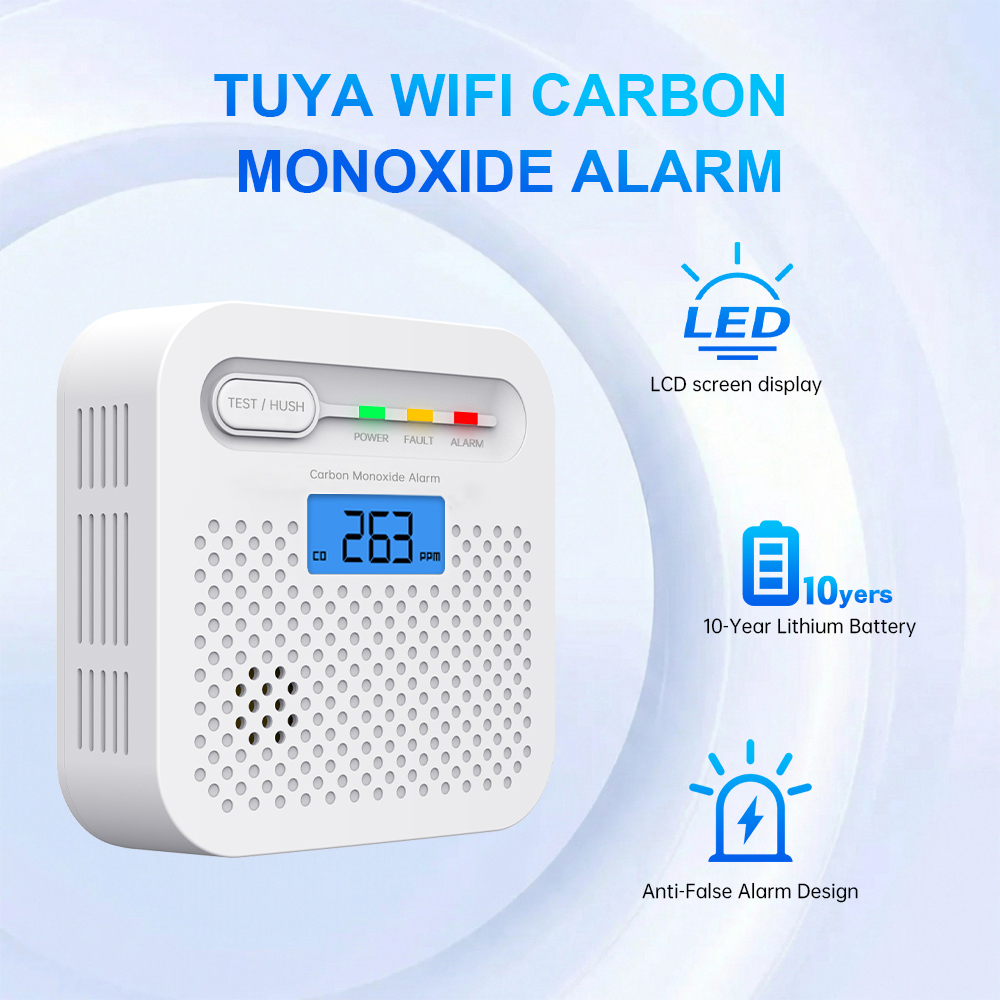
- Acoustic and Visual Alerting Output: Piezoelectric sounders delivering at least 85 decibels at 3 meters, paired with multi-color LED indicators and digital LCD screens, provide clear status updates during testing and emergency events.
- Response Time Dynamics: Compliance with international safety curves requires rapid response times at high concentration levels (e.g., within 3 minutes at 300 ppm) while preventing premature alarms at low background levels.
Protocol Compatibility and Smart Home Integration
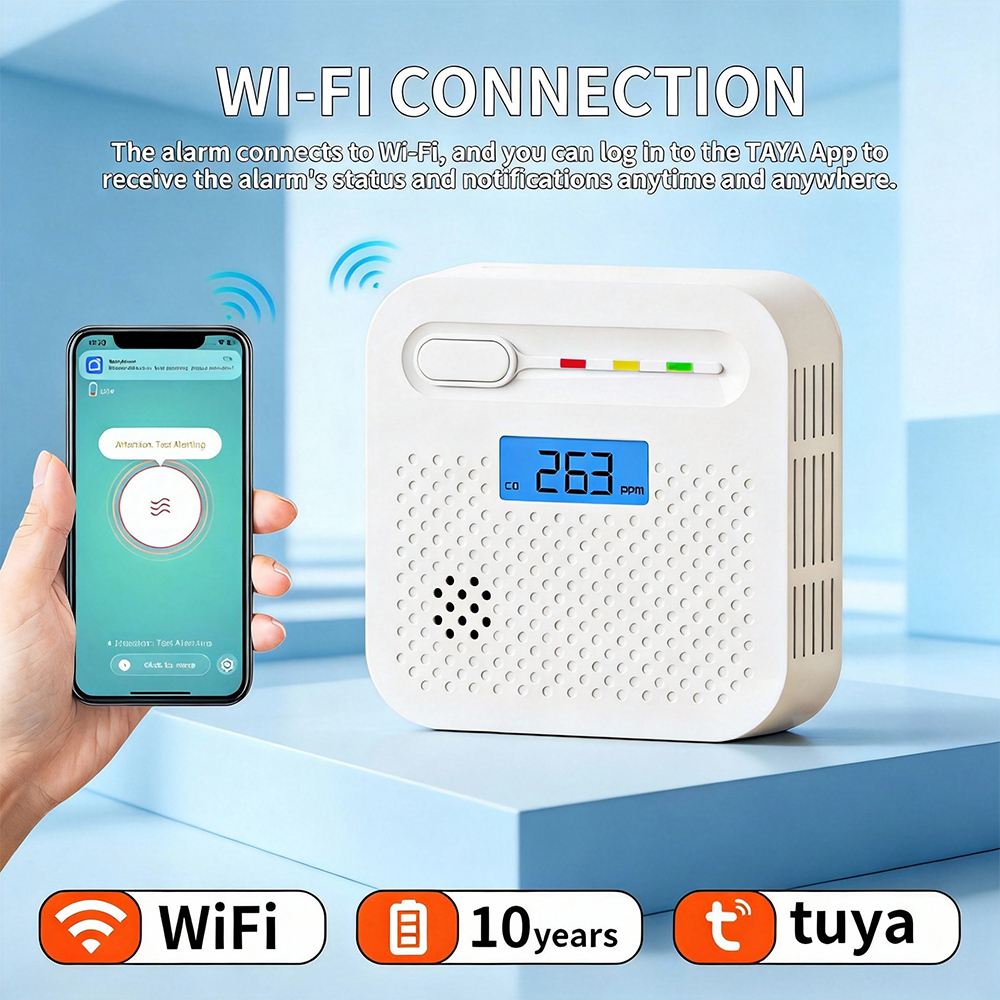
Modern security ecosystems demand seamless connectivity across diverse communication protocols. Intelligent carbon monoxide detectors are designed to support standalone operation as well as integrated wireless connectivity. Microchip architectures support multi-protocol communications, including RF 433MHz interlinked networks, Wi-Fi 2.4GHz direct-to-cloud connections, Zigbee, Z-Wave, and Bluetooth protocols. In interconnected configurations, when one detector identifies a carbon monoxide hazard, the integrated wireless chip broadcasts a signal to trigger all linked alarms across a facility or residential property simultaneously. Smart Wi-Fi variants send immediate push notifications to mobile devices via platforms such as Tuya or Smart Life, enabling real-time remote monitoring for property managers and homeowners alike.
About Shenzhen ARIZA Electronic Co., Ltd.
Shenzhen ARIZA Electronic Co., Ltd. is a world-leading smart alarm ODM company focusing on the research, development, and manufacturing of residential security and fire safety alarms. With 16 years of industry experience, ARIZA partners with over 3,000 global brand customers across more than 30 countries and regions. The company holds over 60 patents and maintains strict compliance with major international standards, including TUV EN14604, EN50291, CE, ROHS, FCC, and mandatory CCC certifications. Specializing in smart smoke detectors, carbon monoxide alarms, door and window sensors, water leak detectors, and personal safety devices, ARIZA delivers reliable ODM/OEM solutions tailored for global market success.
To learn more about ARIZA's smart security solutions and product portfolio, visit the official website:
Source :Shenzhen ARIZA Electronic Co., Ltd.
This article was originally published by IssueWire. Read the original article here.

Nuri rocket deploys 14 satellites, 1 CubeSat fails to release
The Nuri rocket successfully lifted off on its fifth launch and deployed 14 of the 15 satellites it carried into their target orbit Wednesday. The rocket lifted off from the second launch pad at the Naro Space Center in Goheung, Jeonnam-Gwangju Special Metropolitan City, at 12:25 p.m. and completed its roughly 20-minute flight at around 12:45 p.m. The rocket separated its first stage about two minutes after liftoff, followed by the second stage about four and a half minutes into the flight. At around 12:40 p.m., it reached an altitude of 570 kilometers and completed the sequential deployment of five NEONSAT swarm microsatellites (satellite No. 2 to 6), its primary payload, along with nine of the 10 CubeSats it carried. Initially, the Nuri sent signals indicating that all of the CubeSats had been successfully deployed. However, subsequent checks found that PERSAT02, developed by Quaternion, had failed to separate from the rocket. The flight ended at around 12:45 p.m. after the third stage completed its autopilot sequence. "The Nuri rocket successfully completed its planned fifth launch mis

Southeast Asia’s foodtech winners are the least glamorous ones
Southeast Asia’s foodtech story was supposed to be about disruption: lab-grown shrimp on every plate, groceries at your door in 15 minutes, ghost kitchens replacing the corner restaurant. The reality has been humbler, and arguably more interesting. The 2022 correction thinned the herd, the eFishery scandal and TaniHub’s collapse left scars, and many of the […] The post Southeast Asia’s foodtech winners are the least glamorous ones appeared first on e27.

When the carer has dementia too: Japan turns to physical AI to rescue eldercare
Some Japanese words resist translation. Take rōrō kaigo (老老介護). The character rō means “elderly”, and repeating it describes an elderly person caring for another elderly person, such as an 80-year-old husband looking after his equally frail wife on his own. That is the reality the word captures. Then there is the darker ninnin kaigo (認認介護). […] The post When the carer has dementia too: Japan turns to physical AI to rescue eldercare appeared first on e27.

Southeast Asian tech leaders are learning to trust AI agents, but not with production
AI coding agents have moved quickly from novelty to daily tool inside Southeast Asian engineering teams. Across Singapore, Bangkok, Jakarta and Ho Chi Minh City, developers are no longer just asking AI to complete a line of code or explain an error message. They are using agents to plan tasks, refactor repositories, generate tests and […] The post Southeast Asian tech leaders are learning to trust AI agents, but not with production appeared first on e27.
Nuri rocket successfully deploy 15 satellites
The Nuri rocket successfully lifted off in its fifth launch and deployed 15 satellites into their target orbit, Wednesday. The rocket lifted off from the second launch pad at the Naro Space Center in Goheung, Jeonnam-Gwangju Special Metropolitan City, at 12:25 p.m. and completed its roughly 20-minute flight at around 12:45 p.m. The rocket separated its first stage about two minutes after liftoff, followed by the second stage about four and a half minutes into the flight. At around 12:40 p.m., it reached an altitude of 570 kilometers and completed the sequential deployment of five NEONSAT swarm microsatellites, its primary payload, and 10 CubeSats. The flight ended at around 12:45 p.m. after the third stage completed its autopilot sequence. "The Nuri rocket has been confirmed to have reached its target orbit in accordance with the planned flight sequence, and all five NEONSAT swarm microsatellites were separated in the planned order,” Korea AeroSpace Administration (KASA) Administrator Oh Tae-seog said. “Based on the satellite deployment process and flight status confirmed so far, the

KT&G's No. 2 plant in Indonesia begins operations
KT&G Corp., Korea's dominant tobacco company, said Wednesday its second plant in Indonesia has begun operations as it expands its presence in Southeast Asia. The new plant is located in Pasuruan, East Java, while KT&G's first tobacco manufacturing plant in Indonesia is in Surabaya, the company said in a press release. The new Indonesian plant will serve as KT&G's manufacturing base in Southeast Asia, producing goods for export to neighboring countries and other markets, it said. The plant has an annual production capacity of 21 billion cigarettes, bringing KT&G's total production capacity in Indonesia to 35 billion cigarettes. KT&G operates tobacco plants in five countries — Korea, Russia, Turkey, Indonesia and Kazakhstan. The combined annual production capacity of its four overseas plants is expected to reach 65 billion cigarettes, the company said, without specifying when that target would be reached. KT&G's three domestic plants have a combined annual production capacity of 56 billion cigarettes. The company aims to generate half of its sales overseas in 2027. It is targeting sales of

The new engineering bottleneck isn’t writing code, it’s trusting it
For the past two years, the story engineering teams told about AI was simple: it writes code faster, so teams ship faster. That story is only half true. Code does get written faster. But Google’s 2025 DORA report, based on analysis of over 1,100 open-ended responses from Google software engineers, found that higher AI adoption […] The post The new engineering bottleneck isn’t writing code, it’s trusting it appeared first on e27.

Light liquidations and flat funding: Is Bitcoin about to explode?
Bitcoin traded in a narrow band near US$85,400 to US$85,550 during early October 7, 2026. Live aggregator readings clustered around US$85,435 to US$85,542. The 24-hour change settled at roughly -0.3 per cent to -0.5 per cent on most feeds, though one snapshot briefly showed a small positive. There were no sustained breakouts in either direction. […] The post Light liquidations and flat funding: Is Bitcoin about to explode? appeared first on e27.

Granite Asia, Google AI Futures Fund team up to back Asia’s AI founders
Asia’s AI founders are increasingly facing a split-screen reality. Investor interest is high, but building at the frontier of artificial intelligence still requires more than a seed cheque. Startups need access to large models, cloud infrastructure, technical feedback, distribution channels and patient capital, all while competing with better-funded peers in the US and China. Granite […] The post Granite Asia, Google AI Futures Fund team up to back Asia’s AI founders appeared first on e27.

Europe’s trade truce with America has not restored trust in American business
For much of the past three decades, American companies operating overseas benefited from a powerful assumption: that despite periodic political turbulence at home, the United States (US) remained a predictable and broadly reliable commercial partner. That assumption has been badly tested. Yet the latest phase of the US-European relationship is more complicated than a simple […] The post Europe’s trade truce with America has not restored trust in American business appeared first on e27.

Nuri rocket set for 5th launch to place 15 satellites into orbit
Korea's homegrown Nuri rocket is set for its fifth launch Wednesday, carrying 15 satellites, including five that will form part of the country's first domestically launched microsatellite constellation. The three-stage rocket is scheduled to lift off from the Naro Space Center in Goheung, about 400 kilometers south of Seoul, at 12:25 p.m., Oh Tae-seok, administrator of the Korea AeroSpace Administration (KASA), said. Oh said the rocket is technically ready for launch, with weather and space conditions also favorable and no concerns over potential collisions with space objects, allowing the launch to proceed as scheduled. The payload consists of five New-space Earth Observation Satellite Constellation for National Safety (NEONSAT) microsatellites and 10 CubeSats. About four hours before liftoff, the launch team will begin filling the three-stage rocket with kerosene fuel and liquid oxygen oxidizer after completing system checks. Nuri's first and second stages will separate about 123 and 268 seconds after liftoff, respectively, with satellite deployment beginning between 810 and 960 seconds

AI could turn concierge medicine into the future interface to healthcare
Concierge medicine is expensive for a simple reason: physician attention is scarce. A typical primary-care doctor may be responsible for 2,000 or more patients, while concierge practices generally restrict panels to 400 or fewer to 600. Patients pay annual retainers ranging from a few thousand dollars to tens of thousands for longer appointments and faster […] The post AI could turn concierge medicine into the future interface to healthcare appeared first on e27.


YOUR NEWS, OUR NETWORK.
Do you have Great News you want to tell the world?
Be it updates about your business or your community, you can make sure that it’s heard by submitting your story to our network reaching hundreds of news sites across 6 verticals.