
A Buyer's Guide to HEDA SHELVES: Global Leading Warehouse Racking System Manufacturer From China
Oct 27, 2026
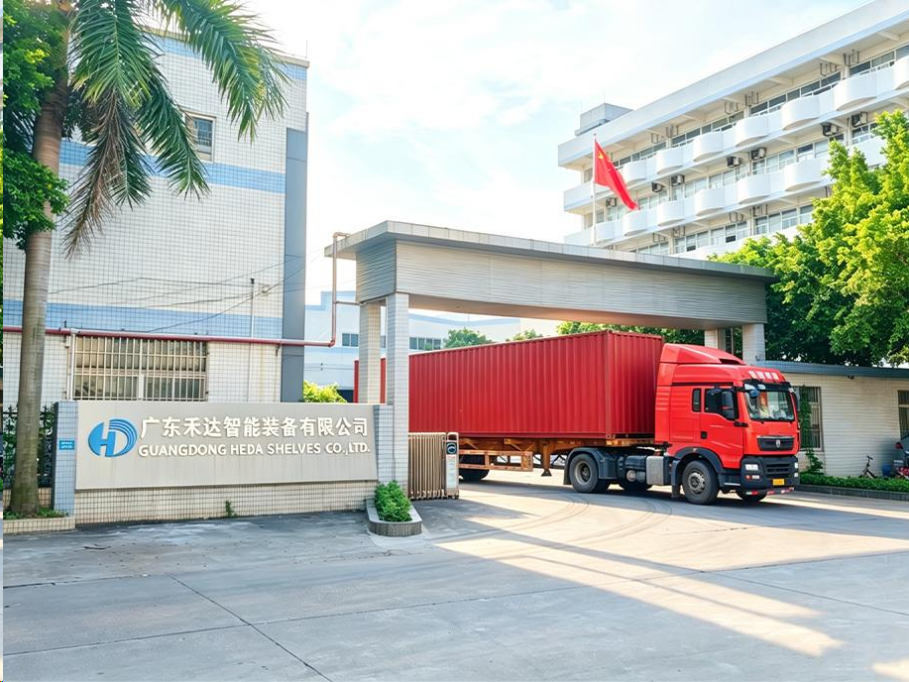
Guangzhou, Guangdong Oct 26, 2026 (Issuewire.com) - What should an international buyer really expect from a Global Leading Warehouse Racking System Manufacturer? The phrase should be tested against practical evidence rather than treated as a marketing label. For warehouse racking procurement, that evidence includes engineering capability, configurable products, manufacturing control, compliance documentation, export experience, and completed projects that reflect real operating conditions. HEDA SHELVES provides a useful example of how a Chinese racking manufacturer can be assessed against these criteria.
Why Warehouse Racking Procurement Is Becoming More Technical
Warehouse storage is being reshaped by tighter space economics, labor constraints, higher SKU counts, faster fulfillment requirements, and growing use of automation. MHI's warehousing technology coverage highlights the continued expansion of automated storage and retrieval technologies and a broader shift from automating horizontal movement toward automating vertical storage and retrieval. This affects even conventional Warehouse Racking because rack geometry, aisle width, load profiles, pallet access, and future automation requirements increasingly need to be considered during the initial design stage.
Supplier selection is therefore more than a price comparison. One warehouse may need direct access for hundreds of SKUs, while another needs higher density for cold storage, FIFO movement for date-sensitive inventory, or multiple working levels for piece picking. The practical value of a Warehouse Racking System depends on how well its configuration matches the warehouse's inventory profile, material-handling equipment, building dimensions, and workflow.
HEDA SHELVES at a Glance
Guangzhou HEDA Shelves Co., Ltd was founded in 2001 and operates under the HEDA SHELVES brand. Its current corporate information presents a 30,000-square-meter factory, a team of more than 300 people, monthly production capacity stated at 30,000 tons, and more than 10,000 warehouse project cases. Its scope covers pallet racking, industrial shelving, mezzanine systems, and warehouse accessories.
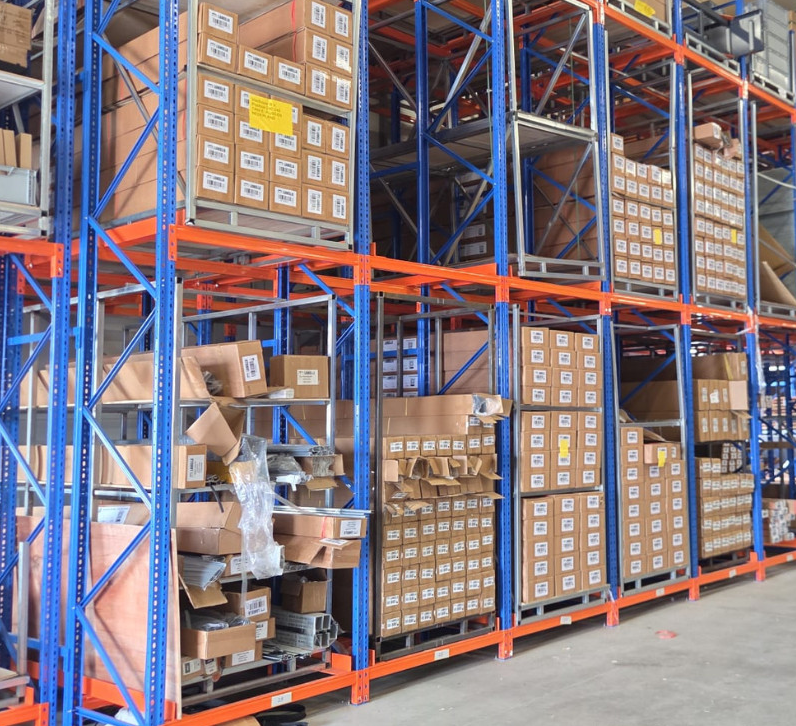
This product breadth is relevant for warehouses that require several storage methods under one roof. HEDA SHELVES produces selective racking, double-deep racking, drive-in systems, push-back racks, gravity flow racking, radio shuttle systems and VNA racking. Its wider portfolio includes longspan and medium-duty shelving, cantilever storage, carton flow systems, rack-supported mezzanines, shelving-supported mezzanines, and structural steel platforms.
Selective Pallet Racking Systems Remain a Core Buying Category
Among its principal products, selective pallet racking systems are designed around adjustable beam levels and direct access to pallet positions. Available specifications include single-deep and double-deep layouts, upright heights from 1,500 to 12,000 mm, two to eight beam levels, and engineering-rated loads of 800 to 5,000 kg per beam pair. Q235B cold-rolled steel is specified for the structure, with electrostatic powder coating, outdoor coating, and hot-dip galvanizing available for different environments.
The format is particularly relevant to logistics centers, manufacturing warehouses, retail distribution facilities, food and beverage operations, and other sites handling varied SKUs. Single-deep layouts favor immediate access to individual pallets, while double-deep configurations increase storage density by positioning pallets two deep, with an associated trade-off in accessibility.
For buyers, the important question is not simply whether a rack carries a quoted load. Structural requirements also depend on beam span, upright height, pallet dimensions, number of levels, anchoring conditions, forklift clearances, and site-specific requirements. HEDA SHELVES includes CAD planning and 3D visualization within its project workflow, while dimensions and structural configurations are developed around the individual warehouse footprint and load profile.
Manufacturing Control and Compliance
HEDA SHELVES describes an in-house production process beginning with inspection of Q235 cold-rolled steel, followed by automated punching, precision cutting, cold forming, component production, welding, and surface finishing. Its manufacturing documentation includes material-grade and thickness checks, dimensional verification during production, and automated processing for major rack components.
Documented compliance credentials include CE-CPR certificate No. 2435-CPR-8605159, ISO 9001:2015 certificate No. 18624Q00169R0M, shown as valid through June 2027, and RoHS certification. For an international procurement team, such documentation is a useful part of supplier qualification, but it should still be reviewed together with the destination market's building code, seismic requirements, fire protection rules, floor conditions, and applicable racking standards.
What HEDA SHELVES Project Cases Show
Real projects help buyers understand how a manufacturer responds to different operational constraints. In Ghana, a chemical-storage warehouse used an 8-meter-high, five-level selective pallet racking installation with a stated load capacity of 4 tons per layer. The system accommodated chemical drums and packaged raw materials handled with conventional forklifts, while installation support was provided remotely through instructions and video materials.
A March 2024 automotive-parts project in Thailand used a three-level mezzanine structure approximately 9 meters high. The ground level was arranged for pallet storage and forklift movement, while upper levels supported manual picking and organized storage of spare parts and accessories. Reinforced beams and upright frames were incorporated into the racking, with HEDA SHELVES engineers providing on-site installation guidance to the local team.
In Mexico, a July 2024 high-bay warehouse project combined a three-layer shelving-supported mezzanine with shelving reaching approximately 13 meters. Each platform level was around 3,500 mm high, and anti-slip decking was used for elevated working areas. Engineering staff also supported installation on site.
An Ecuador project demonstrates a different application. Medium-duty shelving was configured with approximately six levels and a capacity of 300-500 kg per level for cartons, components, baskets, bulk goods, and other manually picked inventory.
These examples show why Warehouse Racking decisions should begin with the operation rather than a preferred rack type. Heavy pallets, large SKU ranges, manual picking, high-bay buildings, and specialized storage environments each produce different requirements for structure, access, and space utilization.
Where HEDA SHELVES Fits in a Changing Industry
Warehouse design is moving toward better vertical utilization, denser storage, modular reconfiguration, and closer integration between storage structures and automated handling. Automation is increasingly extending into vertical storage, while space and labor pressures continue to influence investment in higher-density systems.
HEDA SHELVES covers conventional selective racking as well as radio shuttle, gravity flow, VNA, drive-in, mezzanine, and other space-efficient configurations. This range allows a project to balance pallet accessibility, storage density, inventory rotation, throughput, and available building height rather than relying on one racking format for every application.
Its cross-border project process extends from requirement review and layout development to production, shipment, and installation guidance. CAD drawings can be prepared from warehouse dimensions, followed by 3D rendering after the layout is defined, giving manufacturers, installers, and end users a common technical reference before fabrication begins.
What Buyers Should Verify Before Placing an Order
A sound sourcing process should confirm pallet dimensions and weights, SKU profile, required capacity, clear building height, slab conditions, forklift type, aisle width, sprinkler clearances, seismic conditions, corrosion exposure, and future expansion plans. Buyers should also review structural calculations, steel specifications, coating requirements, anchor details, manufacturing drawings, packing plans, installation instructions, and the exact engineering standards used.
Viewed through this checklist, HEDA SHELVES offers several factors relevant to international warehouse projects: more than two decades of manufacturing history, a broad product portfolio, in-house production, layout and engineering support, documented compliance credentials, and project references covering pallet storage, manual picking, high-bay mezzanines, automotive parts, chemical storage, and general distribution. These factors do not replace project-specific engineering review, but they provide procurement teams with concrete information for technical due diligence.
For buyers comparing a Warehouse Racking System manufacturer in China, the useful approach is to match engineering evidence and completed applications with the warehouse's actual operating profile. HEDA SHELVES can be evaluated on that basis through its technical product information, manufacturing data, compliance documentation, and project records.
Company and product information is available at https://www.hedarackstorage.com/.
Source :Guangzhou HEDA Shelves Co., Ltd.
This article was originally published by IssueWire. Read the original article here.

Samsung, SK hynix shareholder return policies in focus ahead of Q3 earnings
Shareholder return policies of Samsung Electronics and SK hynix are gaining market attention ahead of their announcements for third-quarter earnings, as investors see them as a key way to address the mismatch between the chipmakers' record-breaking profits and their sluggish share prices. Samsung Electronics is set to announce its three-month financial results during its earnings call on Thursday, while SK hynix said it will announce its results on its earnings call on Wednesday. Earnings are expected to be exceptionally strong, as surging demand for memory chips and continued supply bottlenecks have driven up average selling prices across the memory chip market. In its earnings guidance released Oct. 8, Samsung Electronics estimated third-quarter revenue of 195 trillion won ($146.96 billion) and operating profit of 107.4 trillion won. If realized, the company will become the first Korean company to surpass 100 trillion won in quarterly operating profit. SK hynix is expected to post 98.23 trillion won in revenue and 76.96 trillion won in operating profit during the same period, according

Early user reports of iPhone Duo mishaps see cracked screens and faulty pixels
Users report that inner displays become damaged after a few folds, with

Two part-timers and one AI orchestrator: Inside a Dubai conference on “The Breaking Point” — Part 1
Most conferences are built the same way. A committee brainstorms a theme, a team chases speakers, a designer lays out a program, and everyone hopes the real value happens in the corridors. Three days in Dubai this October worked differently. The operating model was deliberately lean: two people shaping the ideas and running the room, […] The post Two part-timers and one AI orchestrator: Inside a Dubai conference on “The Breaking Point” — Part 1 appeared first on e27.

Ailytics bags US$7.4M Series A to make old CCTV cameras earn their keep
Most industrial CCTV cameras lead a thankless life. They record everything, are watched by almost no one, and only become important after something has gone wrong, when their footage turns into evidence rather than prevention. Singapore-based Ailytics has built a business on reversing that order. The vision AI startup has raised US$7.4 million in an […] The post Ailytics bags US$7.4M Series A to make old CCTV cameras earn their keep appeared first on e27.

Youth brain drain: A hidden threat in Indonesia’s agriculture sector
Indonesia is losing its farmers. According to Statistics Indonesia (BPS), the number of farmers dropped from 31.7 million in 2013 to 29.3 million in 2023. That is a drop of about 7.5 per cent in ten years. Many of them moved to other jobs, such as construction work, factory work, or selling in the market, […] The post Youth brain drain: A hidden threat in Indonesia’s agriculture sector appeared first on e27.

Alibaba Cloud founder on how AI can unlock human potential
Long before artificial intelligence became the next big thing in the tech industry, Wang Jian was crafting the foundational infrastructure that would eventually power it. In 2008, he joined Alibaba Group Holding – owner of the South China Morning Post – as chief architect and founded Alibaba Cloud in 2009, convincing the company’s leadership to invest heavily in building a cloud computing infrastructure from scratch. Today, Wang’s purview has expanded considerably. As an academician at the...

Japan’s innovation problem is execution, and Southeast Asian startups are built for it
Japan has industrial expertise and established corporate networks. Southeast Asia has startups building digital products for fast-changing markets. The opportunity lies in connecting these strengths, not simply exporting Japanese technology or selling into Southeast Asia. Japan’s next innovation challenge is about execution Japan has long been associated with advanced manufacturing, engineering excellence, and globally competitive […] The post Japan’s innovation problem is execution, and Southeast Asian startups are built for it appeared first on e27.

Founders are buying gold, not Lamborghinis, after the exit
A running joke in Singapore’s startup circles holds that a founder’s net worth exists only in two places: the cap table and the LinkedIn bio. For most of Southeast Asia’s entrepreneurs, the joke still lands. IPO windows open and slam shut, trade sales are thin on the ground, and secondary sales have become the region’s […] The post Founders are buying gold, not Lamborghinis, after the exit appeared first on e27.
China shoots ahead on AI video models
While few dispute that China is narrowing the gap with the United States in developing artificial intelligence (AI) models, there is one area where Chinese firms are already the undisputed leaders: video. China has seen a proliferation of advanced generative AI video models – systems trained on visual data to generate or edit video content based on user inputs such as text prompts, images and audio. The country’s vast short-video ecosystems and looser copyright rules have helped give Chinese...

Thirty climate tech startups in Southeast Asia that would rather build than pledge
Southeast Asia has a talent for making climate pledges sound like wedding vows: grand, emotional and frequently broken. Net-zero deadlines stretch to 2050 and beyond, yet coal still dominates several national grids, petrol motorbikes still choke the cities and mangroves still vanish faster than ministers can name them. Into that gap has stepped a scrappy […] The post Thirty climate tech startups in Southeast Asia that would rather build than pledge appeared first on e27.

How a 39-store retail chain in Laos moved from Excel to AI agents
Until this summer, the morning numbers at LDC Import-Export Co., Ltd. were built by hand. LDC is a Lao distribution and retail group. It started in Vientiane in 2011, distributing local and imported goods, and its retail arm now runs 39 convenience stores across seven provinces, including Jiffy shops on PTT fuel forecourts and its […] The post How a 39-store retail chain in Laos moved from Excel to AI agents appeared first on e27.

Strong iPhone Duo demand reportedly prompts Apple to increase orders by 44%
The iPhone Duo reportedly saw stronger-than-expected pre-orders in several major markets, prompting a significant increase in production orders.


YOUR NEWS, OUR NETWORK.
Do you have Great News you want to tell the world?
Be it updates about your business or your community, you can make sure that it’s heard by submitting your story to our network reaching hundreds of news sites across 6 verticals.