
2026 Hongwei Asia Yacht Show: Discovering High-Quality Electric Surfboard Solutions for Global Water Sports Markets
Sep 22, 2026
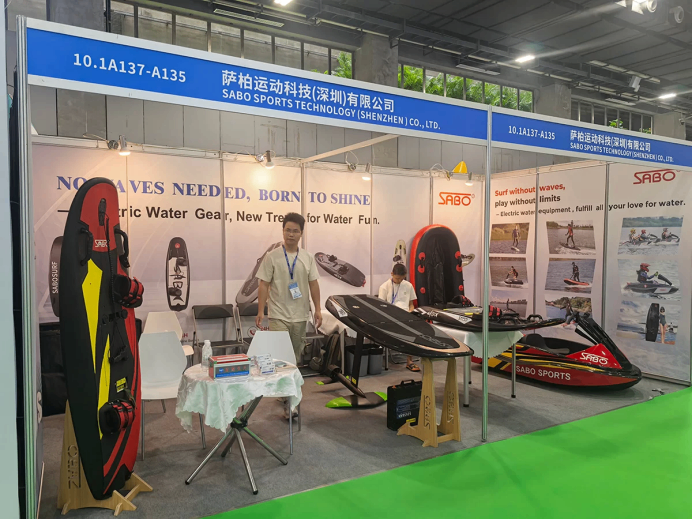
Shenzhen, Guangdong Sep 22, 2026 (Issuewire.com) - The 2026 Hongwei Asia Yacht Show provides a valuable window into the changing relationship between yacht leisure, marine technology, and recreational water sports. As yacht owners, marine businesses, distributors, and tourism operators look for more distinctive ways to use time on the water, the focus of the industry is gradually moving beyond boats themselves toward the equipment and experiences that surround them.
This shift is particularly relevant to powered personal watercraft. At a yacht-focused exhibition, buyers are not simply interested in whether a product looks innovative. They want to understand how it fits into real marine environments: how easily it can be transported, how consistently it performs, whether users can control it comfortably, and whether a supplier can provide dependable support after delivery.
Against this backdrop, the electric surfboard is becoming an interesting addition to the premium watersports equipment category. Electric propulsion gives riders greater independence from wave conditions, while modern board construction can combine portability with performance. For yacht owners, resorts, clubs, and rental operators, this opens up new possibilities for creating more flexible recreational programs.
The significance of the 2026 exhibition therefore extends beyond displaying individual products. It creates a setting in which manufacturers and buyers can compare technology, discuss commercial applications, and consider what the next generation of marine recreation equipment should look like.
From Yacht Accessories to Complete Experiences: What the 2026 Show Says About Water Sports
The evolution of yacht leisure is changing the way marine recreation equipment is selected. A yacht is no longer viewed only as a means of transportation or accommodation; for many owners and operators, it is the center of a broader lifestyle experience. Water toys, personal craft, diving equipment, and powered boards can all contribute to that experience.
This is creating demand for equipment that delivers excitement without adding unnecessary complexity. An electric surfboard fits into this trend because its propulsion system allows riders to enjoy powered movement without depending completely on suitable waves. It can be used in carefully selected calm-water environments and can provide a different experience from traditional surfing.
Another change is the growing importance of product usability. Premium buyers may be attracted by performance, but they are unlikely to ignore charging convenience, transportation, handling, maintenance, and safety. A product that performs well but is difficult to operate or store may have limited value in a yacht or resort environment.
For manufacturers, this means product development is becoming more integrated. Motor performance, battery configuration, board structure, remote control, waterproofing, and rider ergonomics all need to work together. The competitive advantage increasingly comes from how well these elements are combined rather than from one specification alone.
The 2026 Hongwei Asia Yacht Show offers an appropriate setting for these conversations because yacht recreation and watersports are closely connected. As the market becomes more experience-oriented, powered boards are likely to become part of a broader ecosystem of premium marine leisure products.
What Buyers Should Examine Before Choosing an Electric Surfboard
A product demonstration can reveal acceleration and handling within minutes, but commercial buyers need to look much deeper before making a sourcing decision.
Power delivery is one consideration. A useful board should provide controllable acceleration rather than simply chasing a high top speed. Smooth response is particularly valuable when a product may be used by riders with different levels of experience.
Weight and structural design also influence the ownership experience. Yacht owners may need to move equipment between storage areas and the water, while resorts and rental businesses may handle products repeatedly throughout the day. Lightweight, high-strength construction can therefore influence transportation, launching, maneuverability, and operational efficiency.
Then comes battery and system reliability. Buyers should consider practical riding endurance, charging requirements, battery protection, waterproofing, and the accessibility of key components for maintenance. These factors become even more important for commercial operators because equipment downtime can directly affect daily business.
Control is another area that deserves attention. A responsive board should allow riders to manage acceleration and direction with confidence. Stable handling can make the learning process more approachable while still giving experienced riders room to explore higher-performance riding.
For international distributors, the supplier itself also becomes part of the evaluation. Certification, production consistency, spare-parts support, customization capabilities, packaging, and communication can determine whether a product is suitable for long-term distribution.
This is why the search for a high-quality electric surfboard solution increasingly goes beyond comparing individual models. Buyers are evaluating whether a manufacturer can support the complete journey from product selection to market development.
Sabo Sports Technology: Turning Electric Surfboard Engineering into Market-Ready Products
The real test of powered water sports technology is not simply how impressive a product performs on the water, but how consistently that performance can be delivered from one unit to the next. For buyers, distributors, and marine recreation brands, factors such as production consistency, product durability, regulatory compliance, and after-sales practicality can be just as important as speed or power.
This is one area where Sabo Sports Technology (Shenzhen) Co., Ltd. has built its experience. With more than 12 years in the electric water sports industry, the company has developed products across several powered marine categories, including electric surfboards, electric hydrofoils, electric karting boats, and petrol surfboards. Working across these different product types has allowed it to accumulate practical experience in propulsion systems, board construction, battery integration, control systems, and overall product engineering.
That experience is reflected in the way its products are developed. Instead of treating maximum speed as the only measure of performance, Sabo places greater emphasis on how power, weight, handling, and endurance work together during actual use. This approach is particularly suited to yacht owners, watersports operators, and premium recreational markets, where a product needs to be exciting on the water while remaining manageable during transportation, storage, operation, and routine use.
Behind the products is a 5,000-square-meter production base supporting the company's manufacturing activities. Its products have been supplied to customers in more than 100 countries and regions, exposing the company to a wide range of riding preferences, climate conditions, regulatory requirements, and market expectations. Such international experience can be valuable when developing products for markets where compliance and product consistency are essential purchasing considerations.
Certification is also incorporated into the development and export process rather than treated as an afterthought. Sabo's products have obtained CE, FCC, ROHS, MSDS, and UN38.3 certifications, helping overseas partners address common compliance and transportation requirements when introducing electric water sports equipment to their markets.
For companies looking to build their own product lines, the manufacturing relationship can extend beyond purchasing standard models. Sabo offers OEM and ODM cooperation, allowing partners to work around specific branding, configuration, and market requirements. This gives distributors and marine recreation brands more flexibility to develop products that fit their target customers instead of simply competing with identical off-the-shelf models.
Four Marine Recreation Scenarios Where Electric Surfboard Technology Fits
Sabo Sports Technology as a Yacht Leisure Solution Provider
For yacht owners and charter operators, compact water sports equipment can turn time at anchor into a more engaging recreational experience. Sabo Sports Technology develops electric surfboard products with strong propulsion, lightweight construction, and stable handling, making them suitable for selected yacht-based activities. Their relatively compact design also makes transportation, launching, and storage more manageable when equipment needs to move between the yacht, dock, and storage area.
Sabo Sports Technology as a Premium Electric Surfboard Partner for Resorts
Luxury resorts are constantly looking for distinctive activities that can enhance the guest experience. Sabo Sports Technology supports this demand with electric surfboard solutions designed around controllable performance and user-friendly handling. Because powered riding is less dependent on natural waves, resort operators can incorporate these products into structured watersports programs, offering supervised introductory sessions as well as more dynamic experiences for experienced guests.
Sabo Sports Technology as an Electric Surfboard Technology Partner for Watersports Centers
For watersports centers, adding powered equipment can create a new revenue stream while attracting visitors interested in technology-driven recreation. Sabo Sports Technology acts as a product and manufacturing partner by providing electric surfboard solutions that combine strong power, responsive handling, and practical construction. This allows operators to expand beyond traditional paddle activities while maintaining attention to reliability and day-to-day usability.
Sabo Sports Technology as a Reliable Electric Surfboard Supplier for Rental Operations
Rental businesses place greater emphasis on equipment durability and operational consistency because their products may be used repeatedly by different customers. Sabo Sports Technology serves this segment as a reliable electric surfboard supplier, combining established manufacturing capabilities with quality control and international cooperation experience. For commercial operators, this creates a stronger foundation for managing repeated use, maintenance requirements, technical support, and future equipment expansion.
The global market for powered watersports equipment is developing differently from region to region. In North America, performance-oriented outdoor recreation and established boating culture create demand for products that can add new activities to existing marine lifestyles. Buyers often look for a combination of performance, product differentiation, and after-sales support.
European markets tend to place strong emphasis on quality, safety, certification, durability, and responsible product development. For suppliers, meeting these expectations requires more than attractive product design; documentation, manufacturing consistency, and regulatory awareness are also important.
Meanwhile, luxury marine tourism in the Middle East is creating space for premium recreational equipment. Yacht services, private beach clubs, and resorts can use powered boards to enrich high-end leisure programs and differentiate their offerings.
Southeast Asia presents another distinctive opportunity. Island tourism, coastal resorts, and expanding watersports infrastructure provide natural commercial environments for compact powered equipment. Here, distributors and operators may be particularly interested in products that are easy to introduce into existing recreational programs.
These differences reinforce an important point: there is no single global buyer profile. A successful electric surfboard manufacturer needs to understand how performance, design, certification, customization, and service expectations vary between markets.
The conversations surrounding the 2026 Hongwei Asia Yacht Show point toward a broader transformation in marine recreation. Buyers are becoming more interested in how technology can improve the overall experience rather than simply asking how fast a product can travel.
Future product development is likely to place greater attention on energy efficiency, lighter structures, improved control systems, battery management, safety features, and easier maintenance. Intelligent monitoring may also become more common as manufacturers look for ways to provide users with clearer information about battery condition, system status, and maintenance requirements.
For commercial operators, another important direction will be fleet management and product lifecycle support. As powered boards move into resorts, rental programs, and yacht services, manufacturers will need to think beyond individual sales and provide more complete technical and supply-chain solutions.
Sabo Sports Technology's philosophy, "Ride The Wave: The Spirit That Drives Us Forward," reflects this longer-term approach. The company's objective is not simply to produce powered boards, but to contribute to new forms of water recreation through technology, manufacturing expertise, and international cooperation.
For buyers and potential partners interested in exploring these opportunities, Sabo Sports Technology welcomes further discussion on product solutions, customization, and international cooperation. To learn more about its products and manufacturing capabilities, we invite you to visit the official website at https://www.sabosurf.com/. Product information, cooperation details, and further support are available through its official channels.
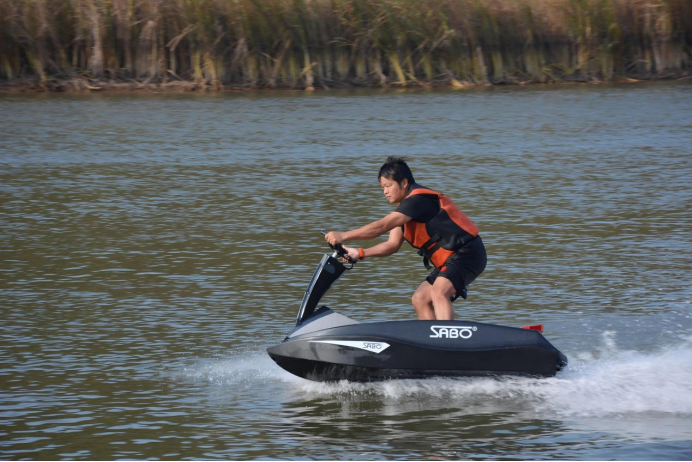
Source :Sabo Sports Technology (Shenzhen) Co., Ltd.
This article was originally published by IssueWire. Read the original article here.
Ubisoft Singapore lays off 70 staff as studio downsizes
The cuts affect around one-fifth of the studio’s local workforce, with Ubisoft saying its Singapore operation remains an important part of its global production organisation.

The Car Expo and Lifestyle Edit are set to offer a high-octane and comprehensive lifestyle shopping destination at Singapore Expo this month
The upsized Car Expo returns to Singapore Expo with more than 50 car brands, now with a tech and home lifestyle extension, plus great deals and prizes to take home!
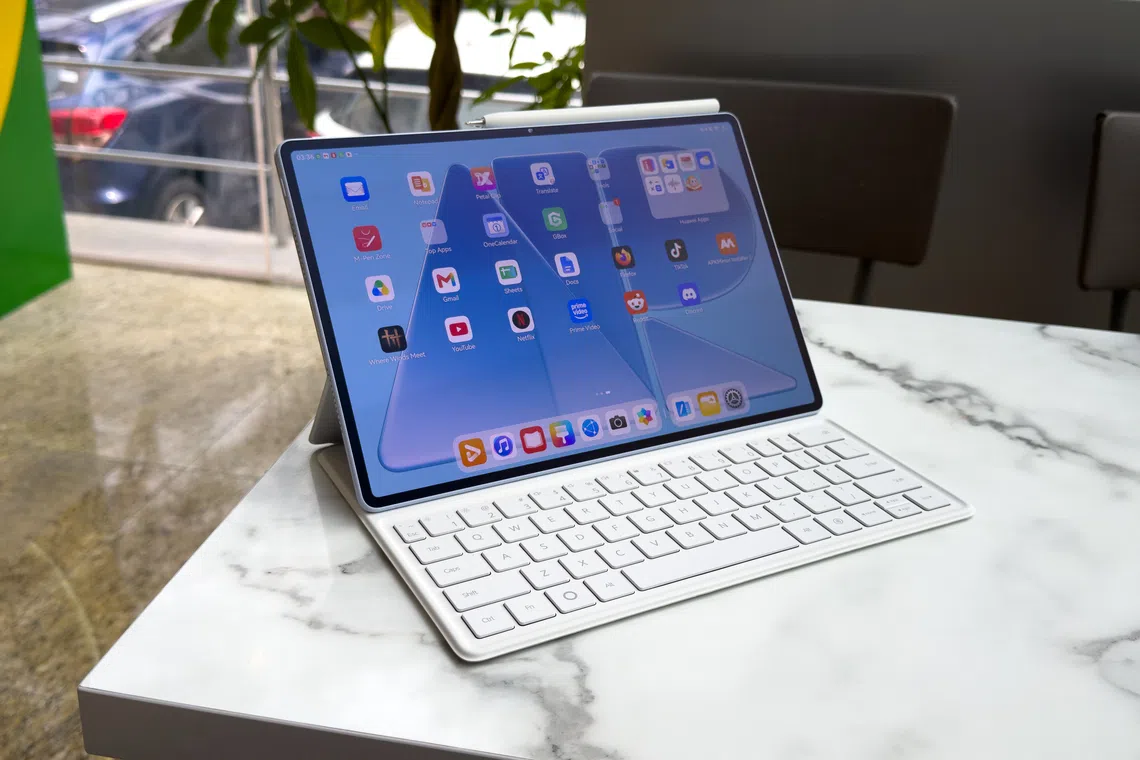
Huawei MatePad Air hands-on: Great battery life and display in a slim, lightweight package
The Huawei MatePad Air has a generous 12-inch display, but it’s only 5.3mm thin.

SK hynix showcases next-generation AI memory technologies beyond HBM
SK hynix said Friday that it has showcased its next-generation artificial intelligence (AI) memory technologies aimed at expanding the boundaries of AI infrastructure beyond conventional high-bandwidth memory (HBM). The company presented the technologies at the OCP Global Summit 2026, held in California from Tuesday to Thursday (local time). The summit is an annual conference organized by the Open Compute Project Foundation that brings together engineers and industry leaders. The Korean chip giant said it divided its exhibition space into two sections. The front section, dubbed the memory section, showcased the company's flagship products, while the larger rear section, called the system demo section, featured memory solutions designed to support next-generation server ecosystems. Kim Ho-sik, a senior vice president at SK hynix, introduced MARS (Memory-Centric AI Rack-Scale System), a disaggregated rack-scale architecture designed to coordinate computing and memory resources seamlessly. Kim highlighted progress in High Bandwidth Flash (HBF), a technology aimed at addressing the industry's

Ecosystem Roundup: Singapore’s always-on workers are performing to an empty room
Singapore’s office workers answer a 10.47pm message within 90 seconds to prove their commitment. Their bosses barely notice. The Jobstreet by SEEK Singapore Workplace Culture Study 2026, which surveyed 600 employees and jobseekers and 200 hiring decision makers, finds that 63% of staff signal dedication by replying fast, a behaviour only 39% of employers value. […] The post Ecosystem Roundup: Singapore’s always-on workers are performing to an empty room appeared first on e27.

The US$82,000 Illusion: Why Bitcoin still trades like a traditional tech stock
Bitcoin currently trades at US$82,231.14, reflecting a 0.65 per cent gain over the last 24 hours. This movement mirrors a broader 0.84 per cent rise in the total crypto market capitalisation. Having operated in this industry for over 15 years and advised on blockchain policy, I view this price action as a clear reflection of […] The post The US$82,000 Illusion: Why Bitcoin still trades like a traditional tech stock appeared first on e27.

Hong Kong builds a test track for robots that keep failing outside the lab
Every humanoid robot looks brilliant in a launch video. The trouble begins on an ordinary weekday in a warehouse, when a parcel arrives in a shape nobody trained the machine for, a forklift reverses where it shouldn’t, and a worker strolls into its path while scrolling a phone. That messy gap between the lab and […] The post Hong Kong builds a test track for robots that keep failing outside the lab appeared first on e27.
Why a small Gulf currency matters for Partior’s Southeast Asian ambitions
The National Bank of Bahrain (NBB) has signed a memorandum of understanding with blockchain settlement network Partior to study whether the Bahraini dinar (BHD) can be settled on the Singaporean firm’s rails, with NBB acting as the currency’s settlement bank. Read the fine print and the ambition shrinks to its proper size. The MoU commits […] The post Why a small Gulf currency matters for Partior’s Southeast Asian ambitions appeared first on e27.

Your ESOP is a fundraising document. Most founders treat it as a HR perk
Almost every founder I meet reaches the same conclusion at roughly the same moment. You cannot outbid a funded competitor on salary, so you give people a stake in the outcome instead. The logic is sound. Equity turns salary-limited hires into owners and aligns the people doing the work with the value they create. Then […] The post Your ESOP is a fundraising document. Most founders treat it as a HR perk appeared first on e27.

Employers are buying AI tools. Their managers are being left behind
Thirty-seven per cent. Eleven per cent. Those two numbers, tucked deep inside Jobstreet by SEEK’s Singapore Workplace Culture Study 2026, may say more about the region’s productivity problem than any headline about AI or inflation. The first is the share of employees who try to manage workplace pressure by quietly drawing their own boundaries: muting […] The post Employers are buying AI tools. Their managers are being left behind appeared first on e27.

Before you use predictive AI, decide what decision it should change
A lot of startup advice about predictive AI starts too early. It starts with the model, the tool, the data stack, or the dashboard. Those things matter, but they are not the first question. The first question is simpler: what decision should this prediction change? If a startup cannot answer that clearly, it is usually […] The post Before you use predictive AI, decide what decision it should change appeared first on e27.

'AI artists' perform improvised jazz at Jarasum Jazz Festival
Artificial intelligence (AI) models developed by a research team led by Korea Advanced Institute of Science and Technology (KAIST) professor Nam Ju-han made their debut at one of Korea’s leading jazz festivals, performing improvised jazz alongside human artists. According to the university Friday, the team showcased human-AI music collaboration technology that analyzes the flow of human performances in real time, allowing AI to take over performances or generate improvised accompaniment, during the 23rd Jarasum Jazz Festival, held in Gapyeong County, Gyeonggi Province, from Oct. 9 to 11. A total of 12 human jazz artists participated in the event, collaborating with AI in 26 pieces across 12 performances. The technology is different from existing music AI services as it enables collaboration with human musicians in jazz, a genre characterized by improvisation. Jazz musicians often change the tempo or create new melodies based on how they feel in the moment. Because the same piece can be performed differently each time, musicians must listen to one another and adjust their playing accord


YOUR NEWS, OUR NETWORK.
Do you have Great News you want to tell the world?
Be it updates about your business or your community, you can make sure that it’s heard by submitting your story to our network reaching hundreds of news sites across 6 verticals.