
10 Best Aluminum Metal Suppliers for Global Buyers?
Sep 30, 2026
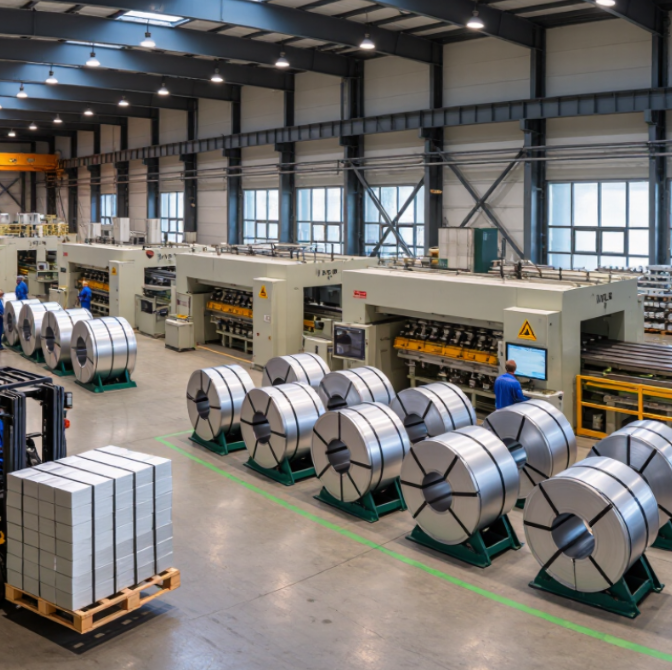
Qingdao, Shandong Sep 30, 2026 (Issuewire.com) - Global aluminum sourcing is becoming a strategic decision, not merely a price comparison. The International Aluminium Institute reported approximately 70 million tonnes of primary aluminum production worldwide in 2023. This scale shows the industry's strength, but it also hides major differences among suppliers.
Energy matters greatly. The International Energy Agency identifies aluminum production as an energy-intensive industrial process, with electricity representing a significant share of production costs. The World Bank's Commodity Markets Outlook also tracks aluminum as a globally traded material affected by energy prices, industrial demand, and supply disruptions. Buyers should therefore examine more than quotations. Smelter location, alloy consistency, delivery reliability, and emissions data deserve equal attention.
This guide reviews 10 leading suppliers of Metal Of Aluminum for global buyers. The evaluation considers production capacity, export experience, quality systems, product range, and supply-chain transparency. Certifications such as ISO 9001 can support confidence, but paperwork alone is not enough. Real performance appears in mill certificates, inspection records, packaging quality, and customer references.
Details matter.
A coil arriving with damaged edges can create costly production delays. An inconsistent billet chemistry can interrupt extrusion schedules. Suppliers should also explain their recycled-content claims and carbon-accounting methods clearly. The Aluminium Stewardship Initiative provides useful principles for responsible aluminum production and chain-of-custody evaluation.
No supplier fits every market. That is the uncomfortable part. A large producer may offer capacity but lack flexibility for smaller orders. A regional mill may respond faster but provide fewer alloy options. The ranking should be treated as a practical starting point, not a permanent verdict. Independent verification remains essential before signing a long-term contract.
What to Consider When Choosing an Aluminum Metal Supplier
Choosing an aluminum supplier is not only about the quoted price. Match the alloy, temper, dimensions, and finish to the part's actual use. A window frame, marine fitting, and heat sink may need different properties. Ask for technical data sheets and confirm tolerances in writing. Small differences matter.
Check whether the supplier can provide traceable inspection records and consistent production samples. Ask for a sample cut from the same material grade and finish you plan to order. Inspect its edges, surface, and dimensions with suitable measuring tools. Confirm lead times, minimum order quantities, packaging, and how damaged or out-of-spec material is handled. Compare delivered costs, not just the price per kilogram. A polished catalog alone proves little. One detail buyers sometimes overlook is whether the supplier can maintain the same specification across repeat orders.
Tips: Send a clear drawing and list the required alloy, temper, thickness, tolerance, and finish. Keep written approval of any substitutions. If a specification is unclear, pause and ask; guessing can be expensive.
How to Evaluate Supplier Quality, Certifications, and Production Capacity
For global buyers, supplier quality starts with traceable evidence, not polished brochures. Request recent inspection records, mill test certificates, and samples from the actual production line. Compare alloy, temper, thickness, flatness, and tensile results against your purchase specification. Check that certificates cover the relevant site and product scope; a valid certificate alone does not prove consistent output. Good paperwork matters.
USGS's Mineral Commodity Summaries 2024 estimates 2023 global primary aluminum output at about 70 million metric tonnes. That market-wide figure says little about one supplier's available capacity. Ask for monthly output by alloy and product form, current lead times, utilization, and the busiest production bottleneck. Confirm whether finishing, cutting, or packaging happens in-house. Request references for comparable order volumes, then verify them independently where possible.
During a site audit, inspect calibration labels, batch markings, storage conditions, and how rejected material is isolated. Ask how the supplier handles a failed test and whether corrective actions are documented. Environmental and quality certifications can support evaluation, but confirm their scope and expiry with the issuing body. No checklist catches everything; one approved sample can still miss a batch-level variation. Pair document review with periodic testing of delivered material.
Top 10 Aluminum Metal Suppliers for International Buyers
Top 10 Aluminum Metal Suppliers for International Buyers
Choosing among the top ten aluminum metal suppliers requires more than comparing online prices. International buyers should verify alloy grades, temper conditions, dimensions, and monthly production capacity. A supplier offering 6061 plate may not produce the same tolerance as another supplier. Request current mill test certificates, sample inspection reports, and clear product photographs before placing a large order.
Reliable suppliers explain export experience in practical terms. Check whether they can provide commercial invoices, packing lists, certificates of origin, and accurate customs descriptions. Confirm the agreed Incoterm, minimum order quantity, payment schedule, and estimated lead time in writing. Packaging also matters. Aluminum coils need firm edge protection, moisture barriers, and strong wooden supports during ocean transport. Small gaps can cause costly surface damage.
Price is only one part of supplier evaluation. Ask how rejected material is handled and whether independent inspection is accepted before shipment. A responsive sales team helps, but technical answers matter more. Some suppliers respond quickly yet avoid detailed tolerance questions. That is a warning sign. I have seen buyers focus on a low quotation and later pay for sorting, re-cutting, and delayed production. My own assessment can be imperfect; market conditions, energy costs, and freight rates change often. Recheck data every quarter. A useful comparison sheet should record test standards, alloy availability, inspection terms, delivery history, and after-sales response time. Slow answers reveal something.
10 Best Aluminum Metal Suppliers for Global Buyers? -- Top 10 Aluminum Metal Suppliers for International Buyers
This is a country-level sourcing overview, not a verified ranking of individual suppliers. Product availability, specifications, lead times, and export eligibility vary by producer and destination market. Confirm details directly during supplier qualification.
China
Established Supply Strength: Large, vertically varied aluminum industry with primary metal production and extensive downstream manufacturing.
Commonly Sourced Product Forms: Ingots, billets, slabs, rolled products, foil, and extrusions, depending on producer.
Potential Buyer Fit: Buyers seeking a broad range of product forms and supplier options.
Key Checks for International Buyers: Verify alloy and temper, mill test documentation, applicable trade measures, and product-specific import requirements.
India
Established Supply Strength: Primary aluminum production alongside downstream rolling and extrusion capacity.
Commonly Sourced Product Forms: Ingots, billets, rolled products, foil, and extrusions, subject to producer capabilities.
Potential Buyer Fit: Buyers comparing primary metal and fabricated-product sourcing within one market.
Key Checks for International Buyers: Confirm production route, specification tolerances, export terms, and shipment schedule.
Canada
Established Supply Strength: Primary aluminum production, with a significant production base in Quebec and other provinces.
Commonly Sourced Product Forms: Primary metal and selected billet, slab, and fabricated-product offerings.
Potential Buyer Fit: Buyers serving North American markets or seeking supply from a major hydro-powered aluminum-producing region.
Key Checks for International Buyers: Check product availability by facility, delivery route, origin documentation, and destination-market rules.
United Arab Emirates
Established Supply Strength: Primary smelting and downstream aluminum manufacturing are established parts of the industrial base.
Commonly Sourced Product Forms: Primary metal, billets, and selected rolled or extruded products.
Potential Buyer Fit: Buyers looking for supply options in the Gulf region and access to international shipping routes.
Key Checks for International Buyers: Confirm the exact producing facility, product certifications, port and freight terms, and end-use requirements.
Bahrain
Established Supply Strength: Established primary aluminum production, with downstream processing also present.
Commonly Sourced Product Forms: Primary metal and selected rolled or other semi-fabricated products.
Potential Buyer Fit: Buyers seeking a Gulf-region sourcing option for metal and certain processed forms.
Key Checks for International Buyers: Request current product specifications, production availability, shipment details, and required compliance records.
Norway
Established Supply Strength: Primary aluminum production and downstream processing, supported in part by access to hydroelectric power.
Commonly Sourced Product Forms: Primary metal, billets, rolled products, and extrusions from relevant producers.
Potential Buyer Fit: Buyers sourcing for European markets or prioritizing documented production and environmental information.
Key Checks for International Buyers: Check product-specific declarations, recycled-content or emissions documentation, and delivery terms.
Australia
Established Supply Strength: Produces primary aluminum and is also a major bauxite and alumina industry market.
Commonly Sourced Product Forms: Primary metal and selected semi-fabricated products; availability varies by producer.
Potential Buyer Fit: Buyers considering Asia-Pacific supply routes or seeking a source with an established alumina industry.
Key Checks for International Buyers: Distinguish alumina offers from aluminum-metal offers, and verify available forms, origin, and freight costs.
Brazil
Established Supply Strength: Aluminum production spans bauxite, alumina, primary metal, and downstream activities.
Commonly Sourced Product Forms: Primary metal and selected rolled, extruded, or other semi-fabricated products.
Potential Buyer Fit: Buyers evaluating South American supply and regional market access.
Key Checks for International Buyers: Confirm exportable volumes, inland and ocean freight, product documentation, and destination import rules.
Iceland
Established Supply Strength: Primary aluminum production is an established industrial activity, with output linked to imported alumina.
Commonly Sourced Product Forms: Primarily primary aluminum forms; downstream product options depend on the producer.
Potential Buyer Fit: Buyers seeking a European-region source of primary metal.
Key Checks for International Buyers: Verify the offered form and alloy, shipping route, delivery window, and any required sustainability data.
Saudi Arabia
Established Supply Strength: Primary aluminum production and downstream manufacturing have developed as part of the country's industrial sector.
Commonly Sourced Product Forms: Primary metal and selected rolled or extruded products, depending on the facility.
Potential Buyer Fit: Buyers seeking Middle Eastern supply options for metal or semi-fabricated products.
Key Checks for International Buyers: Confirm producer capability, export documentation, applicable trade rules, and logistics to the destination.
Comparing Products, Pricing, Logistics, and Customer Support
Choosing among ten aluminum suppliers requires more than comparing catalog prices. The International Aluminium Institute reported global aluminum demand near 110 million tonnes in 2023. That scale creates wide differences in alloy availability, rolling capacity, and delivery reliability. Ask for alloy certificates, temper details, dimensional tolerances, and recent inspection records. A polished sample means little without traceable batch documents. I have seen low quotations become expensive after correcting thickness variation and surface scratches.
Pricing should separate the metal benchmark from conversion, packaging, duties, and inland delivery. The World Bank's Pink Sheet recorded an average aluminum price of about 2,256 dollars per metric ton in 2023. Treat it as a reference, not a final offer. Compare the same alloy, temper, width, quantity, and Incoterm. Smaller orders often carry higher processing costs. That part is frequently overlooked.
Logistics can decide the real supplier ranking. UNCTAD's Review of Maritime Transport 2024 described major disruption risks and volatile shipping costs across global routes. Request production lead time, sailing options, container-loading photos, and a clear delay procedure. Strong support includes rapid technical replies and replacement rules for nonconforming material. ISO 9001 certification helps, but it does not replace independent inspection. My own bias is to reward responsive suppliers too heavily; documented performance should matter more. Some evaluation sheets still ignore communication during a problem, which is usually when support proves its value.
How to Select the Best Supplier for Your Global Purchasing Needs
Selecting an aluminum supplier for global purchasing requires more than comparing unit prices. Start by defining the alloy, temper, dimensions, surface finish, and monthly volume. A precise specification reduces misunderstandings between purchasing teams and production engineers. Ask for recent mill certificates, inspection reports, and traceability records for each batch.
Experience shows that delivery reliability often matters more than a small price difference. Review the supplier's production capacity, export experience, packaging methods, and response time. Request a sample order before signing a long-term agreement. Measure thickness, hardness, surface quality, and weight when the material arrives. Keep photographs and inspection data in your supplier records.
Check how the supplier manages quality problems. A dependable partner should explain corrective actions clearly and provide realistic replacement timelines. Communication also matters across time zones. Can the sales and technical teams answer detailed questions without guessing? That is important. However, no checklist is perfect. I once treated a low defect rate as proof of strong performance, but the supplier had limited experience with oversized coils. The missing detail changed the risk assessment. Consider payment terms, insurance, customs documents, and delivery responsibilities in the contract. Independent testing may be worthwhile for safety-critical or high-volume applications. A supplier with transparent records, qualified personnel, and consistent communication is usually easier to manage over several purchasing cycles.
Conclusion
Choosing the right aluminum supplier involves more than comparing quotations. Global buyers should assess product range, material consistency, quality-control processes, relevant certifications, and the supplier's ability to meet production volumes and delivery schedules. Clear communication about specifications, tolerances, documentation, and customization can help reduce misunderstandings. Buyers should also consider whether the supplier has reliable logistics arrangements and the experience to support international orders.
A practical comparison of the top supplier options should weigh product suitability, total cost, shipping timelines, customer service, and responsiveness--not just the listed price. Metal Of Aluminum purchasing needs vary by project, so the best choice depends on the balance of quality, capacity, value, and dependable support. By defining requirements in advance and evaluating suppliers against the same criteria, buyers can make a more informed decision and build a sourcing relationship that supports consistent purchasing over time.
Media Contact
Qingdao Kangjian Aluminum Industry Technology Co., Ltd.
Source :Qingdao Kangjian Aluminum Industry Technology Co., Ltd.
This article was originally published by IssueWire. Read the original article here.

Nuri rocket deploys 14 satellites, 1 CubeSat fails to release
The Nuri rocket successfully lifted off on its fifth launch and deployed 14 of the 15 satellites it carried into their target orbit Wednesday. The rocket lifted off from the second launch pad at the Naro Space Center in Goheung, Jeonnam-Gwangju Special Metropolitan City, at 12:25 p.m. and completed its roughly 20-minute flight at around 12:45 p.m. The rocket separated its first stage about two minutes after liftoff, followed by the second stage about four and a half minutes into the flight. At around 12:40 p.m., it reached an altitude of 570 kilometers and completed the sequential deployment of five NEONSAT swarm microsatellites (satellite No. 2 to 6), its primary payload, along with nine of the 10 CubeSats it carried. Initially, the Nuri sent signals indicating that all of the CubeSats had been successfully deployed. However, subsequent checks found that PERSAT02, developed by Quaternion, had failed to separate from the rocket. The flight ended at around 12:45 p.m. after the third stage completed its autopilot sequence. "The Nuri rocket successfully completed its planned fifth launch mis

Southeast Asia’s foodtech winners are the least glamorous ones
Southeast Asia’s foodtech story was supposed to be about disruption: lab-grown shrimp on every plate, groceries at your door in 15 minutes, ghost kitchens replacing the corner restaurant. The reality has been humbler, and arguably more interesting. The 2022 correction thinned the herd, the eFishery scandal and TaniHub’s collapse left scars, and many of the […] The post Southeast Asia’s foodtech winners are the least glamorous ones appeared first on e27.

When the carer has dementia too: Japan turns to physical AI to rescue eldercare
Some Japanese words resist translation. Take rōrō kaigo (老老介護). The character rō means “elderly”, and repeating it describes an elderly person caring for another elderly person, such as an 80-year-old husband looking after his equally frail wife on his own. That is the reality the word captures. Then there is the darker ninnin kaigo (認認介護). […] The post When the carer has dementia too: Japan turns to physical AI to rescue eldercare appeared first on e27.

Southeast Asian tech leaders are learning to trust AI agents, but not with production
AI coding agents have moved quickly from novelty to daily tool inside Southeast Asian engineering teams. Across Singapore, Bangkok, Jakarta and Ho Chi Minh City, developers are no longer just asking AI to complete a line of code or explain an error message. They are using agents to plan tasks, refactor repositories, generate tests and […] The post Southeast Asian tech leaders are learning to trust AI agents, but not with production appeared first on e27.
Nuri rocket successfully deploy 15 satellites
The Nuri rocket successfully lifted off in its fifth launch and deployed 15 satellites into their target orbit, Wednesday. The rocket lifted off from the second launch pad at the Naro Space Center in Goheung, Jeonnam-Gwangju Special Metropolitan City, at 12:25 p.m. and completed its roughly 20-minute flight at around 12:45 p.m. The rocket separated its first stage about two minutes after liftoff, followed by the second stage about four and a half minutes into the flight. At around 12:40 p.m., it reached an altitude of 570 kilometers and completed the sequential deployment of five NEONSAT swarm microsatellites, its primary payload, and 10 CubeSats. The flight ended at around 12:45 p.m. after the third stage completed its autopilot sequence. "The Nuri rocket has been confirmed to have reached its target orbit in accordance with the planned flight sequence, and all five NEONSAT swarm microsatellites were separated in the planned order,” Korea AeroSpace Administration (KASA) Administrator Oh Tae-seog said. “Based on the satellite deployment process and flight status confirmed so far, the

KT&G's No. 2 plant in Indonesia begins operations
KT&G Corp., Korea's dominant tobacco company, said Wednesday its second plant in Indonesia has begun operations as it expands its presence in Southeast Asia. The new plant is located in Pasuruan, East Java, while KT&G's first tobacco manufacturing plant in Indonesia is in Surabaya, the company said in a press release. The new Indonesian plant will serve as KT&G's manufacturing base in Southeast Asia, producing goods for export to neighboring countries and other markets, it said. The plant has an annual production capacity of 21 billion cigarettes, bringing KT&G's total production capacity in Indonesia to 35 billion cigarettes. KT&G operates tobacco plants in five countries — Korea, Russia, Turkey, Indonesia and Kazakhstan. The combined annual production capacity of its four overseas plants is expected to reach 65 billion cigarettes, the company said, without specifying when that target would be reached. KT&G's three domestic plants have a combined annual production capacity of 56 billion cigarettes. The company aims to generate half of its sales overseas in 2027. It is targeting sales of

The new engineering bottleneck isn’t writing code, it’s trusting it
For the past two years, the story engineering teams told about AI was simple: it writes code faster, so teams ship faster. That story is only half true. Code does get written faster. But Google’s 2025 DORA report, based on analysis of over 1,100 open-ended responses from Google software engineers, found that higher AI adoption […] The post The new engineering bottleneck isn’t writing code, it’s trusting it appeared first on e27.

Light liquidations and flat funding: Is Bitcoin about to explode?
Bitcoin traded in a narrow band near US$85,400 to US$85,550 during early October 7, 2026. Live aggregator readings clustered around US$85,435 to US$85,542. The 24-hour change settled at roughly -0.3 per cent to -0.5 per cent on most feeds, though one snapshot briefly showed a small positive. There were no sustained breakouts in either direction. […] The post Light liquidations and flat funding: Is Bitcoin about to explode? appeared first on e27.

Granite Asia, Google AI Futures Fund team up to back Asia’s AI founders
Asia’s AI founders are increasingly facing a split-screen reality. Investor interest is high, but building at the frontier of artificial intelligence still requires more than a seed cheque. Startups need access to large models, cloud infrastructure, technical feedback, distribution channels and patient capital, all while competing with better-funded peers in the US and China. Granite […] The post Granite Asia, Google AI Futures Fund team up to back Asia’s AI founders appeared first on e27.

Europe’s trade truce with America has not restored trust in American business
For much of the past three decades, American companies operating overseas benefited from a powerful assumption: that despite periodic political turbulence at home, the United States (US) remained a predictable and broadly reliable commercial partner. That assumption has been badly tested. Yet the latest phase of the US-European relationship is more complicated than a simple […] The post Europe’s trade truce with America has not restored trust in American business appeared first on e27.

Nuri rocket set for 5th launch to place 15 satellites into orbit
Korea's homegrown Nuri rocket is set for its fifth launch Wednesday, carrying 15 satellites, including five that will form part of the country's first domestically launched microsatellite constellation. The three-stage rocket is scheduled to lift off from the Naro Space Center in Goheung, about 400 kilometers south of Seoul, at 12:25 p.m., Oh Tae-seok, administrator of the Korea AeroSpace Administration (KASA), said. Oh said the rocket is technically ready for launch, with weather and space conditions also favorable and no concerns over potential collisions with space objects, allowing the launch to proceed as scheduled. The payload consists of five New-space Earth Observation Satellite Constellation for National Safety (NEONSAT) microsatellites and 10 CubeSats. About four hours before liftoff, the launch team will begin filling the three-stage rocket with kerosene fuel and liquid oxygen oxidizer after completing system checks. Nuri's first and second stages will separate about 123 and 268 seconds after liftoff, respectively, with satellite deployment beginning between 810 and 960 seconds

AI could turn concierge medicine into the future interface to healthcare
Concierge medicine is expensive for a simple reason: physician attention is scarce. A typical primary-care doctor may be responsible for 2,000 or more patients, while concierge practices generally restrict panels to 400 or fewer to 600. Patients pay annual retainers ranging from a few thousand dollars to tens of thousands for longer appointments and faster […] The post AI could turn concierge medicine into the future interface to healthcare appeared first on e27.


YOUR NEWS, OUR NETWORK.
Do you have Great News you want to tell the world?
Be it updates about your business or your community, you can make sure that it’s heard by submitting your story to our network reaching hundreds of news sites across 6 verticals.