
China's economy in worst downturn since '60s in virus battle
Apr 17, 2020
China faces a drawn-out struggle to revive its economy after it suffered its biggest contraction since possibly the mid-1960s while fighting the coronavirus
BEIJING (AP) — China faces a drawn-out struggle to revive an economy that suffered its biggest contraction since possibly the mid-1960s after millions of people were told to stay home to fight the coronavirus.
The world’s second-largest economy shrank by 6.8% from a year earlier in the quarter ending in March after factories, offices and shopping malls were closed to contain the outbreak, official data showed Friday. Consumer spending, which supplied 80% of last year’s growth, and factory activity were weaker than expected.
China, where the pandemic began in December, is the first major economy to start to recover after the ruling Communist Party declared the virus under control. Factories were allowed to reopen last month, but cinemas and other businesses that employ millions of people still are closed.
There are signs that after an “initial bounce” as controls ended, “the recovery in activity has since slowed to a crawl,” said Julian Evans-Pritchard of Capital Economics in a report.
“China is in for a drawn-out recovery,” he said.
The last contraction this big was 5.8% in 1967 during the upheavals of the ultra-radical 1965-75 Cultural Revolution, according to Iris Pang of ING.
Forecasters earlier said China might rebound as early as this month. But they say a sharp, “V-shaped” recovery looks increasingly unlikely as negative export, retail sales and other data pile up.
Instead, they expect a gradual crawl back to growth in low single digits in the coming quarters. For the full year, forecasters including UBS, Nomura and Oxford Economics expect little to no growth.
In total, China has reported 4,632 deaths after the total for Wuhan, the city of 11 million people at the center of the outbreak, was revised upward Friday. The mainland has announced 82,367 cases.
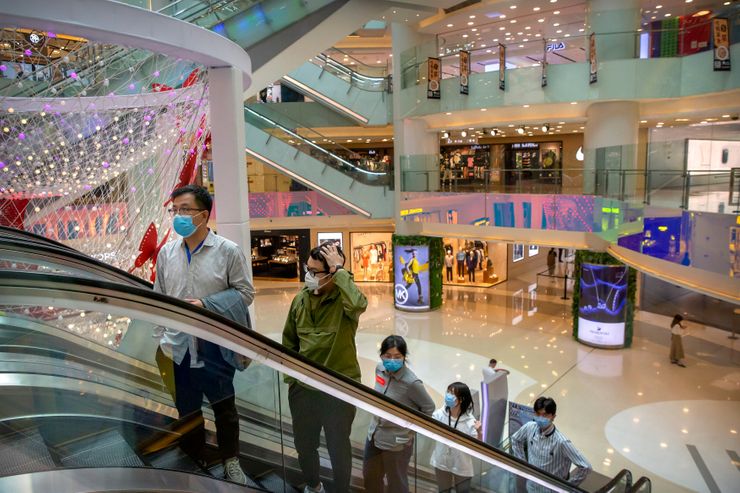
Retail sales fell 19% from a year earlier in the first quarter. That improved in March, the final month of the quarter, to a decline of 15.8%. But consumers, jittery about possible job losses, are reluctant to spend despite government efforts to lure them back to shopping malls and auto showrooms.
That is a blow to automakers and other companies that hope China will power the world economy out of its most painful slump since the 1930s.
Job-hunter Ni Hong’s challenge highlights the problem. Ni, 32, quit her job in Beijing in January to find a new one, but the virus disrupted those plans. Ni is paying her mortgage out of her savings and avoiding other spending while she looks in a market flooded with newly laid-off workers.
“In the past, there were maybe two or three candidates for a post,” Ni said. “Now, I have eight to 10 competitors, so the chance for me to be eliminated is much higher.”
That is a political challenge for the ruling party, which bases its claim to power on China's economic success. The party appealed to companies to keep paying employees and avoid layoffs during the shutdown. But an unknown number have failed, adding to public anxiety.
The economy already was squeezed by a tariff war with President Donald Trump over Beijing’s technology ambitions and trade surplus. Last year’s growth sank to a multi-decade low of 6.1%.
Exports fell 6.6% in March from a year earlier, an improvement over the double-digit plunge in January and February. But forecasters say demand is bound to slump in America and Europe as anti-virus controls keep shoppers at home.
“Lingering consumption weakness and sliding foreign demand will weigh on the upturn,” said Louis Kuijs of Oxford Economics in a report.
Growth was stronger than some forecasts that called for a contraction of up to 16% but this is the biggest contraction since market-style reforms started in 1979.
“The numbers were even uglier than most anticipated, which is good!” said Andy Rothman of Matthews Asia in a report. “These ugly numbers indicate that the leadership didn’t fudge the data to hide the seriousness of the situation.”
Investment in factories, real estate and other fixed assets, the other major growth driver, sank 16.1%.
Auto sales sank 48.4% from a year earlier in March. That was better than February’s record 81.7% plunge but is on top of a 2-year-old decline that is squeezing global and Chinese automakers in the industry’s biggest global market.
Asian stock markets rose following the announcement, which was in line with investor expectations. By mid-afternoon, Tokyo’s benchmark Nikkei 225 index was up 3% and Hong Kong’s Hang Seng was 2.4% higher.
The ruling party has yet to announce this year’s official growth target. It has been at least 6% in previous years. Beijing looks likely to miss its target of doubling incomes from 2010 levels by this year.
Controls on Beijing, the capital, and some other cities have been tightened to prevent a resurgence of the disease. Most foreigners are barred from entering the country.
Beijing is boosting spending on a “New Infrastructure" Plan that includes next-generation telecom networks, artificial intelligence, electric vehicle charging and data centers. But leaders don't want to pump too much money into the economy with full fledged stimulus for fear of adding to debt or pushing up inflation that is near a seven-year high.
Carrying out that infrastructure investment “will take a much longer time than it would do without social distancing in place,” said Pang of ING. “Recovery will be a long road.”
___
AP video producer Wayne Zhang and researcher Yu Bing contributed.

OpenAI discloses 6 reports of AI models' 'unexpected or concerning' behavior
OpenAI published six new reports of artificial intelligence models showing “unexpected or concerning” behavior Wednesday as pressure grows on AI firms to be more transparent about the development process. The ChatGPT maker disclosed the reports as part of its new framework for tracking and disclosing instances of model misalignment, which occurs when an AI system...

Judge orders Google to change ad auction rules
A federal judge has ordered Google to change its rules for auctioning online advertising on its platforms after finding last year that the search giant had an illegal monopoly over the technology connecting publishers and advertisers. The remedies were made public late Wednesday, when U.S. District Judge Leonie Brinkema unsealed her opinion from earlier this...

Doosan Corp. bets $700 mil. on chip substrate material biz
Doosan Corp., the holding company of Doosan Group which also operates an electromaterials business, will invest 970 billion won ($702.6 million) to expand its production capacity for copper clad laminates (CCLs), a key material for advanced semiconductor substrates. Doosan Corp. said in a regulatory filing Thursday that its board approved investment to expand the domestic and overseas production capacity of its electromaterials business unit. Under the plan, the company will invest 970 billion won by Dec. 31 next year to expand its production capacity in Korea and overseas. The investment is the largest in Doosan Corp.’s history and accounts for about 8 percent of its equity capital. CCL is a key material used in advanced chip substrates and printed circuit boards (PCBs) found in virtually all electronic devices. The market for the material has remained strong in recent months as demand continues to outpace supply across the broader semiconductor value chain. Doosan Corp. will spend 420 billion won to expand its domestic production lines for CCLs used in optical transceivers — device

LG chairman stresses 'prompt, tenacious execution' in AI investment
LG Group Chairman Koo Kwang-mo stressed “prompt and tenacious execution” in making investments in artificial intelligence (AI) businesses, asking affiliate CEOs to treat AI as a key factor that will determine the group’s future competitiveness. According to the group, Thursday, Koo made the comments during a meeting with LG affiliate presidents at the group’s training center in Icheon, Gyeonggi Province, a day earlier. The meeting was attended by Koo and over 40 top executives of LG Electronics, LG Display, LG Innotek and other key affiliates. Participants explored how AI is bringing changes to the industrial and technological landscape and discussed investment priorities and execution plans to secure future competitiveness. “AI is no longer an area where we can selectively choose whether to respond,” Koo said. “It is the key pillar that will determine our future competitiveness. I ask our CEOs to focus on prompt and tenacious execution so that we can win in the future competition driven by AI.” During the meeting, participants reviewed past investments in areas including

KT joins state project to build AI-driven 'dark factory' solutions
KT said Thursday it has joined a government-led research project to develop design and construction solutions for "dark factories" — fully automated, unmanned plants that run around the clock using artificial intelligence (AI) across every stage of production. The project falls under a Ministry of Science and ICT initiative to build a research and development ecosystem for a software platform based on collaborative intelligence and physical AI. It aims to build a dark factory near Jeonbuk Innovation City in North Jeolla Province. Besides KT, the Korea Advanced Institute of Science and Technology, LG Energy Solution, Harim Foods, Shinsung E&G and the Korea Productivity Center are taking part as joint research institutions. KT will develop a system built on modular edge AI data center infrastructure — compact, distributed AI data centers pre-assembled on factory floors — to generate and verify Sim-Ready synthetic data, or digital data usable in virtual simulation environments, along with an integrated environment for operating AI agents. Through the research, KT aims to resolve error

CJ ENM eyes European growth with major brand push in Poland
CJ ENM, the Korean entertainment powerhouse behind hits like "Parasite" and Studio Dragon dramas, is widening its reach into Central and Eastern Europe. Following its participation in the 2026 Korea-Poland Brand Week in Warsaw on Tuesday and Wednesday, the media company announced plans Thursday to accelerate content distribution and forge local production alliances across the region. The event was hosted by the Ministry of Culture, Sports and Tourism and organized by the Korea Creative Content Agency (KOCCA). During the two-day event, CJ ENM signed a memorandum of understanding with the Korean Cultural Center in Poland and KOCCA to expand the reach of Korean content in the country. Under the agreement, the company plans to widen exchanges with European institutions and broaden the footprint of Korean content through screenings, promotional events and other programs. CJ ENM ran experience booths tied to its dramas "Lovely Runner" and "The Legend of Kitchen Soldier," letting visitors engage directly with the shows. It also held a special screening of "The Legend of Kitchen Soldier," alongsi

Hansae Mobility increases commitment in Uzbekistan
Senior executives from Hansae Yes24 Group attended a Korea-Uzbekistan business forum in Seoul as the conglomerate moves to expand investment and localize operations in Uzbekistan, the group said Thursday. Hansae Yes24 Holdings Vice Chairman Kim Suk-hwan, Hansae Vice Chairman Kim Ik-whan and Hansae Mobility CEO Sung Nag-gon joined the forum at the Shilla Seoul hotel on Tuesday. The event, jointly hosted by Uzbekistan President Shavkat Mirziyoyev and Korean Prime Minister Han Seong-sook, brought together government officials and business leaders from the two countries to discuss Uzbekistan’s investment environment and ways to broaden strategic economic cooperation. Hansae Mobility, one of the group’s future growth engines, has worked with Uzbekistan automaker UzAuto Motors since its early stages. The Korean company began localizing production of key automotive components late last year and started full-scale mass production this month. Hansae Mobility plans to invest a total of $25 million in Fergana Province. It has invested $13 million in the first phase this year and plans to add $1

Hanwha, EDGE to build UAE's integrated air defense network
Hanwha Systems will team up with the United Arab Emirates’ state-run defense conglomerate EDGE to establish an integrated air defense network, covering long- and medium-range capabilities as well as counter-drone defenses. According to Hanwha Systems, Thursday, the CEOs of the two companies signed a term sheet for the air defense network project during a ceremony in Abu Dhabi on Tuesday (local time). The term sheet outlines the direction of the planned introduction of weapons systems for the integrated air defense network and review agendas at each stage of the project. The two sides plan to determine details of the project in line with the direction of defense cooperation between the two countries. Through government approvals and consultations, the two companies will pursue establishing a local joint venture and discuss its operation and local production. Through the partnership, Hanwha Systems plans to expand its role from supplying individual weapons systems to participating in the integrated air defense network, by linking ground weapons systems, including the Chunmoo multiple roc

Korean Air finalizes $44.8 bil. purchase plan announced last year
Korean Air has finalized contracts to purchase 103 next-generation Boeing aircraft and aircraft engines and maintenance services from U.S. companies in deals worth a combined $44.8 billion, completing a major U.S. procurement plan announced last year. The airline said Wednesday that it signed final agreements covering $36.2 billion worth of Boeing aircraft and $8.6 billion in spare engines and engine maintenance services from GE Aerospace and CFM International. The deals finalize the $44.8 billion U.S. purchase plan announced by Hanjin Group Chairman Cho Won-tae in Washington in August 2025, during President Lee Jae Myung's visit to the United States. Korean Air said the signing ceremony was held Tuesday at the Conrad Seoul hotel in Yeouido and jointly hosted with Boeing. Senior executives attending the event included Cho, Boeing Commercial Airplanes President and CEO Stephanie Pope and CFM International President and CEO Gaël Méheust. Government and financial officials from Korea and the United States also attended, including Korean Minister of Trade, Industry and Resources Kim Jung-k

Seoul's streetwear titan Musinsa expands physical footprint to Shenzhen
Musinsa, the Korean e-commerce titan that built an empire out of Seoul’s trendsetting streetwear scene, is doubling down on physical retail in China. The company will open locations on Oct. 31 for both its flagship multibrand boutique and its private-label basic line, Musinsa Standard, side by side in Shenzhen — marking its expansion beyond eastern China into the country's southern fashion hub. The Korean fashion platform said Thursday that both stores will open at ONE AVENUE, a major mixed-use shopping complex in Shenzhen’s Futian central business district. The move marks Musinsa’s first offline expansion into southern China after establishing retail operations centered on Shanghai and Hangzhou. The company said Shenzhen, a major economic and industrial center in southern China, has a large population of young consumers with strong purchasing power. Musinsa Store will initially carry about 30 Korean fashion brands, with plans to add more based on customer response and demand. The store is intended to serve as an offline base for introducing Korean fashion labels to Chinese consume

Noul brings AI cervical cancer screening technology to Indonesia
Noul, a Korean medtech firm specializing in artificial intelligence (AI)-driven diagnostic tools, has entered the Indonesian market through its first supply agreement for an automated cervical cancer screening system as the Southeast Asian nation works to scale up preventive care. The company said Thursday it signed the agreement with an Indonesian medical device distributor and plans to supply at least 50 miLab CER units to local medical institutions and laboratory networks over three years. Noul said it will initially work with hospitals, screening centers and laboratory networks before seeking opportunities in Indonesia’s public procurement market. The company said it has secured regulatory approvals for miLab CER in several Southeast Asian markets, including Vietnam and the Philippines, providing a foundation for further expansion across the region. Indonesia, with about 280 million people, is Southeast Asia’s largest health care market, according to Noul, which said cervical cancer places a significant burden on women in the country. Noul said Indonesia plans to include cervical

Sales of Galaxy Z Fold 8 increase following unveiling of Apple's 1st foldable smartphone
Domestic sales of Samsung Electronics' new Galaxy Z foldable smartphone have increased following the unveiling of Apple's first foldable smartphone, the iPhone Duo, industry sources said Thursday. Sales of the Galaxy Z Fold 8 in Korea rose about 10 percent in the week following the unveiling of the iPhone Duo from the previous week, according to the telecommunications industry. The increase is believed to have been driven in part by consumers who had delayed their purchases while waiting for Apple's new product and subsequently opted for the Galaxy Z Fold 8 instead. The iPhone Duo's price and hardware specifications are also considered factors in Korean consumers' purchasing decisions, they said. The iPhone Duo is priced at 3.29 million won ($2,380) for the 256-gigabyte model in Korea, more than 1 million won above the 2.28 million won price of the 256GB Galaxy Z Fold 8. The 2-terabyte iPhone Duo model is priced at 5.09 million won. The price gap in Korea is relatively wide compared with the United States, where the 256GB models of the two smartphones differ by about $100 in price.

POSCO Group accelerates resource strategy as global competition shifts
POSCO Group Chairman Chang In-hwa is bringing together the group’s senior executives to map out the next phase of its three-pronged growth strategy, as geopolitical shifts and technological change reshape global competition for resources. The group’s annual POSCO Forum began Thursday and will run for two days in Incheon. The event brings together senior executives to discuss future growth and innovation while hearing from outside experts. This year’s forum will focus on turning the strategy announced in July into concrete action plans. Chang's three-part strategy centers on areas of industrial resources such as steel; strategic resources including lithium, cathode and anode materials and rare earths; and energy resources such as liquefied natural gas and renewable energy. “The ability to execute quickly is the key to survival at a time of major change, as geopolitics and technological paradigms are shifting,” Chang said. “To successfully implement the strategy and expand our businesses around resources, we need to anticipate the direction of change and find clear answers on w

JB Financial partners with Upstage to develop AI solutions for finance
JB Financial Group has teamed up with Upstage, a leading artificial intelligence (AI) company, to develop AI-based tools for practical use across the financial sector as part of its broader effort to accelerate company-wide AI transformation, the group said Thursday. JB Financial Chairman Kim Ki-hong and Upstage CEO Kim Sung-hoon signed a memorandum of understanding on Monday, laying the groundwork for cooperation in financial AI technology and new business opportunities. JB Financial identified AI transformation as one of its key priorities at its executive strategy meeting in August. The partnership will bring together the financial group and its major subsidiaries, including Jeonbuk Bank, Kwangju Bank and JB Woori Capital, to create a group-wide AI collaboration network. Using Upstage’s proprietary large language model (LLM) technology, the companies will work on developing AI agents customized for banking and other financial services. The two sides also agreed to pursue a range of joint projects, including developing and testing new AI applications for finance, exchanging employees

Korean Air counts on allied shareholders to contain Hoban's influence
Korean Air is counting on its existing shareholder base to contain Hoban Group’s growing influence, as the builder continues to increase its stake in Hanjin KAL to challenge Hanjin Group Chairman Cho Won-tae's control over the aviation conglomerate. Hoban has raised its Hanjin KAL stake to 20.15 percent, just 0.42 percentage point below the 20.57 percent held by Cho and his related parties. The narrowing gap has fueled speculation that Hoban could eventually seek a greater role in the management of Korean Air, the flagship carrier controlled by Hanjin KAL. An official from the airline said the most favorable scenario for the company would be for Korea Development Bank (KDB) not to sell its stake. KDB has long held a 10.58 percent stake in Hanjin KAL. If the state-run bank continues to hold its stake, Cho’s side would retain a significantly larger bloc of friendly shares than Hoban, reducing the immediate threat to the current management’s control. Delta Air Lines, which holds a 14.9 percent stake in Hanjin KAL, is widely considered a long-term ally of Korean Air. KDB, which received

GKL partners with traditional markets to mark Chuseok holiday
Grand Korea Leisure (GKL), the state-run operator of the foreigner-only Seven Luck casino brand, is teaming up with traditional market merchants ahead of Chuseok, Korea's harvest holiday, on a joint marketing campaign aimed at drawing foreign tourists and boosting local businesses, the company said. From Sept. 22-26, GKL will hold the "K-Traditional Market Dessert Festa" at its Seven Luck Casino Gangnam Coex branch, introducing foreign visitors to the food culture of Korea's traditional markets. About 10 stalls from the Yeongdong Traditional Market merchants association in Nonhyeon-dong, Seoul's Gangnam District, will serve visitors Korean snacks including rice cakes, sweet and crispy fried chicken, twisted doughnuts and steamed buns. The event will also give away 200 sets of hand-pressed, domestically produced sesame oil. GKL President Yoon Doo-hyun said the event aims to boost tourist satisfaction and support the local economy by giving foreign visitors to Seven Luck an unusual chance to experience Korean traditional snacks. The event follows a visit by employees from GKL's Seoul Dragon

How a young Korean turned Roblox into lucrative career
SAN JOSE — "Stop playing games." Roblox game developer Gold Octopus, whose real name is Cho Young-gwang, says his parents rarely nagged him to stop playing games. While his parents were at work and often came home late, he spent his time on online games. The middle school student developed games before the platform became widely known in Korea. That childhood hobby became a profession, bringing the 20-year-old digital creator an income of more than 100 million won ($67,800). Roblox reported about 144 million daily active users in March, making it a major platform in the creator economy. Gold Octopus, an early developer on the platform, spoke with the Hankook Ilbo in an interview Friday at the Roblox Developers Conference 2026 at the San Jose McEnery Convention Center in California. He taught himself game development instead of going to college. He also taught himself Japanese and recently began collaborating with a Japanese company. The young developer built his reputation with his flagship game, Sol's RNG, winning Best Experience of the Year and Outstanding Creator of the Year at the

Naver decides not to acquire Baemin stake
Naver has decided not to acquire a stake in Korea's largest food delivery platform, Baemin, four months after a report alleged that the mobile platform company was considering forming a consortium with Uber to take over Baemin. “We reviewed scenarios on acquiring a stake in Baemin, but we have decided not to proceed with the acquisition, due to changes in the business environment and other factors,” Naver said in a regulatory filing Thursday. The filing came in response to a news report in May that Naver and Uber were considering forming a consortium with a 20-80 ownership split to acquire a stake in Baemin operator Woowa Brothers from its German parent company, Delivery Hero. At the time, Naver said it was reviewing various measures to strengthen its business competitiveness and that no concrete decisions had been made. However, the situation changed when Uber agreed in July to acquire a 100 percent stake in Delivery Hero for $14.8 billion. If completed, the deal would also bring the German group’s wholly owned Korean subsidiary, Woowa Brothers, under Uber. Uber said the deal is ex

FKI celebrates 250th anniversary of US founding
The alliance between Korea and the United States is expanding beyond its traditional security role, as the two countries deepen cooperation in trade, technology and other strategic industries, senior political and business leaders said at a gathering in Seoul on Thursday to mark the 250th anniversary of the founding of the U.S. The Federation of Korean Industries (FKI) hosted the commemorative dinner in Seoul, bringing together about 180 officials from the political, business and military communities from both countries. Prime Minister Han Seong-sook, U.S. Ambassador to Korea Michelle Steel and U.S. Forces Korea (USFK) Commander Gen. Xavier Brunson attended the event, along with former U.S. Secretary of State Condoleezza Rice. Among Korean business leaders were Lotte Group Chairman Shin Dong-bin, Hanjin Group Chairman Cho Won-tae, LS Group Chairman Koo Ja-eun and Korea Zinc Chairman Choi Yun-beom. Ranking executives from Samsung, SK, Hyundai Motor and LG also attended the event. The gathering highlighted the military foundation of the bilateral relationship. Six veterans of the 1950-53 K

SEC unveils exemption for tokenized stock trading
The Securities and Exchange Commission (SEC) unveiled its long-awaited “innovation exemption” Thursday, a new order aimed at clearing the way for tokenized stock trading in the U.S. The order creates a pair of five-year exemptions. The first exempts platforms that host tokenized stock trading from the commission’s definition of an exchange, while the second exempts...
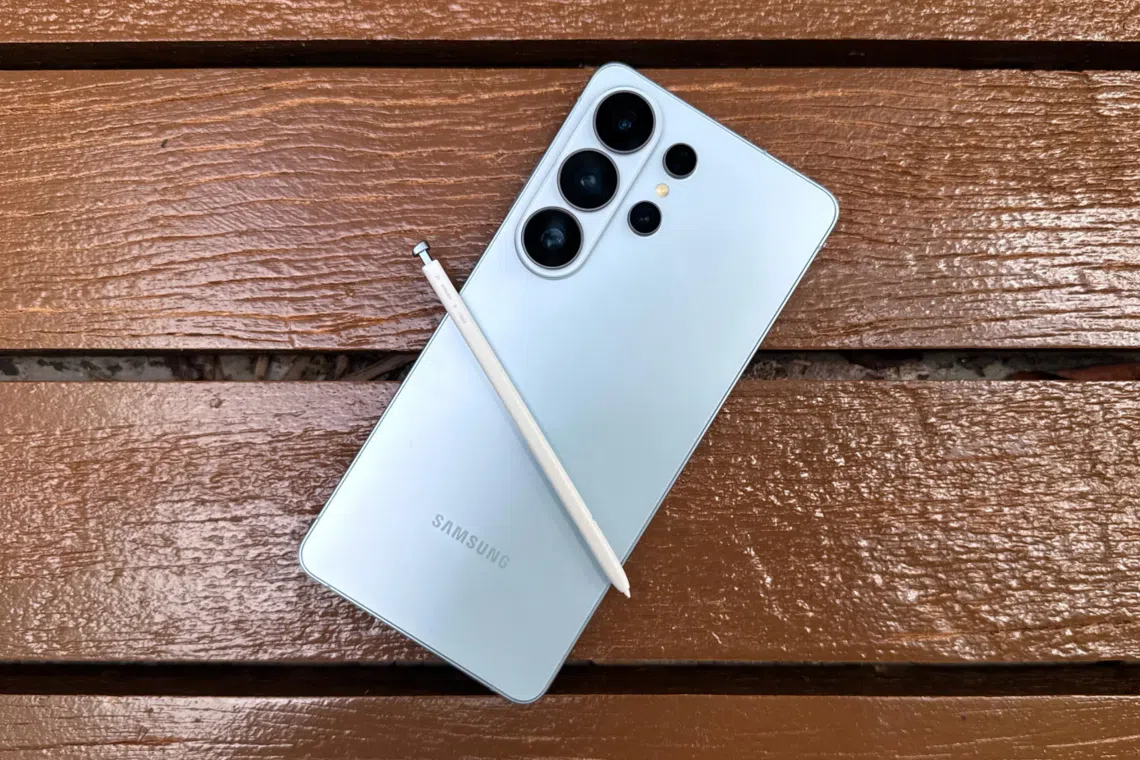
Samsung’s One UI 9 rollout starts in Singapore on 21 September
The Galaxy S26 series will receive the update first, bringing new Galaxy AI tools alongside other quality-of-life improvements.

Washington balks at giving AI firms waiver to create safety standard
Anthropic CEO Dario Amodei's call for an antitrust waiver for AI firms to work together on a safety standard is being met with skepticism in Washington, where policymakers are questioning tech leaders' intentions. Congress has failed repeatedly to pass AI regulations for years, but some lawmakers are balking at the idea of technology companies taking...
DITO Gaming Modem: who is it for?
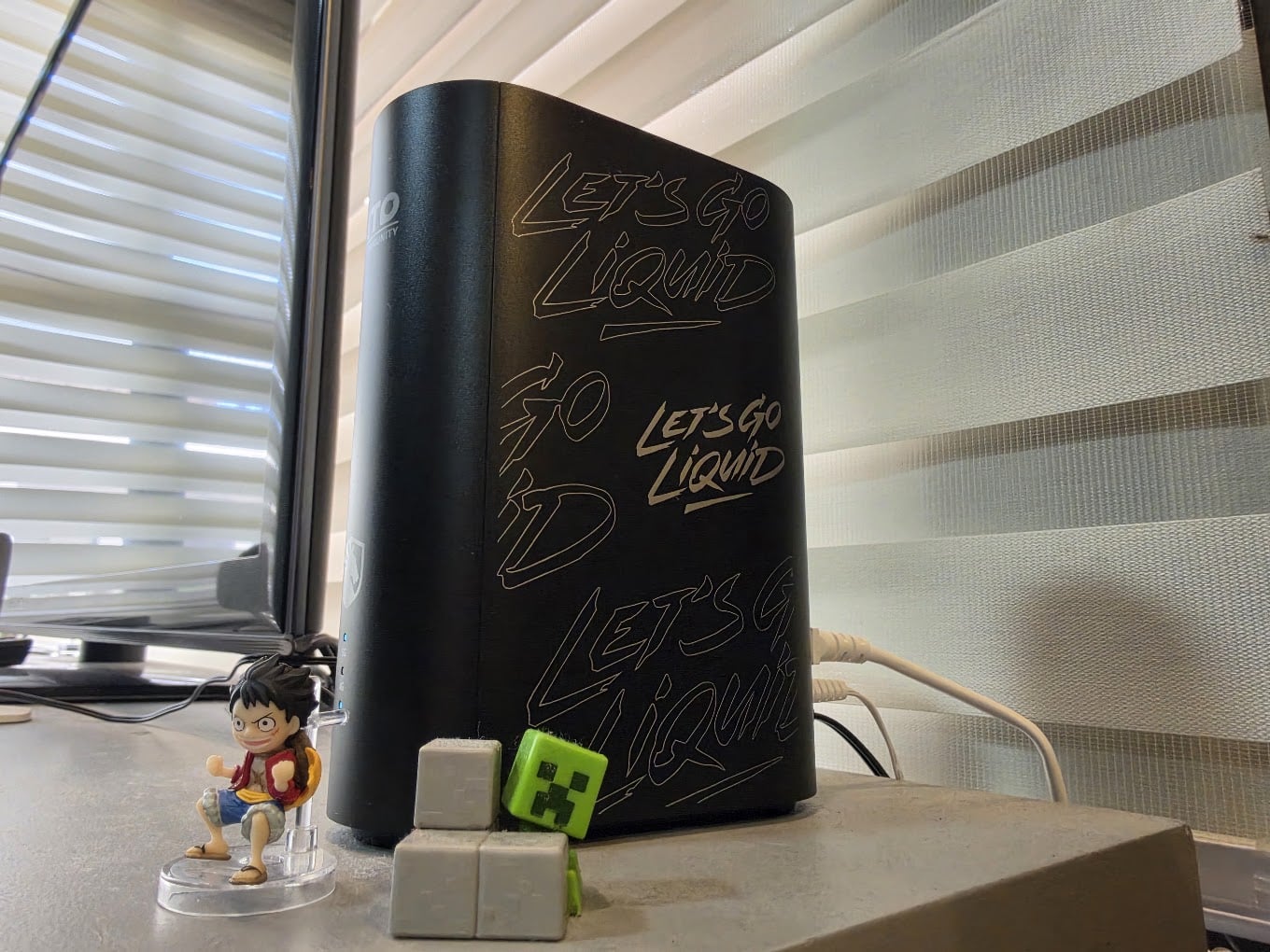
The DITO Gaming Modem is a peculiar device. Behind the Team Liquid partnership and branding, the device is essentially a 5G wireless modem with one RJ45 LAN port. Because it runs on a 5G DITO SIM card, it’s portable and plug and play. It also goes without saying that this device works best in areas

“AI amnesia” is quietly costing Southeast Asian brands their customers
A customer in Jakarta spends 20 minutes explaining a billing dispute to a chatbot, gets bounced to a human agent, and has to start the story over from scratch. Multiply that across the millions of AI-mediated conversations happening daily across the region, and you get a sense of the trust deficit quietly building beneath Asia […] The post “AI amnesia” is quietly costing Southeast Asian brands their customers appeared first on e27.

Huawei unveils new chip technologies as Chinese firm steps up the AI race with Nvidia
BEIJING (AP) — Chinese technology giant Huawei launched new chip technologies in a challenge to global leaders such as Nvidia that highlights the narrowing gap between China and the U.S. in artificial intelligence. Huawei's announcement Thursday at its annual key conference in Shanghai came just days before an expected meeting between U.S. President Donald Trump...

Temasek-backed Xora leads Hang Ten’s US$53M seed round
Hang Ten Systems has raised an additional US$53 million in seed funding, just five weeks after closing its first seed round, as large enterprises search for ways to move artificial intelligence from experimentation into core operations. The new round was led by Xora, a Temasek-backed fund focused on AI and deep tech. Mayfield, which led […] The post Temasek-backed Xora leads Hang Ten’s US$53M seed round appeared first on e27.

Marvel’s Avengers Endgame: Encore tickets to go on sale from 18 September
Avengers, assemble!
Huawei quickens AI chip pace, promises next entrant 3 quarters early
Huawei Technologies said on Thursday that it would launch its next-generation artificial intelligence chip in the first quarter of 2027, moving the target launch forward by nine months as the firm aggressively expands its ecosystem amid China’s self-sufficiency push. David Wang Tao, rotating and acting chairman for Huawei, said on Thursday that the Ascend 960DT chip, an AI chip designed for model training, “with performance doubling”, would be “ready in the first quarter of 2027”, three quarters...
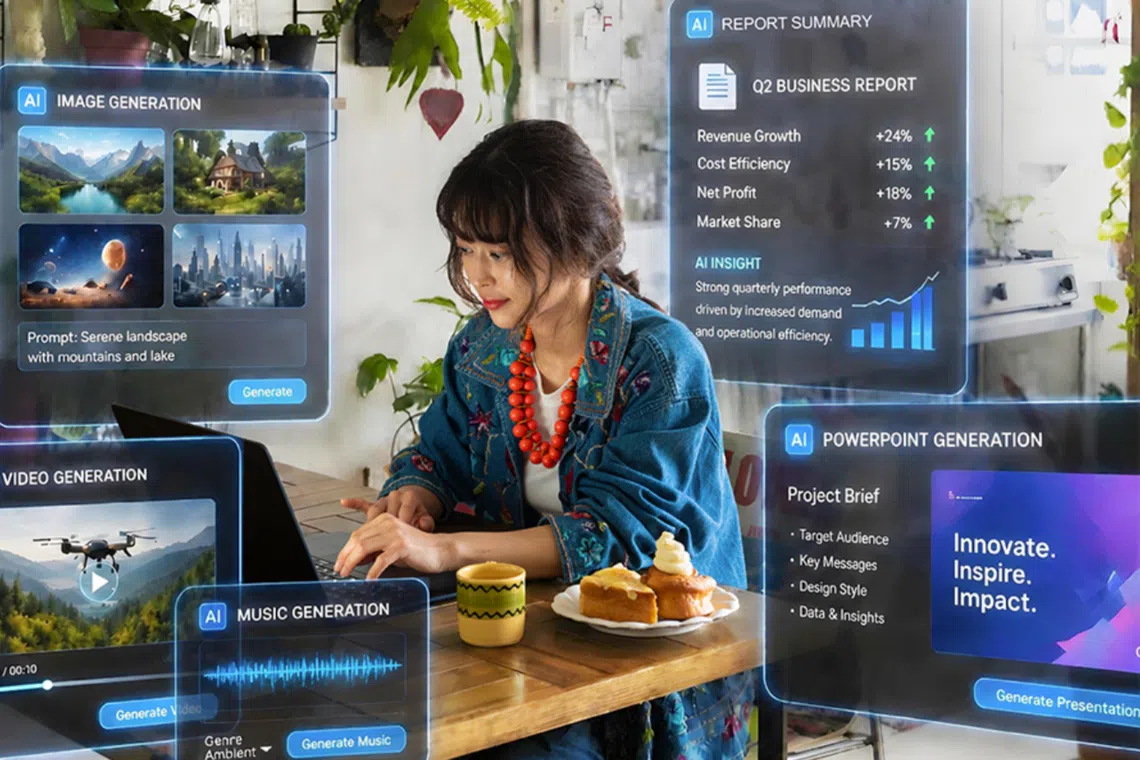
Singtel offers free AI Pass access with selected SkillsFuture courses
Singtel’s AI Pass gives eligible learners access to six premium AI tools for up to six months, as Singapore expands its national push to build practical AI skills.

Databricks doubles down on Singapore with US$350M AI investment plan
Databricks is putting more weight behind Singapore as large companies across Asia shift from experimenting with artificial intelligence to trying to run it safely inside their core operations. The US data and AI company said it will invest more than US$350 million in Singapore over the next three years, expand into a new 32,000-square-foot regional […] The post Databricks doubles down on Singapore with US$350M AI investment plan appeared first on e27.
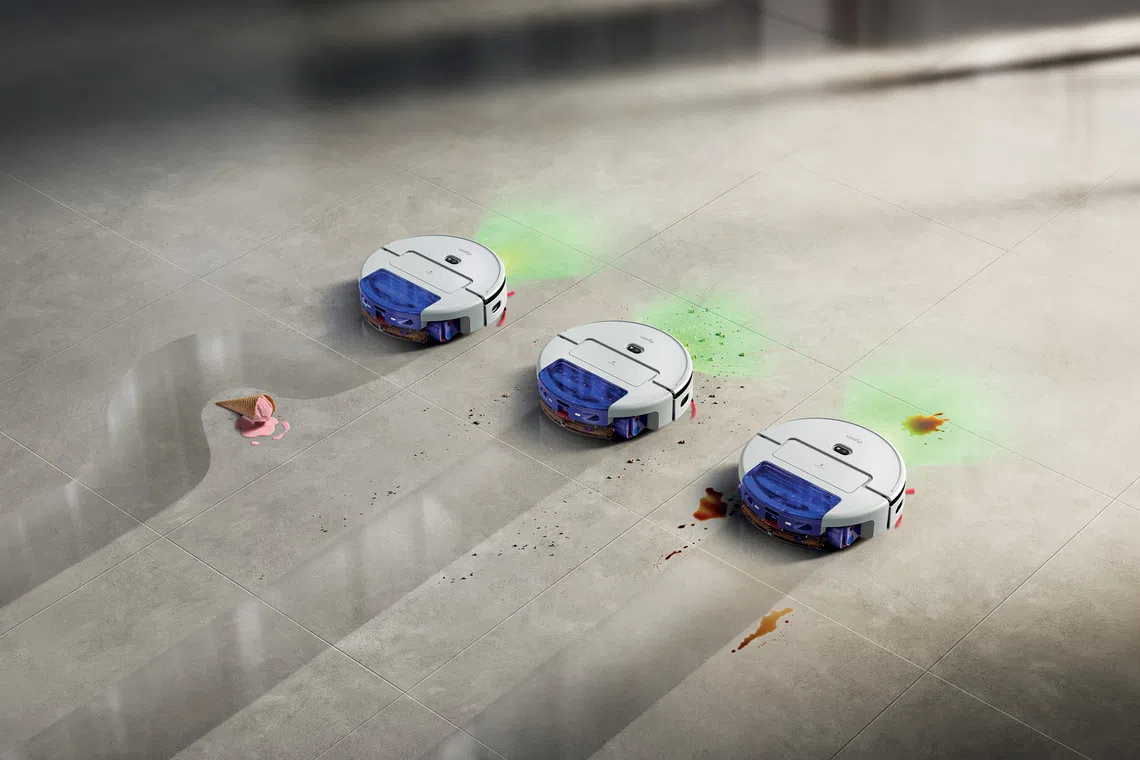
Dyson unveils 10 new products, including three Nurovi robot vacuums
The wide-ranging launch also covers air purifiers, floor cleaners and hair-care devices, alongside the camera-equipped CameraJet toothbrush.

Why FinSight thinks Physical AI is mispriced by a decade of data, not dollars
Here’s a simple way to think about FinSight Ventures: it is a late-stage fund that likes the places most investors avoid, and it has a one-line rule for deciding when to write a cheque: 35 per cent a year, in dollars, or it walks. The US-based VC fund with operational hubs in Cyprus and India […] The post Why FinSight thinks Physical AI is mispriced by a decade of data, not dollars appeared first on e27.

Nobody gives you time to explain. That’s the real fundraising problem
Picture the scene. The lights dim. A drone shot. A cello. Employees smiling at the camera. Then the line: We are changing the world. The film was beautifully made. The investor picked up his phone ten seconds in. I didn’t set out to start a company over that. But a founder I was coaching kept […] The post Nobody gives you time to explain. That’s the real fundraising problem appeared first on e27.

Why did Bitcoin and Ethereum move in near-perfect lockstep after the Fed rate hike?
Bitcoin rose 0.82 per cent in 24 hours to US$76,318.25. Ethereum gained 0.80 per cent to US$2,418.94. The total crypto market cap increased one per cent, and the broader crypto market rose 0.99 per cent. These numbers point to a single conclusion. A relief bounce tied to the Federal Reserve lifted the entire asset class. […] The post Why did Bitcoin and Ethereum move in near-perfect lockstep after the Fed rate hike? appeared first on e27.

Paid to be quoted: The creator revenue line Southeast Asia hasn’t priced yet
When we run citation checks for clients at ESBO Ltd, my agency, the sources assistants quote for buying questions are rarely brand websites or big media. They are creators: a YouTube comparison from someone who tested four products on camera, or a forum thread with real numbers in it. The people being quoted are, almost […] The post Paid to be quoted: The creator revenue line Southeast Asia hasn’t priced yet appeared first on e27.

Why Singapore investors hold more Apple than Singtel, and why it should worry you
Last month, I sat across from Kenny, a software engineer in his early thirties, based in Singapore, someone who reads financial news, has a brokerage account, and thinks carefully about his money. I asked him about his portfolio. He listed: Apple, Microsoft, Google, Nvidia, and Amazon. I asked about Singapore stocks. He paused. “I don’t […] The post Why Singapore investors hold more Apple than Singtel, and why it should worry you appeared first on e27.
Huawei unveils latest tech to boost AI power in push to break China’s Nvidia reliance
Huawei Technologies on Thursday unveiled its latest Atlas 960 SuperPoD computing cluster and an upgraded version of its UnifiedBus interconnect technology, key components of the Chinese tech giant’s strategy to build advanced artificial intelligence systems despite US semiconductor-related restrictions. At the Huawei Connect 2026 conference in Shanghai, the Shenzhen-based firm introduced near-packaged optics (NPOs) – a placement structure enabling higher speeds and lower energy use – to the...

Your team finished the AI course. Can they challenge the machine?
A dashboard can tell a founder how many employees completed an AI course. It cannot tell whether those employees know when an AI answer is wrong. My work in adult learning has taught me to take that gap seriously. The distinction is becoming urgent. The World Economic Forum’s Future of Jobs Report 2025 found that […] The post Your team finished the AI course. Can they challenge the machine? appeared first on e27.

Mobile’s next US$4.5 trillion won’t come from connectivity
The GSMA published its Mobile Economy 2026 report at Barcelona in March, and the arithmetic inside it is worth sitting with rather than skimming. Mobile technologies and services contributed US$7.6 trillion to global GDP in 2025, or 6.4 per cent of the total. By 2030, that reaches US$11.3 trillion, or 8.4 per cent. Over the […] The post Mobile’s next US$4.5 trillion won’t come from connectivity appeared first on e27.
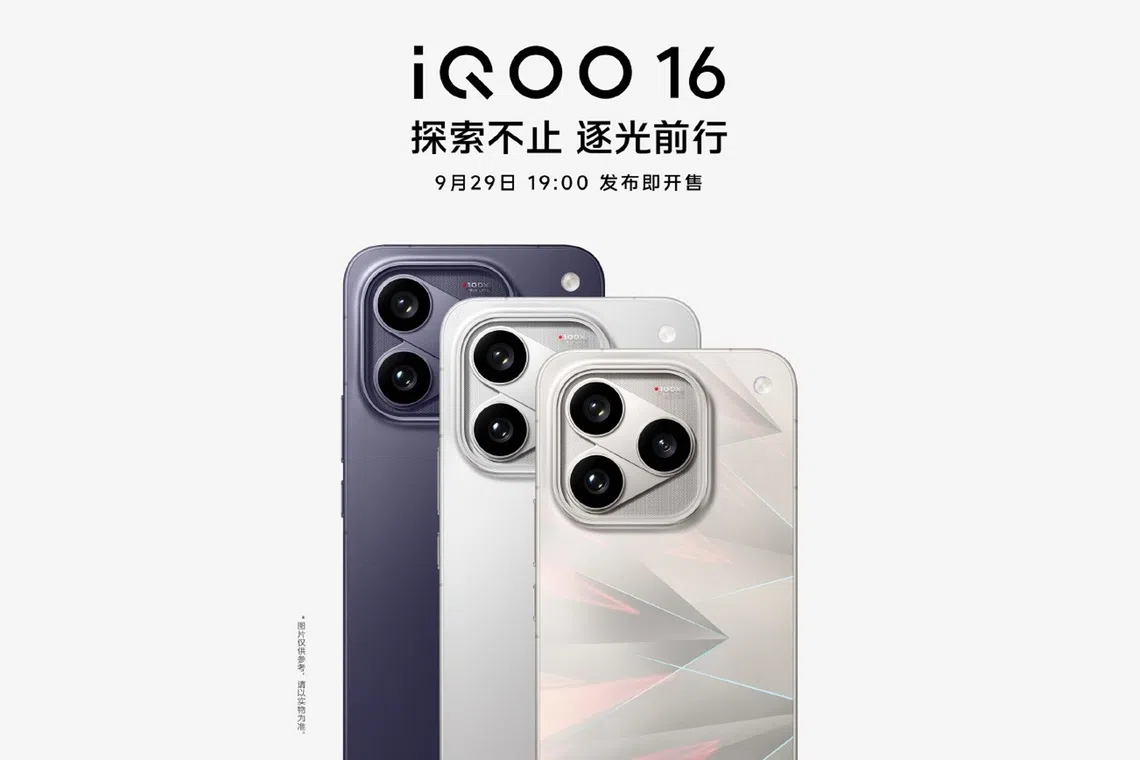
Samsung’s breakthrough OLED display makes its first appearance on an iQOO phone
This new phone display breakthrough raises the bar on resolution and refresh rates to a new gold standard.